The person behind the perspective
Learning what the receiving team needs to know
I learned pharmaceutical technology from processes that behaved less simply than their written instructions suggested. A development team could explain the sequence of steps yet still be uncertain about why a change in material, equipment or scale altered the result. That gap interested me because it sat between scientific understanding and the investment the company wanted to make next. My career has followed that space, from implementing engineering work to leading the choices about which development knowledge was sufficient to support a manufacturing decision.
I completed a chemical engineering degree at Yongcen Institute in June 1993 and began work at Henlure Process Sciences in July. My first role was process engineer within a seven-person development group. I had no direct reports and no independent expenditure authority. The employer's final-year context in 2000 was 260 employees and CNY 120 million revenue. My work involved carrying out agreed engineering studies, recording what had actually happened and helping senior colleagues compare observations across runs. I learned that a result becomes much harder to use when its conditions are reconstructed after the event. Careful notes were not an administrative accompaniment to the engineering; they were part of the knowledge the next person needed.
In January 2001 I joined Lianvero Pharmaceuticals as a formulation development lead. By December 2007 I led 21 employees through three direct reports with CNY 9.4 million annual development authority. The company then had 650 employees, two manufacturing sites and CNY 640 million annual revenue. The scope grew during the appointment. I worked with colleagues who understood materials, analytical examination and manufacturing operations, and I learned to make the boundaries between their judgements explicit. A promising formulation could justify further development without establishing a product's suitability for every intended use. The next decision required its own question and evidence, rather than a general declaration that the project was successful.
The process development head role began in January 2008. By the final year, 2013, my team comprised 56 employees through four reports and my annual authority was CNY 38 million. Lianvero had 1,150 employees and CNY 1.4 billion revenue across two sites. I concentrated on the knowledge needed to move from development into a larger manufacturing setting. Teams needed to understand which differences in equipment and operation mattered, not simply reproduce the names of process steps. I worked to make transfer discussions include the receiving specialists early enough to challenge assumptions while the development programme could still examine them. That preparation was more valuable than discovering the question after an investment timetable had become difficult to change.
From January 2014 through December 2020 I served as technical director. The final remit covered 102 employees through four direct reports and CNY 96 million annual authority, within a business of 1,800 employees, three sites and CNY 2.5 billion revenue. My work extended from individual transfer decisions into the technical investment portfolio. A pilot facility, analytical capability and a larger production line might compete for the same capital while answering different questions. I learnt to ask what knowledge each proposal would create and which operating obligation it would add. A more impressive piece of equipment was not necessarily the next useful step for the product programme.
Lianvero's ownership changed in 2016 to founder-family 60% and private-equity 40%. I date that change because it should not be projected back through the whole career. The new investment discussions required clearer explanations of technical uncertainty, but the responsibility for quality and regulatory decisions did not become an engineering convenience. I continued working with authorised colleagues to distinguish the evidence for a development choice from the evidence needed for another formal decision. That distinction remains central to how I present my work, particularly when a programme's schedule encourages several different meanings of readiness to collapse into one word.
I became CTO in January 2021 and report to Ruiwen Xun. Today I lead 147 employees through five direct reports, with 28 contractors separately, and hold CNY 186 million of 2026 authority. CNY 112 million supports process development and CNY 74 million manufacturing technology. The company's three sites are in Nanjing, Suzhou and Wuxi; its 2,300 employees and CNY 3.2 billion revenue refer to 2025. Those company figures provide context for my role without giving me personal control of all operations. Quality colleagues, including Tinglan Que, retain their own decision responsibilities, and regulatory and clinical judgements are not mine to substitute with an engineering conclusion.
My current work includes examining scale assumptions, making analytical transfer questions explicit, preparing development knowledge for a receiving site and choosing capacity investments that suit the next learning task. I am also prepared to stop a candidate whose evidence does not justify more commitment. The expenditure already made belongs in the account, but it cannot supply the missing technical reason to continue. I want the alternative course, the colleague who preferred it and the unresolved consequence to remain visible in each decision. That gives later leaders something more useful than a sequence of apparently inevitable successes.
I have presented these investment choices to board discussions in an executive capacity and have not held a director appointment. For a first seat I would begin with the company's business model, finances and governance arrangements, alongside the process questions my background helps me ask. I would consider twenty annual days only after reviewing the actual calendar, employer consent and relationships. My contribution would be to collective oversight of consequential choices, not to take over another company's development programme. Thirty-three years of experience have made me more interested in the quality of the next question than in appearing certain before the evidence is ready.
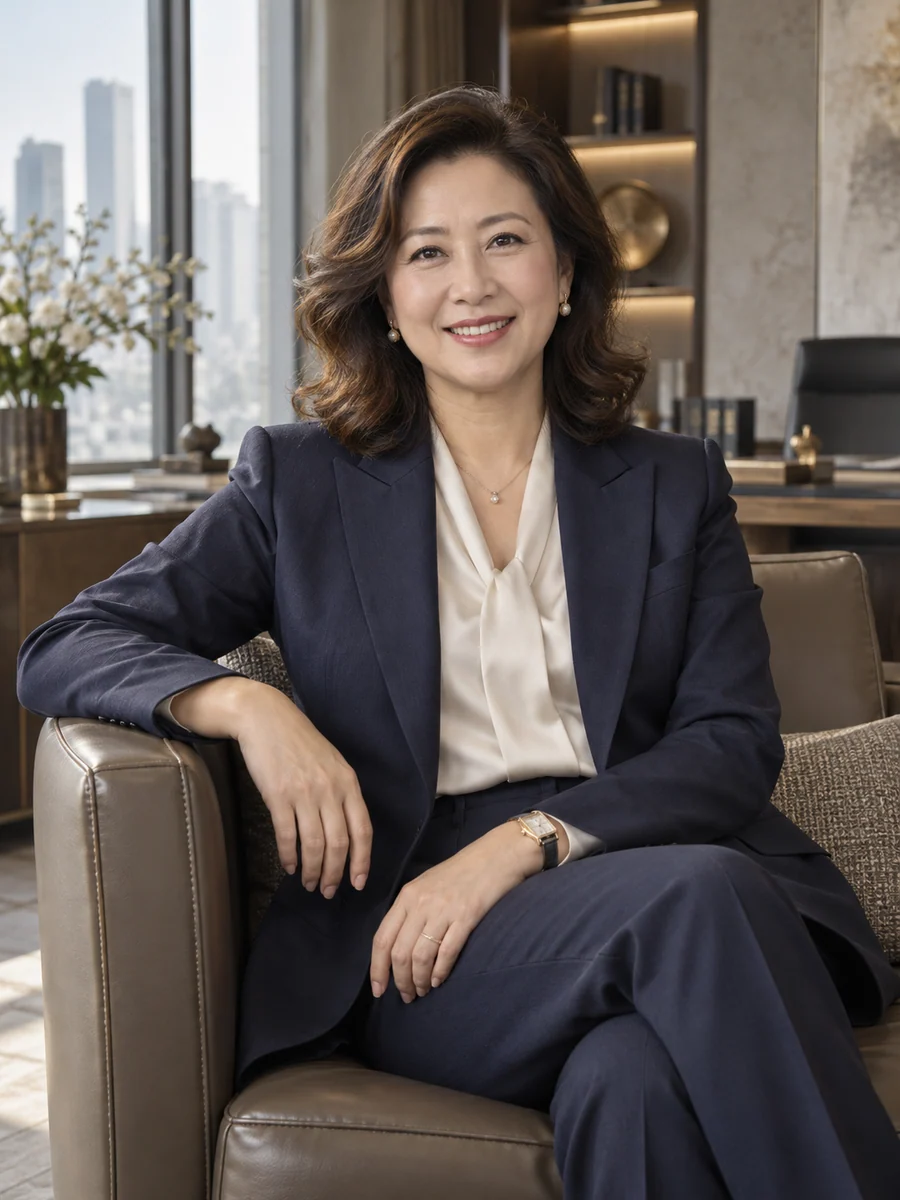
In my own words
A development result becomes useful when the receiving team can explain the conditions that produced it and the questions that remain at the next scale.
Qinglan Yun
Education
Formation
- Degree in chemical engineeringYongcen Institute1993
Working languagesMandarin · English