Roxana VerqazliLeadership review 2026

Leadership review

Roxana Verqazli

Chief Financial Officer · India

Explain the commitment behind the financial number

Open to
  • Board appointments
  • Advisory roles
  • Speaking invitations
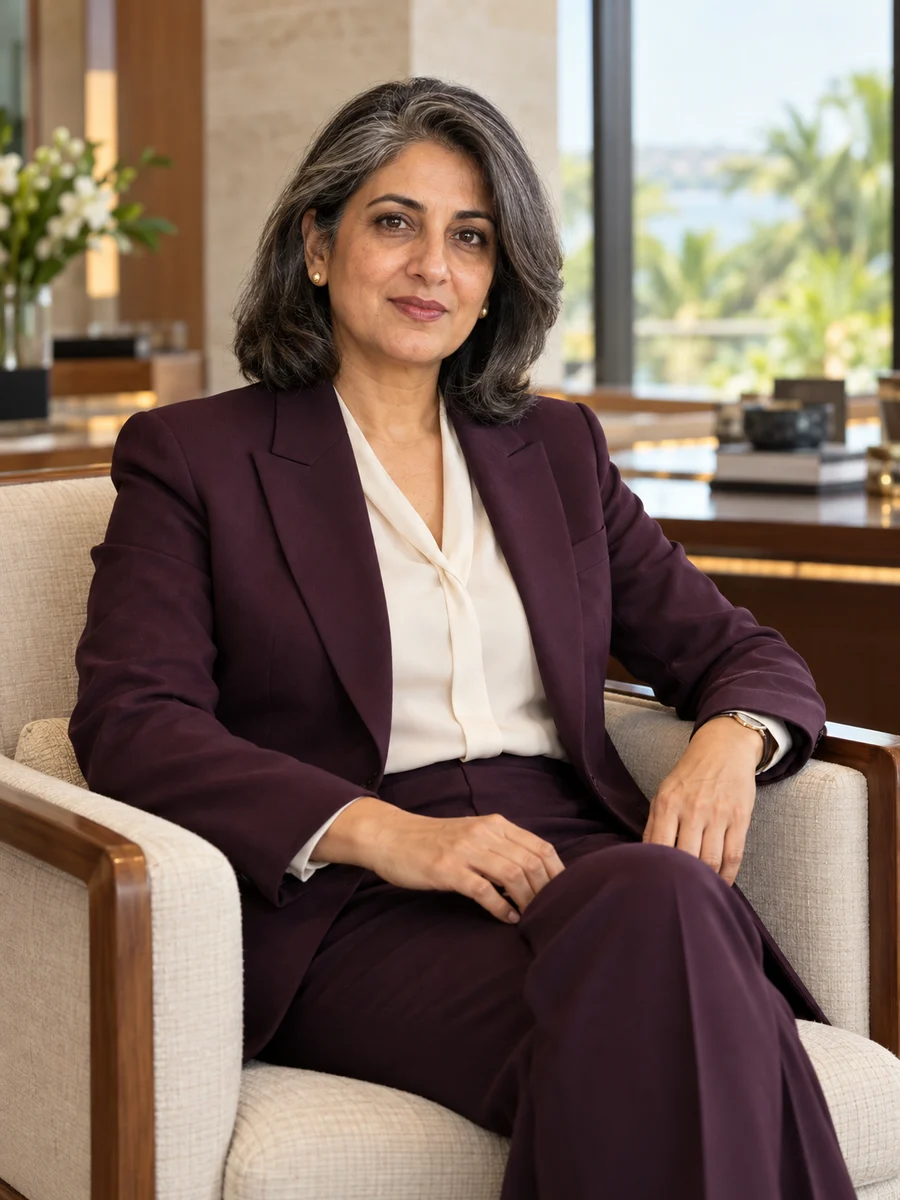
Portrait of Roxana Verqazli

Follow the cost after the reassuring label

In 2019 I let the proceeds from a vacant office sale enter our next-year spending conversation as though the business could produce them again. The receipts account combined ₹4.9 crore from continuing activity with ₹3.5 crore from that single disposal. I accepted the ₹8.4 crore total too readily when assessing a proposed ₹6.8 crore capital programme. The sum was correct; its use in a recurring-capacity argument was not. We revised the programme to ₹4.2 crore, deferred ₹2.6 crore and incurred ₹16 lakh reviewing the planning account. Those consequences belong beside my later financial judgement.

I am Roxana Verqazli, the fictional CFO of Tevqalri Broadcast Rentals in Panaji. Our 128-person enterprise hires production equipment and provides supporting crew, configuration and transport services. FY2026 revenue is ₹68 crore. I lead sixteen finance colleagues through three leads and report to Anil, our CEO. Farida's operating account is essential to my work: a unit's book value does not tell us whether it can meet a production brief, and a depot closure proposal does not make an unexpired premises commitment disappear.

My cases concern the direct cost hidden inside a prestigious contract, equipment that remains useful after depreciation, an insurance recovery that is still uncertain and a closure proposal whose costs continue elsewhere. Each asks a different financial question. I do not present them as a sequence of effortless savings. Some proposals were declined, some spending was retained and some uncertainty remained unresolved. The useful record is how the company reached a decision with the relevant obligations visible, including the limits of what I could establish.

A substantial contract could still lose money before overhead

A proposed ₹2.4 crore fee faced ₹2.5 crore of identifiable external hire, crew and transport costs. We stopped describing the original offer as profitable and retained the expense of examining it.

No remaining book value did not mean no future spending

Of twenty-six control units, seventeen retained supplier support and nine required a different plan. Engineering evidence informed the replacement and support proposals; depreciation alone could not settle them.

Closing the depot did not close its existing obligations

The proposed move left ₹54 lakh annual premises costs in place for two years. We compared those commitments with the new hub's service and moving costs before deciding to retain the current depot for the near term.

Current focus

I am improving the connection between equipment condition, committed expenditure and the financial choices presented to management. The systems programme supports that work without claiming that a new account has already produced a measured return.

Conversations I welcome

I would consider a board conversation about asset-intensive service finance, with preparation and relationships assessed first. Eighteen annual days is a provisional estimate for outside work; I have no statutory board seat or completed databank preparation to present.

Highlights

The operating facts that changed my financial judgement

32 years

Career experience

Supervised accounts to executive financial responsibility

₹68 crore

FY2026 revenue

₹46 crore equipment hire;₹22 crore supporting services

128 people

Enterprise scale

Regional production-equipment rental and services

16 colleagues

Finance remit

Three leads; executive reporting to the CEO

A letter from Roxana Verqazli

Dear reader,

Portrait of Roxana Verqazli

A number can be accurate and still answer the wrong planning question. I ask what produced it, what obligations sit beside it and whether the same conditions will exist when we make the next commitment. Finance should preserve those differences in a form the people running the business can use. That includes a fair account of my own approval mistakes.

I grew up in Jamshedpur in a Parsi family and now live in Panaji. My early interest in commerce came from seeing how the same purchase looked different to the person using an item and the person paying for it. That observation was a starting point, not a professional qualification. I completed a full-time Bachelor of Commerce at the fictional Khevazri Commerce College in May 1994 and joined Vemzatri Equipment Services that July. I do not claim an additional chartered-accountancy credential. My career developed through operating finance roles in which qualified specialists retained the responsibilities appropriate to their work.

Roxana Verqazli

Chief Financial Officer
Strategic priorities

Where I focus my leadership.

Performance

What the priorities delivered.

Priority outcome 01

I carried a one-off receipt into a recurring spending argument

As controller in 2019, I accepted a management planning account that combined ₹4.9 crore of cash from continuing activity with ₹3.5 crore received from selling a vacant administrative office. The ₹8.4 crore total was arithmetically sound. My mistake was allowing that total to support the next year's recurring spending capacity without retaining the separate origin of the disposal proceeds. The proposed capital programme was ₹6.8 crore. It contained genuine operating needs, but the explanation of how the company could repeatedly support that scale of commitment was inadequate. The programme sponsor argued that the cash existed and that delaying equipment purchases would constrain future assignments. That was a legitimate argument for considering how to deploy available resources. It did not establish that the office could be sold again or that the same receipts would recur. I worked with the CFO and operating leads to revisit the programme alongside other obligations, timing and the actual resources available. We approved a revised ₹4.2 crore programme and deferred ₹2.6 crore. The decision was not a formula that simply substituted ₹4.9 crore for ₹8.4 crore; the remaining cash account and operating priorities also required review. The company incurred ₹16 lakh in the planning review. I retained that expense and my approval responsibility in the account presented to management. We did not claim that deferring expenditure created profit, nor that all delayed work was unnecessary. Some proposals had to return with a different schedule. This case concerns a management interpretation, not an asserted restatement of statutory accounts. The disposed asset was a vacant administrative office, not equipment routinely hired and later sold. I would not infer one accounting classification for every disposal in a rental business from this example. The revised planning presentation separated the continuing activity, the single event and the use proposed for the resources. Next time I would require that explanation before the programme reaches its most persuasive summary. The lesson was not to distrust totals. It was to preserve the conditions that make a total relevant to the decision being requested. A finance leader should be able to explain why a number belongs in the argument, including when their own earlier approval failed to do so.

Priority outcome 02

A prominent assignment had a direct-cost shortfall before overhead

In 2022 a commercial team proposed a ₹2.4 crore equipment and service assignment for an invented production. Its profile made it attractive as a possible reference for future work. The initial account drew comfort from our average fleet economics, but the specified configuration was not available from our own inventory. Farida's operating review identified ₹1.5 crore of external equipment hire, ₹65 lakh of crew expense and ₹35 lakh of transport. The ₹2.5 crore direct-cost account exceeded the proposed fee by ₹10 lakh before any contribution to overhead. The commercial sponsor did not dismiss those costs. The argument was that the assignment could establish a relationship and give the company experience with a demanding configuration. I considered that a possible strategic proposition, but it needed to be submitted as one. A prospective reference was not a receipt already earned, and an aspiration for later work could not turn the current cost account positive. Nor could finance simply substitute cheaper equipment: the specification and production responsibilities required operating and customer agreement. We examined a revised scope and fee discussion, but did not submit the offer in its original form. The fictional record does not assert that a replacement proposal won, that the customer accepted different terms or that an alternative assignment filled the calendar. The company retained ₹9 lakh of preparation and procurement-review expense. Declining the original offer did not create a realised ₹10 lakh saving; that figure described its direct-cost shortfall if performed on the stated assumptions. Existing company overhead would still need funding. The consequence was an uncomfortable pause in a visible commercial opportunity. I supported it because the choice had to be described accurately to the executives deciding whether to invest. A board or CEO could still approve an intentional loss for a defined reason, but the purpose, limit and evidence for that decision would need to be clear. I would now ask for the specific delivery account earlier, before an average cost and the prospect of a prestigious reference make the offer feel economically settled. Finance should make the strategic choice legible without pretending it can resolve the customer's technical needs alone.

Priority outcome 03

The equipment was depreciated, but its next commitment still had a cost

A 2023 capital review described twenty-six control units as fully depreciated and therefore inexpensive to keep using. Their original cost had been ₹3.9 crore. The absence of a remaining carrying amount did not tell us whether the units were suitable for the future assignments being proposed. Farida arranged an engineering and supplier-support review. Seventeen units retained support, while nine no longer had continuing vendor updates. Those groups required different decisions, and neither could be assessed solely through the depreciation balance. The operating sponsor preferred to retain as much equipment as possible because replacement would consume cash and require familiarisation. A procurement proposal favoured a broader refresh for consistency. I asked each to preserve the practical case for its alternative. The supported units were not automatically unsuitable because of age, while a zero book value did not remove the consequences of relying on unsupported equipment. Engineering owners examined actual condition, compatibility and the intended work; finance examined the costs and timing of the options they could responsibly recommend. The approved programme provided ₹1.35 crore to replace the nine units and ₹22 lakh annual support expense for the seventeen retained units. These were an authorised replacement and support account, not a claim that every purchase had already been delivered or that a particular failure rate had been achieved. The company did not treat depreciation as a safety finding, adopt a universal useful-life rule or infer a compulsory write-off from the support classification. Any formal accounting assessment remained with the responsible qualified owners using the actual facts. The decision preserved some existing capacity and committed new money to another part of the fleet. It was less convenient than a single instruction to retain everything or refresh everything. I accepted the separate management account because the equipment groups had materially different support conditions. In future reviews I would place the intended assignment and support position beside the financial history from the outset. The ledger explains an important part of the past; it does not by itself provide the resources or professional judgement needed for the next production commitment.

Priority outcome 04

The repair decision could not spend an unsettled insurance claim

Following a fictional equipment-damage event in 2024, the company submitted an insurance claim for ₹1.8 crore. At the management decision date, written insurer confirmation covered ₹65 lakh and ₹1.15 crore remained unresolved. The operating team proposed a ₹95 lakh urgent repair programme. A presentation that placed the full claim beside that programme made the funding position appear more settled than it was. I asked the team to retain the distinction between an amount claimed, an amount confirmed and cash actually available when the repairs needed payment. The commercial concern was understandable: delaying repair could restrict assignments while the claim discussion continued. The response could not be to wait indefinitely for every uncertainty to disappear. Equally, management could not assume the entire submitted amount would arrive in time. We assessed the repair programme against approved company cash resources, with the uncertain portion of the recovery excluded from its funding premise. Qualified insurance and legal advisers continued the claim assessment, and the accounting owners considered the relevant recognition and presentation questions. I did not replace those responsibilities with a CFO's confidence in the claim. The company authorised the ₹95 lakh programme and incurred a separate ₹12 lakh specialist-assessment expense. The fictional account does not state a final recovery, payment date or insurer admission beyond the confirmation already described. It does not assert that the confirmed amount was immediately available cash. Management retained the potential recovery in the appropriate review while ensuring that the repair commitment could be understood without treating the full ₹1.8 crore as settled funding. The decision carried a real use of existing resources. The trade-off was between preserving operating capability and retaining liquidity for other needs. I wanted that choice presented explicitly, including what would change if the unresolved amount was not recovered. The useful improvement was a clearer decision account, not a claim that uncertainty had been eliminated or that every future claim would be accepted. I would ask for the separate funding and recovery timelines at the start of a similar event. Urgency can justify a considered commitment; it does not make the most favourable receipt assumption more certain.

Priority outcome 05

The depot's closure headline left two years of premises cost behind

A 2025 depot proposal described closing the site as a ₹78 lakh annual saving. The existing annual cost comprised ₹54 lakh of contracted premises commitments and ₹24 lakh of operating costs that could be avoided with the closure. The stated premises commitments would continue for two years under the reviewed arrangement. The alternative hub would charge ₹42 lakh annually for services, with a further ₹18 lakh one-off move. The headline had removed the old site from the story faster than the company's obligations could end. The sponsor's argument was broader than cost. A different hub could offer useful service coverage and release operating attention. Farida wanted those possibilities examined rather than rejected by a single financial objection. I agreed, but asked that the first two years show ₹54 lakh of remaining premises cost plus ₹42 lakh of new services: ₹96 lakh annually against the current ₹78 lakh, before the moving expense. That meant ₹18 lakh more each year in that period, rather than the advertised saving. The ₹24 lakh avoidable component was real but insufficient to establish the whole proposition. We incurred ₹14 lakh assessing routes and service conditions. Management retained the current depot for the near term and scheduled a further review around the relevant contract break. The fictional record does not claim that a closure occurred, that customers were moved or that a later renegotiation removed the premises obligation. The contract position was reviewed by the responsible advisers; the case does not offer a general rule about lease termination or the accounting for every proposed move. The immediate decision preserved the existing service while the future alternative remained open. This was not a verdict that a new hub could never be worthwhile. A credible service benefit might justify a period of higher cost, but that benefit and its evidence would need to support the actual choice. I would now require a transition-period account beside the steady-state comparison. A destination can look attractive while the route to it contains commitments that materially change the decision. Finance should show that route clearly enough for operating colleagues to challenge it, without claiming savings from obligations the business still has to meet.

Stakeholder voices

What those I have served alongside say.

In the fictional depot discussion, Roxana retained the service argument while correcting the account of what the company would actually continue to pay. The recommendation to wait did not pretend that a different hub could never have value; it made the present choice understandable.
Anil QezhaviFictional CEO, Tevqalri Broadcast Rentals
This invented equipment review preserved the operating distinctions. Roxana asked what support and replacement would cost without treating a depreciation balance as an engineering judgement or claiming that finance could approve technical suitability by itself.
Farida VemqazriFictional operations lead, Tevqalri Broadcast Rentals

Outlook

Perspectives on what comes next.

An invitation

Contact

I would consider a board conversation about asset-intensive service finance, with preparation and relationships assessed first. Eighteen annual days is a provisional estimate for outside work; I have no statutory board seat or completed databank preparation to present.

Open to
  • Board appointments
  • Advisory roles
  • Speaking invitations

office@roxanaverqazli.example