The person behind the perspective
The award I approved could not explain the people it excluded
The attendance award was meant to recognise reliability. By the end of its three-month assessment in 2016, it had excluded 104 people, including 68 whose only absence was approved leave. I had supported the rule as head of people operations at Zevrashi Industrial Valves. The approval record was available, but the award treated a permitted absence as evidence against the colleague. We stopped before making awards and retained ₹18 lakh of design and administration cost. My mistake was not simply choosing an inconvenient threshold. I had allowed an attendance measure to say more about reliability than it could support.
I grew up in Madurai and was born in 1965. I speak Tamil, English and Hindi and now work from Hosur. After completing a Bachelor of Arts in Social Work at Vaqtheni Social Studies College in June 1986, I joined Nevqoshi Mechanical Works in July as a personnel assistant. The company employed 95 people and recorded ₹8 crore revenue for FY ending March 1987. I worked alongside three colleagues under the personnel manager, without supervisory or spending authority. The work brought me close to the records and conversations through which an employer's decisions became part of everyday factory life.
In May 1995 I became personnel manager. Nevqoshi then employed 260 people and recorded ₹41 crore revenue for FY 1996. I led nine colleagues through two leads with ₹1.1 crore annual function expense, reporting to the works director. I learned that a policy's written form did not settle how managers explained it or how employees understood it. I also learned the limits of the people function: operating choices, professional advice and formal approvals needed their own owners. A useful personnel team could connect them without quietly assuming every authority for itself.
I joined Zevrashi as site HR manager in July 2005. The industrial process-valve manufacturer employed 380 people and recorded ₹96 crore revenue for FY 2006. My fourteen colleagues worked through three leads, with ₹2.4 crore annual function expense under the managing director. Moving to a larger factory widened the range of commitments I had to understand. The same policy could reach production workers, specialists and supervisors through different conversations. I became more interested in the point where a general rule acquired a particular consequence for a person, and in whether that consequence was actually intended.
In April 2013 I became head of people operations. Zevrashi had 590 employees and ₹181 crore revenue for FY 2014. I led 23 colleagues through four leads with ₹4.8 crore annual expense under the CEO. The attendance scheme occurred during this period, and it remains the clearest example of my own approval needing to be challenged. Stopping the awards did not make every other exclusion correct, recover the money already spent or resolve all questions about leave. It meant that the recognition programme could not continue on the meaning I had allowed it to adopt.
An overseas industrial parent acquired 70% of Zevrashi in 2020, with regional founder owners retaining 30%. I became CHRO in February 2021. I now lead 34 colleagues through five heads with ₹8.6 crore annual expense under Asha Qevthali, coordinating functionally with the parent's people director. Dev Qervani is COO. The company employs 820 people at Hosur and Belagavi and recorded ₹316 crore revenue and ₹27 crore operating profit for FY 2026. Those are enterprise figures, not results I claim to have produced independently. My present employment includes no shareholding and no appointment as a director.
After the ownership change, we had to make the relationship between group expectations and employment decisions explicit. Eleven proposals were held while we clarified six decision areas and obtained the relevant professional assessment of authority. A ₹39 lakh programme supported that work. I did not interpret a functional reporting line as permission to make every local employment commitment, or a written allocation as a substitute for the actual approvals required. The purpose was to keep colleagues from receiving instructions whose institutional owner was unclear.
International assignments brought a different test. Among eighteen returnees in 2023, ten resumed agreed roles, four accepted different roles after their original positions ceased, two remained in bridging work and two left voluntarily. We established a ₹68 lakh transition programme over twelve months, without claiming that its budget meant every return had succeeded. Later, we paused three proposed moves while a pay comparison was rebuilt to include relevant package components and individual assessment. A convenient currency comparison had omitted too much to support the claim of equivalence.
In 2025 we withheld twenty proposed campaign clips drawn from internal interviews with 72 employees because specific permission for external use had not been established. The colleagues had contributed to one purpose; a different audience required a fresh decision. These experiences shape the outside contribution I would consider. I have registered with IICA in the fictional record, in April 2026, but the assessment is unfinished. Twenty-two provisional days and employment consent remain conditions to examine. I would bring questions about the commitments inside organisational change while learning the receiving enterprise beyond my own people-function experience.
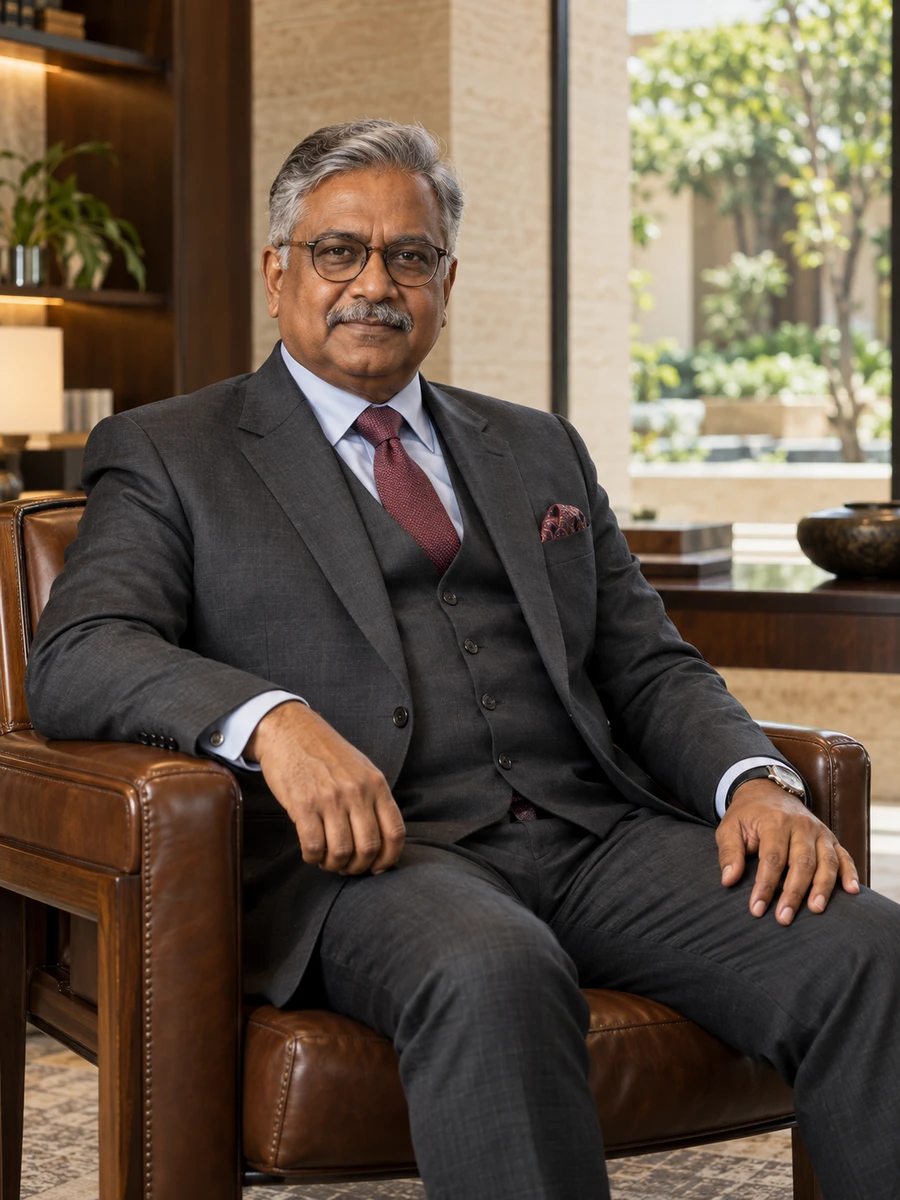
In my own words
A people policy is a commitment someone else may build a life around. I want its scope to survive the change from a factory conversation to a group presentation. I once approved an attendance award that treated authorised leave as evidence against reliability. Later, I learned to examine who could make a commitment on behalf of an employer, what an overseas assignment meant on return and whether permission to speak internally also covered a public campaign. Clarity must reach the person affected, not merely the approving committee.
Peter Mavrelan
Education
Formation
- Bachelor of Arts in Social WorkVaqtheni Social Studies College1986
Working languagesTamil · English · Hindi