Harunori MitsuseLeadership review 2026

Leadership review

Harunori Mitsuse

Chief Technology Officer · Japan

I make automation answer for the whole shift, including the work it leaves to people.

Open to
  • Board appointments
  • Advisory roles
  • Speaking invitations
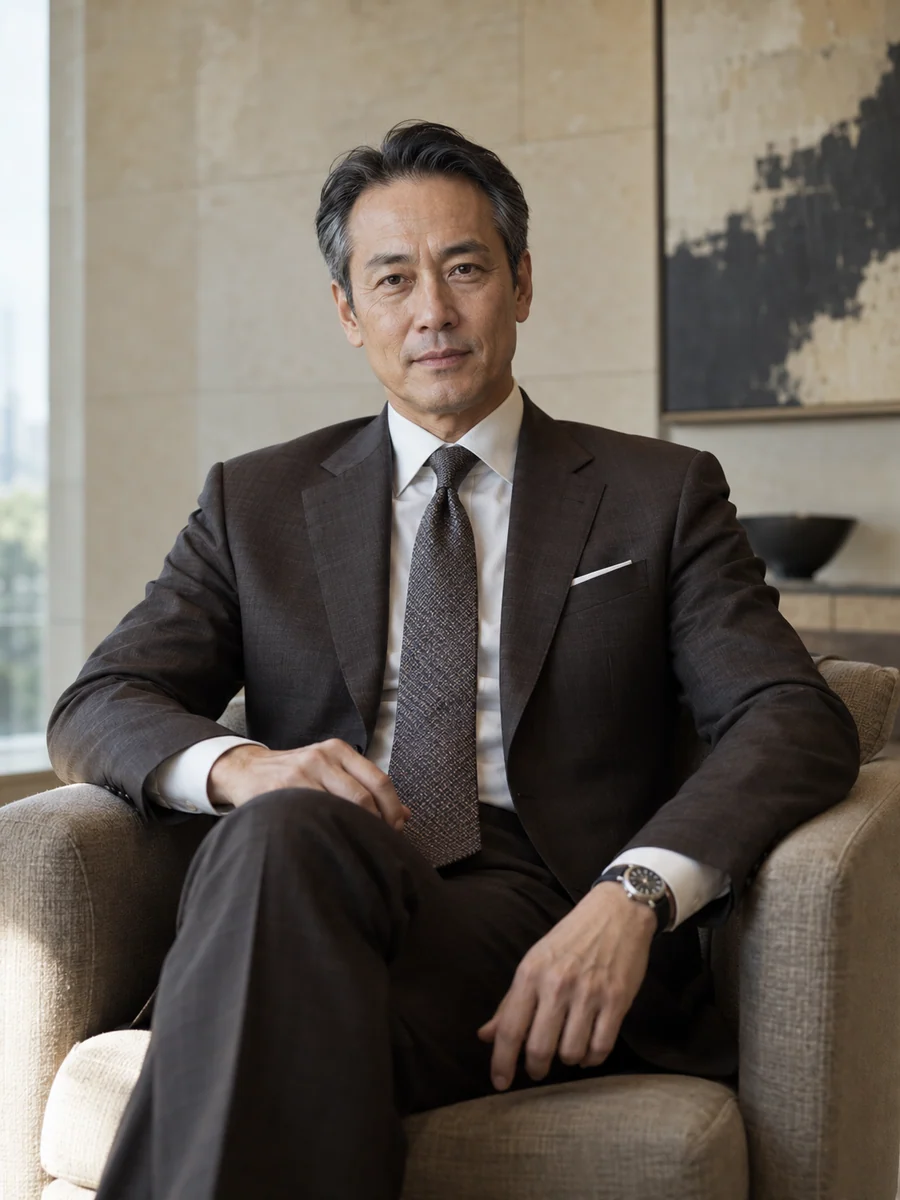
Portrait of Harunori Mitsuse

I make automation answer for the whole shift, including the work it leaves to people.

A warehouse can contain a fast machine and still struggle to finish its work. Irregular parcels need attention, vehicles return at inconvenient times and a stopped conveyor asks someone to diagnose a problem. I lead engineering across these ordinary conditions. My interest is the operating day a new system creates: what becomes easier, which tasks move elsewhere and whether the people responsible can keep the service working after the installation team leaves.

I started with an equipment supplier in April 1995 and joined Yoritsune Mobility in April 2003. Moving from supplying machines to living with them changed the questions I asked. I developed through depot engineering, automation and technical development before becoming CTO in April 2021. I now lead 120 employees through five direct reports, supported by twenty-four contractors. My 2026 engineering authority is JPY3.8 billion, divided between development and engineering support and capability; it is not the company's fleet operating budget.

Yoritsune's 2025 business comprised thirty-two warehouses and 1,120 delivery vehicles in Japan, with 8,200 employees and JPY186 billion revenue. That scale makes repeatable decisions valuable, but it does not make every depot interchangeable. I work with Mika Nerutani's operating teams to understand the work mix, staffing and physical constraints before extending an installation. A local trial needs an explicit reason to travel, not simply a successful demonstration and a procurement timetable.

A sorter assessed across the shift

A revised line averaged 1,270 accepted parcels per operating hour across six examined shifts, against 1,040 in the six earlier shifts. It remained below the 1,500 assumed in the investment case. I retained an irregular-parcel station and changed the proposed four-site release into a two-site learning stage, keeping the extra work and unmet assumption visible.

A charging plan shaped around returning vehicles

An eight-van winter trial completed 126 planned duties, but fourteen required a planned vehicle substitution because the assigned van's charging window was insufficient. I kept the substitution capacity in the next operating proposal. Completion of the customer duties did not mean every assigned electric van could perform its original duty under the examined schedule.

Maintenance learning treated as part of delivery

Thirty-six technicians attempted a defined fault-diagnosis exercise after a supplier course. Twenty completed it without prompting and sixteen needed support. I funded supervised practice and revised documentation before expanding the equipment footprint. Course attendance alone was not enough evidence that the receiving teams could handle the selected task independently.

Current focus

I am developing the maintenance capability behind our next automation stage. The initial exercise established where more practice was needed; the follow-up is still being evaluated. I also want project accounts to show the space and staffing that remain necessary around new equipment, so an apparently efficient component does not hide a more demanding operating day.

Conversations I welcome

I am open to a carefully scoped engineering advisory discussion or a compatible first board appointment in a physical-service business. Employer consent, commercial relationship review and an agreed calendar would come first. Speaking proposals should centre on a practical investment or adoption question rather than a general celebration of automation.

Highlights

The questions I kept asking after the machine was handed over

120

Engineering employees

Five direct reports, plus twenty-four contractors separately

JPY3.8bn

2026 engineering authority

Development JPY2.4bn; support and capability JPY1.4bn

31 years

Physical-systems experience

Equipment supply and logistics, April 1995 onwards

A letter from the chief technology officer

Dear reader,

Portrait of Harunori Mitsuse

I want a machine's useful contribution assessed beside the people, space and maintenance arrangements that allow it to keep contributing.

My first engineering responsibility was to help a machine work as specified. Over time, I became more interested in what happened around it. A technically sound installation could ask operators to perform awkward extra movements, require knowledge that the local team had not received or fit poorly into the rest of a shift. Those observations drew me from equipment supply into logistics, where the consequences continued long after the demonstration had ended.

Harunori Mitsuse

Chief Technology Officer

Strategic priorities

Where I focus my leadership.

Performance

What the priorities delivered.

Priority outcome 01

Keeping the irregular-parcel station beside a faster sorter

In November 2023, a warehouse automation proposal depended on achieving 1,500 accepted parcels per operating hour. The equipment could briefly run faster than that with suitable parcels, but the investment assumption concerned the entire operating period. Our existing line averaged 1,040 accepted parcels per hour across six examined shifts. Irregular items, recirculation and feeding interruptions made the surrounding process important to the result. I authorised a twelve-week, JPY84 million development and assessment programme. The team revised the diversion arrangement and examined six further shifts with broadly comparable work mix. The revised system averaged 1,270 accepted parcels per operating hour. This was an observational before-and-after comparison, not a controlled estimate of the machinery's isolated effect. It also remained below the original investment assumption, despite representing a useful improvement in the examined operation. The project sponsor wanted to remove the irregular-parcel station to release floor space and present a simpler layout. Mika Nerutani's team showed how staff used that station to keep unsuitable items from disrupting the main flow. I supported retaining it and changed the proposed four-site release into a two-site learning stage. Procurement lost some anticipated purchasing simplicity, and the project kept a staffing requirement that its early presentation had expected to reduce. We revised the next-stage account around the observed whole-shift rate and the work retained outside the sorter. The additional sites were not cancelled permanently; they needed a stronger operating basis before approval. We did not claim that the difference between the two six-shift averages represented an assured network improvement or a realised labour saving. The result supported further learning at a defined scale while preserving the cost of the remaining work. The important change was the unit of discussion. Instead of asking whether the machine could reach a short-run rate, we asked whether the warehouse could sustain the intended service with its actual parcel mix. I would involve irregular-item handlers before fixing the first layout. Their work was not a temporary embarrassment to be removed from the account; it was part of understanding where the proposed automation was useful and what the surrounding operation still needed.

Priority outcome 02

Giving six mobile robots a longer route around a busy crossing

A June 2024 investigation examined six mobile robots serving a warehouse replenishment area. The shortest mapped route crossed a pedestrian path used by staff moving between workstations. The operating team described frequent interruptions to its own movement, while the initial project account concentrated on robot travel distance. The equipment was not being judged against the full set of activities sharing the space. We funded a ten-week, JPY62 million programme to examine alternative layouts with operating staff and the relevant safety specialists. Within the performance assessment, four eight-hour observation days recorded the original arrangement and four examined a revised route around the busy crossing. Average completed replenishment missions per observation day moved from 286 to 274. The median observed pedestrian wait at the examined crossing moved from twenty-eight to nine seconds. These were selected observations under the two arrangements, not a randomised study or a measure of every movement in the warehouse. The automation sponsor preferred the higher robot mission count and wanted more time to optimise the shortest route. Mika's team argued that the additional waiting burden had been transferred to people whose work was absent from that score. I supported the longer route for the next operating stage, accepting the lower observed mission count. We kept the replenishment requirement in view rather than declare a lower machine output intrinsically desirable. The revised arrangement proceeded only through the site's separate safety and operating review. Neither the waiting-time comparison nor the absence of an incident during observation established safety. The technical specialists retained responsibility for assessing the actual installation. My decision concerned the investment and the performance account: a device's efficient route should not receive all the credit while another group carries an unmeasured cost. The case changed our layout workshops. We began by listing the journeys that shared the space, including those without a machine-generated mission record. I would now bring those users into the first concept discussion, before a shortest-route drawing becomes the assumed design. A longer path can be a sensible operating choice, but it needs to be justified by the work it enables and checked in the real workplace, not celebrated as a general rule for robot deployment.

Priority outcome 03

Counting vehicle substitutions inside an electric-van trial

In January 2025, we began a twelve-week winter assessment of eight electric delivery vans at one depot. The JPY48 million programme examined how the selected vehicle duties fitted the actual return schedule and available charging windows. It was a development trial within a larger delivery operation, with reserve vehicles available. The initial success measure was completion of the 126 planned duties, which risked concealing how that completion was achieved. All 126 duties were completed, but fourteen required a planned substitution because the van originally assigned to the duty had an insufficient charging window. Those fourteen duties were served by reserve vehicles. We did not describe them as customer delivery failures, and we did not count them as evidence that the original electric assignment worked unchanged. The record separated the customer outcome from the engineering feasibility of the assignment. The procurement sponsor wanted the complete service record to support an immediate move from eight to twenty-four vans. I recommended retaining the eight-van stage while revising duty allocation and the charging plan. Mika Nerutani agreed to keep reserve capacity explicit in the next operating proposal. This delayed the larger purchase and retained a support cost that would have disappeared from a simpler completion-only narrative. Electrical specialists reviewed the installation and supply assumptions, while fleet and depot teams examined return times, payload and the next departure. My responsibility was to connect those dependencies in the investment recommendation, not prescribe electrical settings or claim a universal vehicle range. The winter observations did not establish annual energy cost, emissions or performance at other depots. We kept those questions separate from the immediate decision about expansion. The trial improved the way we discussed operational readiness. A completed service can be a useful result and still depend on resources outside the proposed standard design. I would agree the treatment of substitutions before the next trial begins and ask the sponsor to show which of them would remain affordable in ordinary operation. That makes reserve capacity an accountable design choice rather than a hidden favour supplied by the wider fleet during a demonstration.

Priority outcome 04

Revising a fibre insert before approving a packaging change

An August 2025 packaging project proposed a fibre insert for a selected fragile product. Procurement wanted to reduce use of the existing plastic insert and simplify the material account. Our responsibility was to establish whether the proposed package protected its contents under the chosen assessment before changing the service. A material preference could define a development objective without settling the protection question. The JPY31 million programme used a defined laboratory sequence representing selected handling hazards. Forty packages with the proposed insert and forty with the current insert were assessed. Seven products in the proposed group and two in the current group showed the specified damage. These were observations in a selected test, not estimates of the customer damage rate. The protocol and product configuration remained attached to the result. The procurement sponsor preferred a quick launch followed by field monitoring. I supported revising the insert first, accepting a later release and additional development work. Packaging specialists changed the support around the vulnerable part of the product. A further forty packages with the revised insert produced one observed damaged product under the same defined sequence. That repeat justified a limited field evaluation; it did not establish that every route, product or handling condition would behave the same way. We retained the product-protection decision separately from any environmental assessment. The project did not make a comparative life-cycle claim or treat a material substitution as sufficient evidence of lower overall impact. The next-stage account included the revised insert, its cost and the need to observe performance in the intended service. The original launch message was deferred while the engineering and procurement teams agreed what the evidence actually supported. The enterprise gained a more useful relationship between packaging development and purchasing. The supplier was not simply asked to deliver a preferred material at a chosen price; the team had to show how it supported the particular product. I would define the damage criterion and field-evaluation plan at the first briefing, alongside the material objective. That would make a disappointing first result a foreseeable part of development rather than a late obstacle to an announcement already prepared.

Priority outcome 05

Buying supported maintenance practice, not just course attendance

Between February and August 2026, an automation programme prepared technicians at two depots to support a new equipment family. The supplier course had been completed, and the release plan treated attendance as evidence that the receiving organisation was ready. Supervisors were less certain that the written material connected the symptoms they would encounter with the investigation the course had demonstrated. We authorised JPY46 million for a six-month capability programme, including a defined practical assessment. Thirty-six technicians attempted the same selected fault-diagnosis exercise under supervised conditions. Twenty completed it without prompting; sixteen required support. That was evidence about one exercise after a particular learning experience. It was not a ranking of overall competence, a safety certification or a finding that sixteen people could not maintain the equipment. The project sponsor wanted to proceed because the supplier's course obligation had been met. I recommended adding supervised practice and revising the documentation before expanding the equipment footprint. We funded JPY12 million of additional work and kept the next depot introduction pending its capability review. The choice added cost and delayed a planned introduction, but it made the receiving team's actual preparation part of the delivery obligation. Technicians helped identify where the material assumed familiarity that had not been established. Supervisors and supplier specialists revised the explanation of the selected diagnostic task and created supported opportunities to practise. The follow-up assessment remains under evaluation in October 2026. I do not report a completion rate for it or imply that the first exercise's results have already been resolved. The case changed how I frame maintainability in procurement. Documentation, access to specialist help and the time needed to practise belong beside equipment performance in the handover discussion. I would agree the practical evidence earlier, while the supplier still has a clear development responsibility and the receiving team can influence the plan. Learning gaps should be found in conditions designed to support learning, rather than discovered during an interruption when a technician is expected to satisfy an assumption someone else made at project approval.

Stakeholder voices

What those I have served alongside say.

Harunori kept the reserve vehicles in the account of the winter trial. We could discuss a complete customer service record without pretending that every original electric-van assignment had worked as planned.
Mika NerutaniOperations chief, Yoritsune Mobility · fictional colleague
He treated the maintenance exercise as information about our preparation, not an opportunity to blame technicians. The recommendation identified the extra cost and the equipment introduction that would wait for a better capability review.
Takanori UzuharaChief executive, Yoritsune Mobility · fictional colleague

Outlook

Perspectives on what comes next.

An invitation

Contact

I am open to a carefully scoped engineering advisory discussion or a compatible first board appointment in a physical-service business. Employer consent, commercial relationship review and an agreed calendar would come first. Speaking proposals should centre on a practical investment or adoption question rather than a general celebration of automation.

Open to
  • Board appointments
  • Advisory roles
  • Speaking invitations

office@harunorimitsuse.example