Chief Data Officer Canada
A statistician who kept asking where each record came from
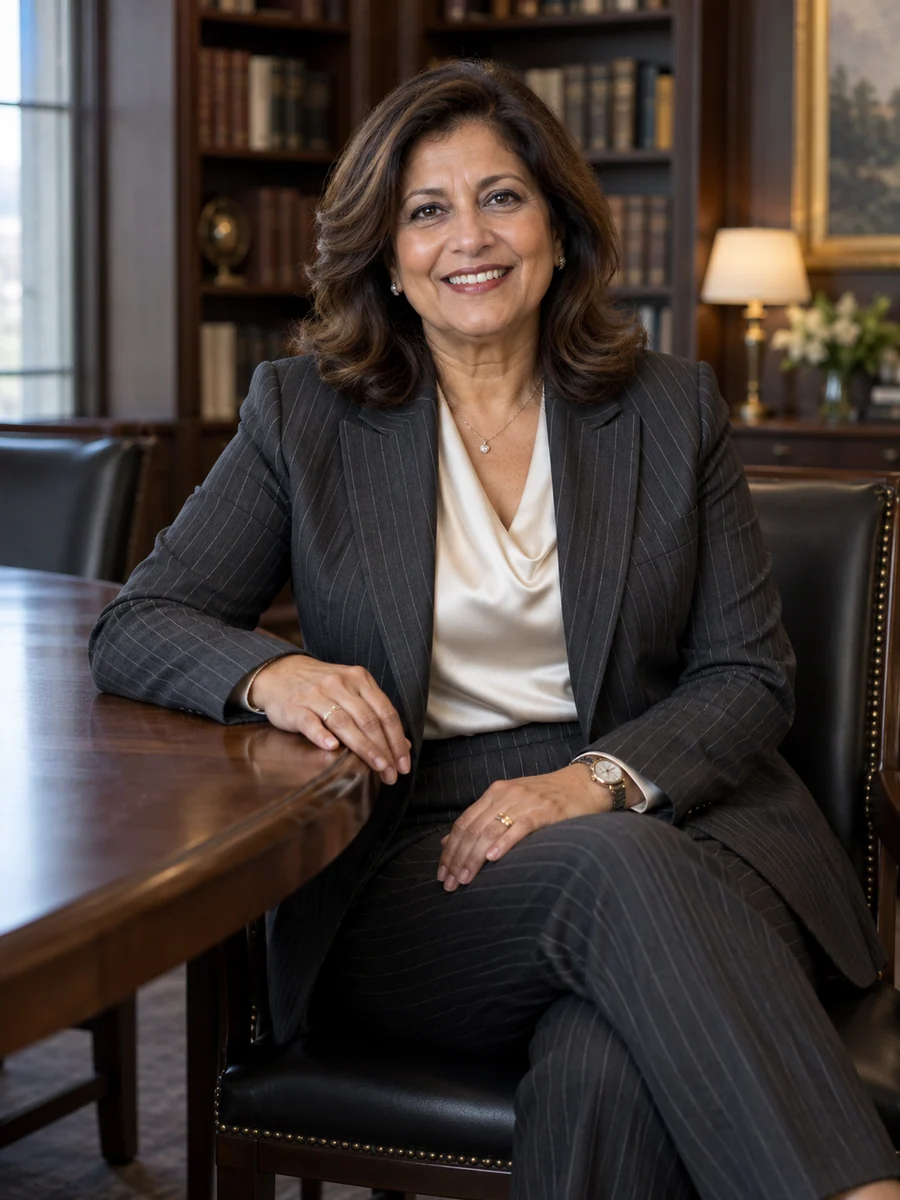
In July 1993 a hailstorm crossed my parents' farm south of Weyburn, Saskatchewan, and flattened most of a canola field in about twenty minutes. The adjuster from our hail insurer arrived nine days later with a storm map showing the hail passing a mile to our north. The map had been drawn from the reports of farmers who had claimed, and our quarter section simply lay between them. A second inspection settled the claim three weeks later. I was eighteen and more curious about how the map had been made than about the cheque. That curiosity, about where a record comes from and whether it describes what happened, has shaped most of my working life.
I studied statistics at Kestowan University in Saskatoon, completing an honours degree in 1997 and a master's degree in 1999 with a thesis on estimating rainfall between widely spaced gauges. I passed the first four actuarial examinations and then stopped. I enjoyed the mathematics, but I was more interested in whether the data going into a calculation was right than in refining the calculation itself.
In September 1999 I joined Coteau Hail Mutual in Regina, a farmer-owned insurer, as its first statistician. Its hail rates were set township by township, largely by a committee of directors and senior underwriters, and they had drifted away from experience. With the encouragement of our underwriting manager, Wilf Dunstable, I spent two winters building a storm-path dataset from eleven seasons of adjusters' reports, so that we could see where storms had tracked instead of averaging losses across whole townships. The revised rates rose in some places and fell in others, and we explained both at member meetings across the province. Farmers often knew their land better than our files did. I have tried ever since to give the people closest to a record a way to correct it.
In 2004 I moved to Toronto to join Mellick Reinsurance Brokers as a catastrophe analyst. For seven years I ran vendor earthquake and storm models for Canadian insurers buying reinsurance, and I learnt how much a model's output depends on the exposure file behind it. Client submissions placed homes at postal centroids, left construction fields blank and sometimes counted the same building twice. With my manager, Ingrid Solvang, I introduced a quality grade for every submission. Once reinsurers began asking for the grade, clients began improving their files. By 2008 I was managing nine analysts. I left in 2011 because grading other people's data had become less satisfying than fixing data where it was created.
From 2011 to 2016 I built pricing models for Fenwold General, a Calgary personal lines insurer owned by a British group. We moved auto and home rating from one-way tables to multivariate models, and I prepared the modelling exhibits for eleven auto rate filings in Alberta and Ontario. The most useful lesson came from a rate regulator's analyst, who asked me to explain in one sentence why a territory variable belonged in an auto rate. At first I could not. I have applied that test to every variable I have been asked to approve since. When Fenwold's parent sold its Canadian business in 2015, I returned to Toronto.
I joined Haverlock Assurance in February 2016 to build a claims analytics team. In 2017 I built a fraud score for Ontario auto accident benefits claims that I later retired, because it scored individual claimants, copied the habits of past investigators and delayed honest people while missing organised rings. Replacing it with network analysis in 2019 and 2020 taught me to judge a model by what it does to everyone it touches, not only by what it catches.
In September 2021 the board approved an enterprise data function and I became Haverlock's first chief data officer. Since then the work has had four strands: lineage for the data behind our regulatory returns, which uncovered a mapping error we resubmitted in 2022; a rating variable register that has removed four variables, one of which worked statistically; the rebuilding of exposure data for 520,000 homes in wildfire-exposed areas before we licensed a wildfire model; and the extension of Quebec's automated-decision notice to customers in every province where we write.
I lead by asking for the denominator and the limits. When someone shows me a model's accuracy, I ask what share of records it could not score and what it has never been tested against. My teams write limits notes, and I attach them to board papers instead of summarising them away. I put disagreements in writing and send the dissenting paper with my own. Colleagues would say that I am slow to call a programme finished, that I will spend money on data nobody outside the building will see, and that I would rather present a worse number I can explain than a better one I cannot.
Since 2020 I have been a director of Harrowby Open Data Collaborative, a Toronto non-profit that helps municipalities publish data responsibly, and I chair its privacy and data ethics committee. I live in Toronto and work in English and, with our Quebec colleagues, in French.
Open to Board appointments · Advisory roles · Speaking invitations
Languages / English · French (professional working proficiency)
A leadership conviction
Every number an insurer acts on was made by someone, from a record that was either right or wrong when it was created. I try to find out which before the number sets a price, refers a claim to investigators or reaches a supervisor. Where I cannot find out, I write the limit down beside the number. I would rather a board read a limit in my paper than discover it in a loss.
- Gross written premium
- C$4.6bn
- Haverlock Assurance Inc., 2025
- Data colleagues I lead
- 260
- Engineering, governance, analytics, data science and geospatial exposure, 2026
- Homes re-located to the building
- 520,000
- Wildfire-exposed areas, 2023–2025
- Fraud referrals ending in a finding
- 47%
- After the move to network analysis; 19% before
Board & advisory record
Current appointments
Harrowby Open Data Collaborative
Director; chair of the privacy and data ethics committee
Privacy and data ethics (chair from 2022); finance and audit
June 2020–present
Education & credentials
- Bachelor of Science (Honours) in statistics
- Kestowan University · 1997
- Master of Science in statistics
- Kestowan University · 1999
Perspectives from colleagues
Daphne brought the risk committee a wildfire figure larger than the one we had been shown before, with a one-page list of what the model could not tell us. It was the first catastrophe paper I have read that made me more confident by admitting more.
We disagreed for most of a summer about how much predictive power to give up for explanations a customer could read. She was right that the notices would expose data errors we had stopped seeing, and I was right that they would cost us some lift. We were both glad we had argued it on paper.
When Daphne told me she wanted to send my unit fewer files, I assumed she was cutting my budget. She was cutting my wasted afternoons. My investigators spent the next two years on organised rings instead of on people who had simply had an accident.