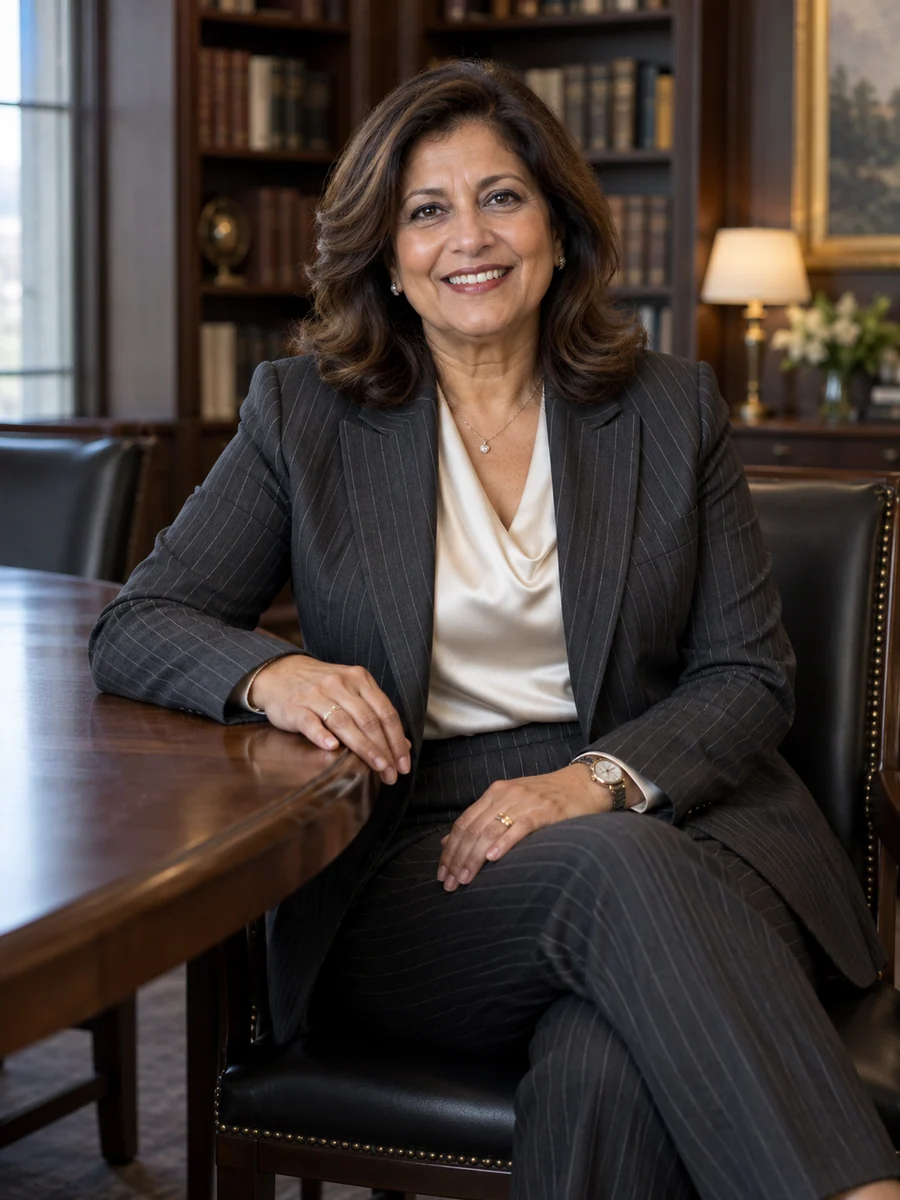
Daphne DouglasChief Data Officer · Essays & perspective
Gross written premium
C$4.6bn
Haverlock Assurance Inc., 2025
Data colleagues I lead
260
Engineering, governance, analytics, data science and geospatial exposure, 2026
Homes re-located to the building
520,000
Wildfire-exposed areas, 2023–2025
Fraud referrals ending in a finding
47%
After the move to network analysis; 19% before

I hold that an insurer should not price a home, refer a claim or report a capital figure that it cannot trace to a verified record and explain to the person or supervisor affected.

I am chief data officer of Haverlock Assurance Inc., a Toronto-listed property and casualty insurer writing personal auto, home and small commercial cover in Ontario, Alberta, Quebec, Nova Scotia and New Brunswick. We wrote C$4.6 billion of gross premium in 2025 on about 2.3 million policies, sold through brokers and our own direct channel. I lead 260 colleagues in data engineering, governance, analytics, data science and geospatial exposure. I report to our chief executive, Gareth Penhallow, present to the board's risk committee every quarter and report to its audit committee twice a year.

I reached this role through the data rather than the technology. I began in 1999 as the first statistician at a farmer-owned hail mutual in Regina, spent seven years running catastrophe models for a Toronto reinsurance broker, and built personal lines pricing models in Calgary before joining Haverlock in 2016 to lead claims analytics. Each move took me closer to the point where an insurance record is first created, and each confirmed that most model failures begin there rather than in the mathematics.

Four questions now occupy most of my week. Do we know where the homes we insure actually stand? Could we tell a customer which data set their price, and correct it if it were wrong? Are our fraud tools finding organised rings, or only slowing down honest claimants? And could we show our supervisor how every material number in our capital return was produced? I have changed my mind on each of these at least once, and the cases on this site record what the changes cost.

Homes placed on the roof, not the postal code

Between 2023 and 2025 we re-located 520,000 homes in wildfire-exposed areas to the building itself. When the wildfire model was run on the corrected file, loadings fell for about 61,000 homes and rose for about 14,300.

A rating variable we chose not to use

In 2022 I declined to approve a purchased household lifestyle score for auto pricing that we could neither explain nor let customers correct. We gave up an estimated C$14 million a year and recovered about a third of it from data we could defend.

Fewer fraud referrals, more findings

Replacing a claimant-level fraud score with network analysis cut referrals to our special investigations unit from 11,800 to 4,300 a year, while the share ending in a finding rose from 19% to 47%.

Owners for the data in the capital return

After resubmitting two quarterly returns in 2022, we gave 184 critical data elements an owner, documented lineage and automated reconciliation. Quarter-end reconciliation fell from seventeen working days to seven.

Current focus

In 2026 I am bringing our machine-learning models, including the document-reading tool our small commercial underwriters use, into the inventory, validation and monitoring cycle that OSFI's revised model risk guideline expects. I am also extending our exposure data standard from wildfire to surface water and severe convective storm, where our location and building records are now weaker than our wildfire records.

Conversations I welcome

I am not seeking another executive role. I would consider one independent board seat outside insurance, most likely on a risk or technology committee, subject to my chief executive's consent and a written conflict review. I accept a small number of advisory conversations and speaking invitations each year on exposure data, explainable pricing and the governance of regulatory reporting data.

Beyond the page

The record behind the perspective.

In the boardroom

  • Harrowby Open Data CollaborativeDirector; chair of the privacy and data ethics committee · June 2020–present

Formation

  • Bachelor of Science (Honours) in statisticsKestowan University · 1997
  • Master of Science in statisticsKestowan University · 1999
Daphne brought the risk committee a wildfire figure larger than the one we had been shown before, with a one-page list of what the model could not tell us. It was the first catastrophe paper I have read that made me more confident by admitting more.
Eleanor ThornburyChair, risk committee, Haverlock Assurance Inc.
The full record ↗

Contact

I am not seeking another executive role. I would consider one independent board seat outside insurance, most likely on a risk or technology committee, subject to my chief executive's consent and a written conflict review. I accept a small number of advisory conversations and speaking invitations each year on exposure data, explainable pricing and the governance of regulatory reporting data.

  • Board appointments
  • Advisory roles
  • Speaking invitations