Chief Marketing Officer Japan
What the counter taught me about a telecom brand
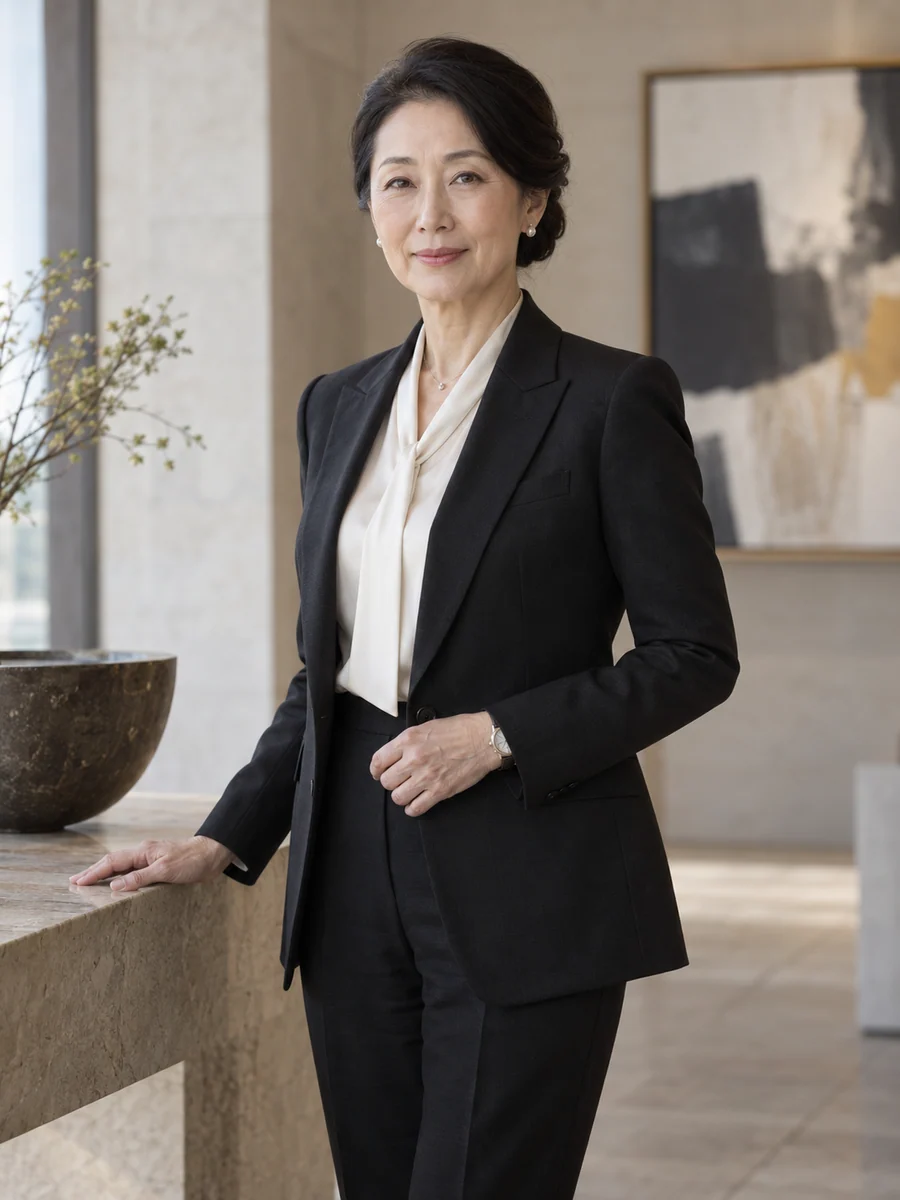
My first job was behind a mobile-phone counter in an Osaka electronics store in April 1997. Handsets were being sold for a token price, funded by operator incentives, and customers left with contracts they understood only partly. I was good at the sale and less comfortable with what happened a month later, when the same customers came back holding a bill. Several were older than my parents. They did not want a better handset; they wanted to know why the figure on the bill was not the figure they had heard at the counter. I learnt then that a telecommunications price is a sentence someone speaks, and that the person speaking it is often not the company that wrote it.
I had joined Tsurumaki Denki, a consumer-electronics retailer with ninety stores across western Japan, after studying economics at Hoshinami University. By 1999 I was supervising nine counter staff. In April 2002 I became the buyer for mobile phones and communications, responsible for about ¥21 billion of annual category sales. Buying taught me the economics behind the counter: operator incentives, volume tiers, the cost of unsold stock when a new model arrived, and the way an incentive scheme could make one operator's handsets the easiest thing for a tired employee to recommend. I negotiated with operators who were, in effect, paying my staff to steer customers. I did not think that was wrong in itself. I did think it should be visible to the people making the recommendation, so I began showing store staff which operator paid what for each handset.
In 2008 I moved to Isaribi Tsushin, a mobile retail agency that ran operator-branded shops for two national operators, including Hinoura. I led operations for 118 shops and about 1,600 staff, and from 2011 sat on the company's board as an executive director. Shop operations is unglamorous work: rosters, training, waiting times. It is also where an operator's brand is decided for most of its customers. I completed an evening MBA at Tamayura Graduate School of Business during this period, mostly to understand the finance that sat above the shop floor. My dissertation compared staff turnover with complaint rates across our shops; the relationship was stronger than any advertising measure I had seen.
Hinoura Communications recruited me in July 2013 to lead shop-network strategy. I managed the relationship with fourteen agency companies operating 640 Hinoura shops and about ¥92 billion a year of commissions and shop support. Agencies trusted that I knew their costs; some colleagues suspected I would be too sympathetic to them. I answered that suspicion with evidence: shop-level complaints, repeat visits, explanation quality and the cost of a lost customer, set against the commission paid to acquire them.
In April 2017 I became General Manager of consumer brand and pricing. We had thirty-one active tariff variants for new customers. Shop staff could not explain them, and nor, in honesty, could I. We reduced them to nine. In late 2020, after the government made clear that it expected lower mobile charges, I made the argument that defined my next five years. The board was considering a separate low-price brand to contain the migration of existing customers. I argued for an online-only plan inside the Hinoura brand, with a published list of what it did not include. A separate brand would have protected revenue for a while, but it would also have let us avoid saying plainly what a lower price removed. The board accepted the argument after two long discussions, and I state its revenue cost whenever I describe it.
I became Chief Marketing Officer and an executive officer in April 2021. The remit joined brand, pricing, insight, marketing science and communications under one budget, now ¥41 billion a year. Three later decisions say most about how I work. We stopped paying shop partners to attach optional services at sign-up. We tested our television budget by switching it off in three prefectures. We launched an advertising-data product only with explicit opt-in consent, which reduced its forecast revenue by more than two-thirds. Each decision had a capable opponent inside the company, and in each case the opponent's argument changed the design. I try to make that visible in board papers, because a director should know what was given up and who warned us.
People who work with me would say I am slow to approve and quick to ask for the counter script. I read commission schedules with the attention other marketers give to copy, because a shop employee's pay explains more of what a customer hears than any campaign. I prefer a measured loss to an unmeasured success. If our shop staff would be embarrassed to repeat a line to an elderly customer, I do not publish it.
I also have limits. I am not a network engineer, and when spectrum or capacity questions reach the board I rely on colleagues who are. I came late to quantitative marketing and depend on our marketing science team for experimental design; my contribution is to insist that the experiment is run and that we agree in advance what result would change our budget. English is a working language for me rather than a native one, which has made me a careful writer of short sentences.
Outside Hinoura, I serve as an unpaid director of Komorebi Digital Support Network, an association that trains volunteers to help older people use smartphones. It keeps me in rooms where nobody cares about our brand architecture and everybody cares whether a grandson's photographs arrive. With my employer's knowledge, I am now preparing for an independent outside director role at a consumer-services company beyond our industry, where I believe the habits learnt at a shop counter would be useful to a board.
Open to Board appointments · Speaking invitations
Languages / Japanese · English
A leadership conviction
I would rather a customer chose a cheaper plan knowing exactly what help it excludes than discover the exclusion at a shop counter. Marketing in telecommunications is not only advertising; it is also the tariff table, the commission schedule and the consent screen. I try to take responsibility for all three, and to say plainly what each one costs the company and the customer.
- Consumer mobile lines
- 8.9m
- Hinoura Communications, March 2026
- Annual consumer marketing budget
- ¥41bn
- Brand, pricing, insight, measurement and media
- In mobile retail and marketing
- 29 years
- From a shop counter to chief marketing officer
Board & advisory record
Current appointments
Komorebi Digital Support Network
Director, non-executive and unpaid
Volunteer safeguarding and partner policy
June 2022–present
Earlier appointments
Isaribi Tsushin
Executive director
Responsible for shop operations
April 2011–June 2013
Education & credentials
- Bachelor of Economics
- Hoshinami University · 1997
- Master of Business Administration, evening programme
- Tamayura Graduate School of Business · 2012
Perspectives from colleagues
Noriko brought the finance director's case against her own proposal into the board paper, in his words. That was when I understood how she would work as an officer: she cared more about the decision being right than about it being hers.
Her commission change cost my company money, and I told her so. She agreed that our transition formula had been unfair to smaller partners and changed how the next scheme was designed. I still disagree with parts of it, but she has never surprised me.
Before our television test, Noriko asked me what result would make her cut her own budget, and then had finance sign the answer. Most executives ask analysts to confirm a decision. She asked us to make one possible.