Chief Marketing Officer India
Following the promise beyond the catalogue description
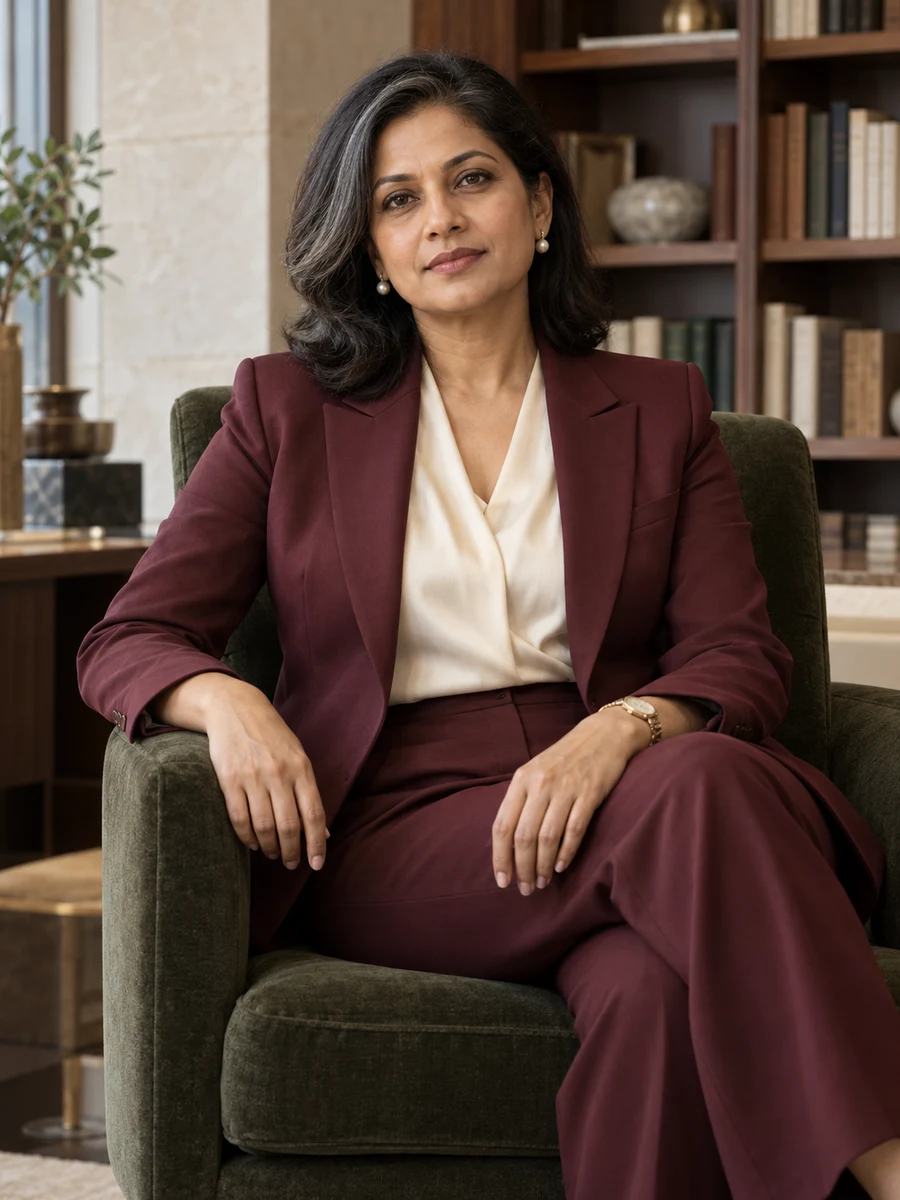
The word independent appeared in a brochure I had approved for an eight-guide commercial programme. Maryam Vezqeli asked me to read it beside the commissioning terms. The paying organisations would shape the questions and approve their own commissioned material. That did not make the guides inherently useless, but it made our description of their editorial relationship wrong. I had relied on the publisher's reputation to make the proposition attractive without explaining who controlled the work. The correction cost prospective bookings and made me more careful about the authority a commercial sentence borrows.
I grew up in Ujjain and completed commerce at the fictional Tazqemi College of Commerce in June 1997. In July I joined Larzethi Book Services as a catalogue assistant. The business had forty-two employees and ₹6.8 crore revenue for FY ending March 1998. I belonged to a five-person catalogue group without reports or spending authority. Institutional buyers often asked questions the short description had not answered: which edition was supplied, whether a supplement was included and what they could expect to receive later. I learned that a useful description needed to survive comparison with the actual item, not simply attract an enquiry.
In April 2003 I became institutional account manager. Larzethi employed ninety people and recorded ₹19 crore revenue for FY ending March 2004. Eight colleagues worked through two leads within ₹58 lakh annual function expense. The role brought me closer to librarians, purchasing staff and professional users who participated in the same decision for different reasons. I learned to distinguish a catalogue's apparent completeness from a buyer's ability to understand the proposed supply. I also saw how easily a renewal conversation could assume that last year's explanation was still accurate after the offering had changed.
I joined Qemzori in September 2009 as subscription marketing manager. The Lucknow publisher had sixty-one direct employees and ₹16 crore revenue for FY ending March 2010. Seven marketing colleagues worked through two leads within ₹1.2 crore annual expense. The move gave me a continuing relationship with the publication rather than a succession of catalogue listings. Packaging professionals used reporting and briefings to follow their field; advertisers and commissioners wanted to reach that audience. Those interests could coexist, but the reader needed to understand when a commercial product differed from editorial work. Marketing had a part in maintaining that distinction before a contract was sold.
Promotion to head of audience propositions followed in February 2016. Qemzori then had 101 employees and ₹34 crore revenue for FY ending March 2017. Twelve colleagues worked through three leads within ₹2.8 crore annual expense. I became more involved in the composition of institutional subscriptions and the way we described readership. An allocated account was an opportunity to use the service, not evidence that somebody had read it. An archive was a set of available and permitted material, not simply the years a publication had existed. Those distinctions became harder to preserve when a larger number made a proposition easier to sell.
I became CMO in July 2021. Today eighteen marketing employees report through three leads, with ₹4.6 crore FY 2026–27 expense. The ₹2.3 crore campaign authority is included in that total. Qemzori has 138 direct employees and ₹52 crore FY 26 revenue. Founders own 47%, an employee vehicle 31% and a long-term investor 22%; I hold no personal or vehicle interest. I report to Arvind Zemqali. Maryam remains responsible for editorial judgement, with rights, contract and financial decisions held by their appropriate owners. My marketing authority does not include an entitlement to influence a conclusion because the commercial account would benefit.
The guide programme ended with five commissioners accepting the clearer description and three withdrawing. The ₹36 lakh removed from the prospective pipeline was anticipated booking value, not recognised revenue. We retained ₹18 lakh of revision expense. An archive review examined 180 back issues: 142 were cleared and digitally available, 26 required rights clarification and 12 were not digitised. The ₹27 lakh programme supported a narrower offering rather than a claim of complete access that the product could not yet meet.
Audience work required another uncomfortable correction. The institutional offer covered 240 employer licences and 9,600 allocated accounts. 3,710 accounts signed in during the sixty-day examination; 2,120 met our defined reading-event measure in its final thirty days. The ₹22 lakh review preserved those separate meanings instead of calling every eligible account a reader or every account a different person. More recently, a format discussion retained a quarterly print digest and downloadable option for six months at ₹21 lakh after selected reader conversations challenged a digital-only assumption. The projected ₹54 lakh annual saving was not claimed as achieved.
I speak Hindi, Urdu and English. I have presented marketing questions to directors but have no statutory appointment. My interest in a first external contribution concerns the commercial claims through which a specialist information business earns trust and income. I have not registered in the IICA databank, and neither an assessment result nor an exemption is asserted. Twenty-three days is provisional, subject to consent and a serious calendar review. I would bring experience of correcting my own language while learning the broader financial and professional responsibilities of the enterprise considering me.
Open to Board appointments · Advisory roles
Languages / Hindi · Urdu · English
A leadership conviction
The confidence a reader places in a publication should not be borrowed by a commercial proposition that withholds its own terms.
Education & credentials
- Bachelor of Commerce
- Tazqemi College of Commerce · 1997
Perspectives from colleagues
As Rehana's CEO, I saw her put the three withdrawn guide prospects and the revision expense into the same account as the clearer proposition. She did not present anticipated bookings as revenue or ask the editor to carry responsibility for a marketing sentence she had approved.
I work with Rehana as the editor. When the commissioning terms contradicted the brochure's independence claim, she revised the commercial description and left editorial judgement with us. The smaller programme was explained honestly rather than attributed to an editorial refusal to help sales.