Chief Operating Officer Singapore / Southeast Asia
I learnt operations from both sides of the supplier audit
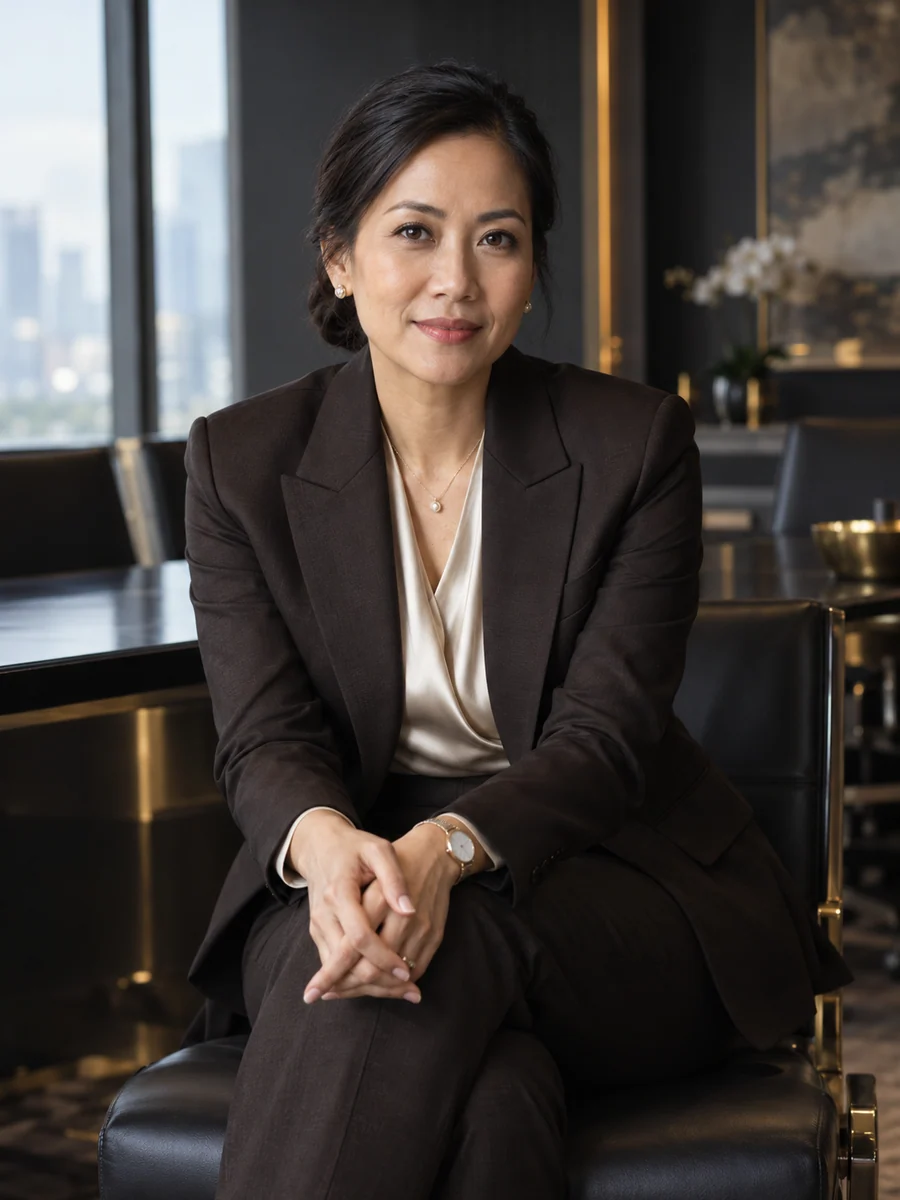
My first plant relocation was not mine to decide. In 2001 Ferrovale Storage Components, the disk-drive component maker I had joined after university, moved its suspension-assembly lines from Singapore to Thailand's eastern seaboard, and I went with them for seven months. The machines arrived on schedule. The procedures were translated and signed. For eleven weeks the new lines could not hold their yields, because six operators in Singapore had been adjusting a fixture by feel and nobody had thought of what they knew as something that needed moving. I have been asking what a line knows, and who knows it, ever since.
I grew up in Toa Payoh, where my father repaired marine engines and my mother kept the books for a hardware shop. I read mechanical engineering at Linvale University, graduating in 1997, and joined Ferrovale that July as a process engineer. The Asian financial crisis arrived in my first months. The disk-drive business taught me to count defects in parts per million and to treat a fraction of a per cent of yield as somebody's wages. When the Singapore lines closed, I left in April 2002.
I then spent almost seven years in Varunda Systems' Singapore factory, which assembled process chambers and wafer-handling modules for one of the larger American makers of deposition and etch equipment. I started as a manufacturing engineer and, after a part-time master's degree in industrial and systems engineering at Linvale in 2004, became manufacturing engineering manager in 2006. My last project there moved frames and weldments out of our own building to contract manufacturers in Singapore and Malaysia. One of them was Kelvorne.
From 2009 to early 2013 I ran supplier quality and development for Varunda across Asia Pacific, with 31 engineers and 64 suppliers. The downturn of 2009 came first, and I spent much of that year deciding, with our purchasing colleagues, which suppliers we could help survive. Then came the audits. I learnt how much a careful audit reveals and how much it cannot. At one supplier that had passed every visit for three years, the night shift's weld-parameter records turned out to have been completed by the day supervisor the next morning. The parts were good; the records were fiction. An audit, I realised, tours the day shift.
In March 2013 Kelvorne's then chief executive asked me to run its Penang plant. I had spent years telling suppliers what to fix, and I wanted to be accountable for fixing it. The plant had 1,400 people and was growing quickly. In October 2015 our customer's integration factory found leaking chamber lids we had shipped, and I stopped lid shipments for nine days rather than ship under a deviation. That decision cost us RM 7.2 million and, the following year, helped win the chamber work on the customer's next platform. By 2018 the plant employed 2,300 people across two buildings at Batu Kawan.
As senior vice president for Malaysia and Vietnam from July 2018, I added our Johor plant and the greenfield site in Bac Ninh. I delayed Bac Ninh's opening by five months to train its Vietnamese supervisors in Penang, a choice the pandemic then made look wiser than it was. In April 2021 I became the group's chief operating officer.
I now lead the five plants, supply chain, quality, environment, health and safety, and manufacturing engineering, with nine direct reports. I present to Kelvorne's board each quarter and report to its Audit and Risk Committee and Sustainability Committee on operational risk, customer-audit findings and labour practice. Once a month I visit a night shift, with notice to nobody but the plant director, because the night shift is where I learn whether what we have told a customer is true. I ask my plant directors for two habits: to measure every shift separately, and to bring me a bad number while it is still small.
Inside the industry I am probably known for three positions that have cost Kelvorne money in the short run: that a recruitment fee paid by a worker is the factory's debt, that a relocated line is moved only when its own night shift can run it, and that customers would learn more from our records than from their visits. I hold them because I watched the alternatives from the customer's side of the table. I am now preparing for one independent directorship outside our industry, on a board that faces the same questions about plants, people and borders.
Open to Board appointments · Speaking invitations
Languages / English · Mandarin · Malay
A leadership conviction
I judge a plant by its quietest shift and its newest worker, because that is where a customer's part is really made.
- Group revenue, 2025
- S$1.06 bn
- 71 per cent from semiconductor-equipment makers
- Colleagues in five plants
- 6,700
- Penang, Johor, Bac Ninh, Singapore and Suzhou
- Recruitment fees repaid to workers
- RM 15.8 m
- To 1,412 migrant workers by March 2022
Board & advisory record
Current appointments
Kelvorne Precision (Malaysia) Sdn. Bhd.
Director of the wholly owned Malaysian subsidiary, in an executive capacity
2018–present
Seberang Skills Centre
Governor of a not-for-profit technician-training centre
Finance Committee
2019–present
Education & credentials
- Bachelor of Engineering (Mechanical)
- Linvale University · 1997
- Master of Science in Industrial and Systems Engineering, part-time
- Linvale University · 2004
Perspectives from colleagues
Suri telephoned me about the recruitment fees a week after the audit, before she had a plan or a number. Most executives wait until they can present a solution. She brought the committee the problem early, told us plainly what she did not yet know, and then let us change her method.
I was one of forty-six people Suri sent to Penang for sixteen weeks before our plant had a single customer. She told us we would run it ourselves, and when the borders closed we did. When she visits Bac Ninh now, her first question is still about the night shift.
Suri worked for me as an auditor and later supplied us as a plant manager, which is an unusual way to test someone. When her lids leaked in 2015 she stopped shipping before we asked. I only wish she had rung me on the first day rather than leaving it to our buyer, and she has said as much herself.