Suri KohChief Operating Officer · Essays & perspective

Chief Operating Officer Singapore / Southeast Asia

Suri Koh

A contract manufacturer is trusted for what its plants do after the customer's auditor has gone home.

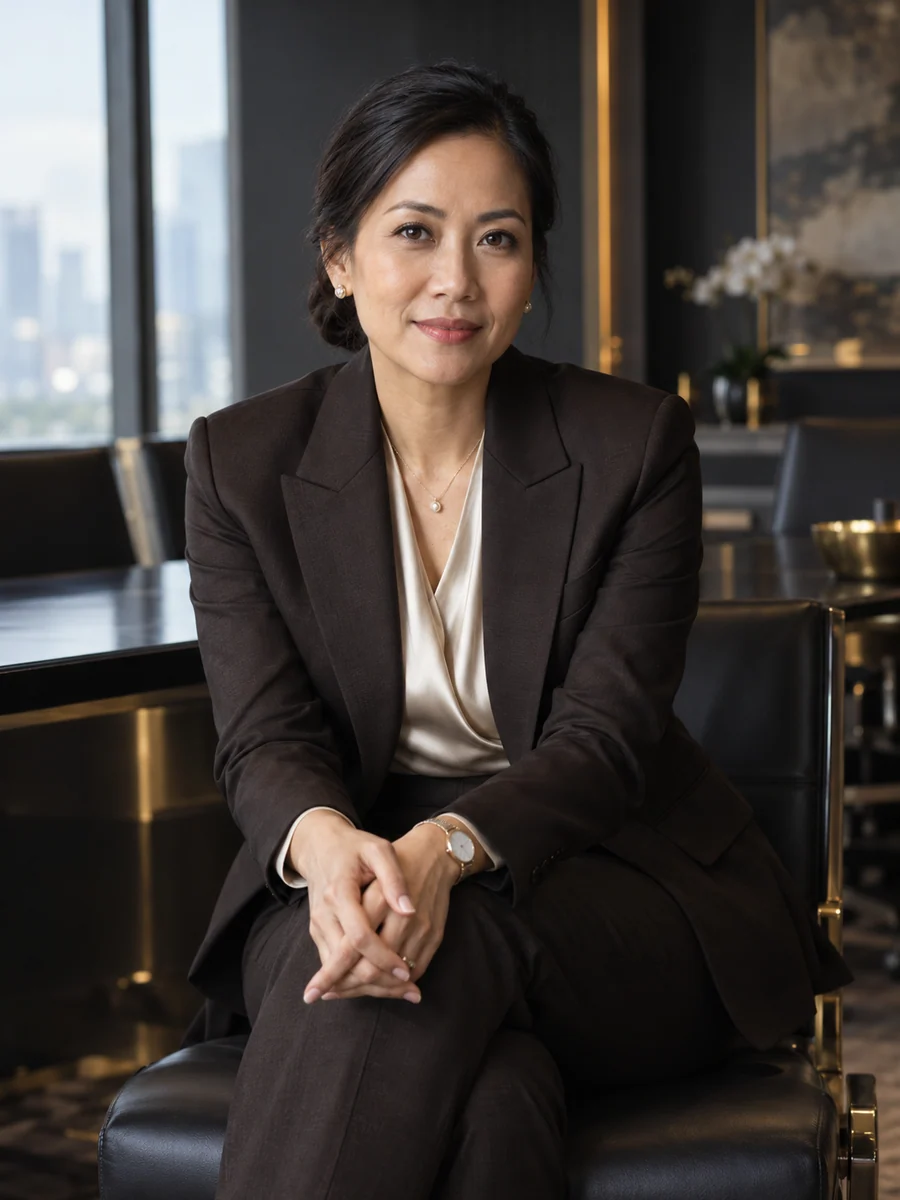
Portrait of Suri Koh

Leadership paper / 01

China+1 relocation5 min read

Factory discipline after the auditor leaves

Abstract
Customers sign off a transferred production line when its first articles pass inspection. In my experience that is the midpoint of a move, and the second half, in which the receiving plant learns to run the line without its visitors, decides whether the move was worth making.
Read the full paper

Experience in figures

Group revenue, 2025
S$1.06 bn
71 per cent from semiconductor-equipment makers
Colleagues in five plants
6,700
Penang, Johor, Bac Ninh, Singapore and Suzhou
Recruitment fees repaid to workers
RM 15.8 m
To 1,412 migrant workers by March 2022

Mandate

Fields of practice.

  1. 01

    Line transfers and ramp-ups

  2. 02

    Migrant-worker recruitment and welfare

  3. 03

    Special-process yield and leak integrity

  4. 04

    Customer audits and open records

  5. 05

    Cleanroom energy and automation

The journal

Further reading.

  1. 02

    Migrant labour5 min read

    A recruitment fee is the factory's debt, not the worker's

    Manufacturers in Malaysia that export to multinational customers now prohibit recruitment fees in their policies, yet many of their workers still arrive owing agents at home. I argue that the fee is an operating cost the factory has merely deferred, and that operations, not compliance, should own the recruitment chain that creates it.

  2. 03

    Customer audits5 min read

    Customers should audit our records, not our tour route

    A precision contract manufacturer may host forty customer audits a year, each following a route the plant has prepared. Having been an auditor before I ran plants, I argue that fewer visits and continuous access to the underlying records would tell customers more and cost everyone less.

Open to Board appointments · Speaking invitations

Start a conversation

A contract manufacturer is trusted for what its plants do after the customer's auditor has gone home.

I am the chief operating officer of Kelvorne Precision Limited, a fictional Singapore-headquartered contract manufacturer listed on the SGX Mainboard. We build vacuum parts, ultra-high-purity gas-line weldments, frames and sub-assemblies to our customers' drawings, and about 71 per cent of our S$1.06 billion of revenue in 2025 came from makers of semiconductor equipment. I am responsible for 6,700 colleagues in five plants: Batu Kawan in Penang, Senai in Johor, Bac Ninh in northern Vietnam, our Woodlands cleanroom in Singapore and a smaller plant in Suzhou.

The customer owns the drawing. What we own is whether the part is right on a Tuesday night in Johor, whether the person welding it paid an agent for the job, and whether a line moved from China still runs once our trainers have flown home. I learnt this from both sides. I spent almost eleven years at Varunda Systems, a wafer-equipment maker that buys from companies like ours, the last four auditing its Asian suppliers, before I crossed over to run Kelvorne's Penang plant in 2013.

The decisions I am asked about most were the expensive ones. In 2021 and 2022 we repaid RM 15.8 million in recruitment fees that our migrant workers had paid to agents at home, money Kelvorne never received. In 2023 and 2024 we sent 138 weldment part numbers from Suzhou to Penang rather than to the cheaper Vietnamese site our chief executive preferred. Each time the cheaper course was defensible. I have tried to record, case by case, where my argument proved right and where I was simply lucky.

Recruitment fees repaid, not only prohibited

Between October 2021 and March 2022 we repaid RM 15.8 million, about S$5.1 million, to 1,412 migrant workers in Penang and Johor who had paid agents in their home countries. Voluntary attrition among those workers fell from 19 per cent to 11 per cent within a year.

A Suzhou transfer judged by its night shift

We moved 212 part numbers out of Suzhou in 2023 and 2024. The move took fourteen months and S$19.4 million, both over plan, but weldment first-pass yield in Penang reached 98.4 per cent on both shifts, and the plant won next-generation gas-line work worth about S$60 million a year.

A Vietnamese plant led by Vietnamese supervisors

Bac Ninh opened in August 2020, five months later than planned, with four expatriates instead of thirty, after 46 local supervisors and technicians trained in Penang. It reached planned output within seven months and earned S$150 million of revenue in 2025.

Quality cost nearly halved

Group cost of poor quality, counting scrap, rework, returns and customer charges, fell from 2.9 per cent of revenue in 2021 to 1.6 per cent in 2025.

Current focus

I am preparing the board's decision on a S$85 million third building at Batu Kawan for next-generation gas systems, including whether its welders should be recruited and certified before the building is finished rather than after. I am also extending our shared audit to a fourth customer.

Conversations I welcome

I am not seeking to leave Kelvorne. I would consider one independent non-executive directorship at an industrial company listed in Singapore or Malaysia, outside the semiconductor supply chain, joining its risk and sustainability committees. I can give about twenty-five days a year, with my board's consent and after a conflicts review, and I accept a few invitations to speak to manufacturing and director audiences.
Beyond the page

The record behind the perspective.

In the boardroom

  • Kelvorne Precision (Malaysia) Sdn. Bhd.Director of the wholly owned Malaysian subsidiary, in an executive capacity · 2018–present
  • Seberang Skills CentreGovernor of a not-for-profit technician-training centre · 2019–present

Formation

  • Bachelor of Engineering (Mechanical)Linvale University · 1997
  • Master of Science in Industrial and Systems Engineering, part-timeLinvale University · 2004
Suri telephoned me about the recruitment fees a week after the audit, before she had a plan or a number. Most executives wait until they can present a solution. She brought the committee the problem early, told us plainly what she did not yet know, and then let us change her method.
Josephine Wee Ai LingFictional independent director and chair of the Audit and Risk Committee, Kelvorne Precision Limited
The full record ↗

Contact

I am not seeking to leave Kelvorne. I would consider one independent non-executive directorship at an industrial company listed in Singapore or Malaysia, outside the semiconductor supply chain, joining its risk and sustainability committees. I can give about twenty-five days a year, with my board's consent and after a conflicts review, and I accept a few invitations to speak to manufacturing and director audiences.

  • Board appointments
  • Speaking invitations