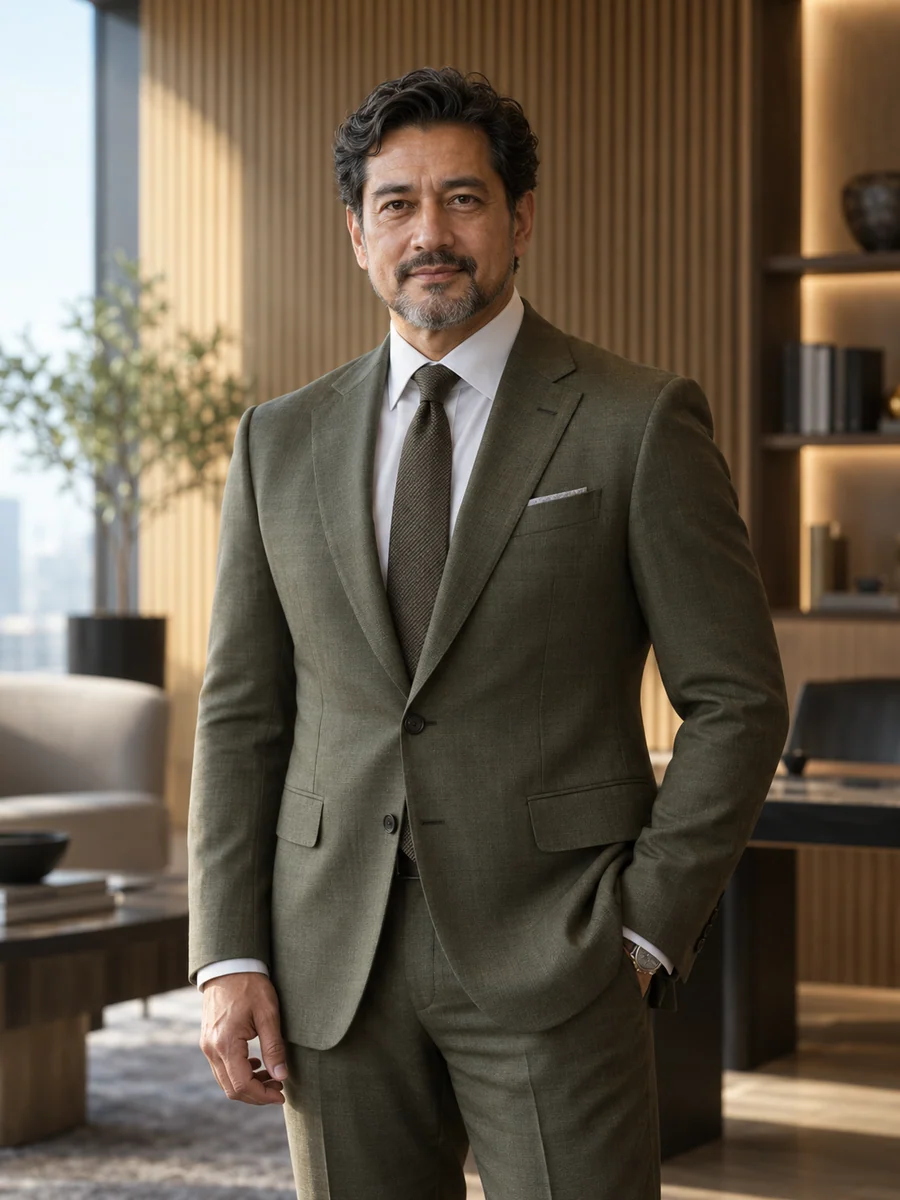
Amir IskandarChief Executive Officer · Essays & perspective
Field notes / Amir Iskandar
Chief Executive Officer · Singapore / Southeast Asia
Dispatch 01 / Singapore / Southeast Asia
Merger remedies5 min read
Mobile consolidation judged by connected towns
Merging mobile operators usually wait for the regulator's objections and then bargain the conditions down. Having offered our own remedies with our filing, I think the merging companies should design them, because they understand their networks and customers better than anyone else can.
Read this dispatch ↗Amir IskandarSingapore / Southeast Asia Malay · English · Khmer (basic)
Southeast Asian operators present bundled video and music subscriptions as their answer to the global platforms. Measured honestly, most bundles are an expensive price cut, and the money is better spent on the services platforms cannot build for themselves.
Government-linked shareholders sometimes ask the operators they invest in to meet public needs directly. The needs are usually real, but a shareholder's request is the wrong instrument: it loads the cost on one company and often serves the purpose worse than a licence condition would.
A leadership conviction
A mobile network is a promise kept in places the board will never visit. I judge an integration plan by the last town it would switch off, and by whether I could explain that choice to the people who live there.
Mobile subscriptions, June 2026
13.6 million
About 68 per cent prepaid, alongside 410,000 fixed-wireless homes
Revenue in 2025
RM6.18 bn
EBITDA of RM2.51 billion, a 40.6 per cent margin
Net debt to EBITDA, December 2025
2.2x
Including leases; down from 2.7x when the merger completed
In a consolidating mobile market, the remedies a company offers and the towns it keeps connected are the merger; the savings figure is only its arithmetic.
I am the chief executive of Seralis Communications Berhad, a fictional mobile and home-broadband operator listed on the Main Market of Bursa Malaysia and headquartered in Kuala Lumpur. Seralis was formed in March 2024, when Lembayung Mobile Berhad, a listed operator, merged with Altirra Wireless Sdn Bhd, the privately owned challenger I had led since 2020. We serve 13.6 million mobile subscriptions, about two-thirds of them prepaid, and 410,000 homes on fixed-wireless broadband. Revenue in 2025 was RM6.18 billion and EBITDA RM2.51 billion.
I came to this job from the radio side of the industry. I spent my first years driving test routes for an equipment maker in the Klang Valley and planning cell sites for Lembayung, the company I would later merge with. Then came five years in Singapore negotiating tower sales and network-sharing deals for a regional group, and four and a half years running a small operator in Cambodia. Very little of that prepared me to talk to investors. All of it prepared me to ask what a network decision will feel like to a customer in Tawau or Kuala Krai.
A merger between two mobile operators is approved once by a regulator and then again, more slowly, by customers who decide whether the combined network is better than the two it replaced. Since 2023 my work has been to earn both approvals: offering remedies before we were asked for them, keeping duplicate sites where the integration plan saw only cost, and lowering a dividend that shareholders, including a government-linked investor, had come to rely on.
A merger review closed in ten months
We filed our undertakings with the merger application in April 2023 instead of waiting for objections: 2 × 10 MHz of 2.6 GHz spectrum returned, a five-year wholesale reference offer for virtual operators and a 24-month freeze on our cheapest prepaid pass. The review concluded in February 2024 and the merger completed on 1 March.
Two radio networks made one
Of 4,300 duplicate sites, we decommissioned 3,400 by March 2026 and kept 900 in rural Sabah, Sarawak, Kelantan and Pahang for capacity and flood resilience. Run-rate cost savings reached RM610 million by June 2026, against the RM750 million we had announced for the end of 2026.
Home broadband carried on mobile spectrum
Fixed-wireless homes grew from 160,000 at completion to 410,000 by June 2026, mostly in suburbs and small towns where fibre had not arrived, served on 4G capacity freed by the integration and on wholesale 5G capacity.
Debt reduced while the network was rebuilt
Net debt including leases fell from 2.7 times EBITDA at completion to 2.2 times in December 2025, after we lowered the dividend payout from more than 90 per cent of profit to 65 per cent and committed RM1.1 billion to fibre backhaul for 6,000 sites.
Current focus
I am preparing two decisions for the board. The first is how much of our 2027 capital budget should follow fixed-wireless demand rather than mobile traffic growth. The second is how to prepare for the renewal of our 4G spectrum assignments without assuming that the terms will resemble the last ones. Alongside both, I am handing day-to-day integration to the operating team so that the merger stops being the company's only subject.
Conversations I welcome
I intend to stay at Seralis until the integration is complete and the company is growing on its own terms, which I expect to take at least two more years. With my board's consent I would accept one independent non-executive directorship at a listed company outside telecommunications, ideally in regulated infrastructure, joining its risk committee. I can give about twenty-two days a year. I also speak occasionally to industry and regulatory audiences about merger remedies and network sharing.
Beyond the page
The record behind the perspective.
In the boardroom
Seralis Communications BerhadExecutive director and chief executive officer · 2024–present
Veyara Mobile Co., Ltd.Director of the Cambodian operating company, in an executive capacity · 2016–2020
Formation
Bachelor of Engineering in electrical and electronic engineeringSeri Kembara University of Technology · 1995
Executive Master of Business Administration, part-timeLarkhaven Graduate School of Business · 2014
Amir brings the board the decision he is least sure of, with the alternative costed beside it. When we lowered the dividend he insisted that the borrowing case be written as carefully as his own. Two directors changed their minds after reading it, one in each direction, and that is how a board paper should work.
Suraya Ilham KassimFictional independent non-executive chair, Seralis Communications BerhadThe full record ↗
Contact
I intend to stay at Seralis until the integration is complete and the company is growing on its own terms, which I expect to take at least two more years. With my board's consent I would accept one independent non-executive directorship at a listed company outside telecommunications, ideally in regulated infrastructure, joining its risk committee. I can give about twenty-two days a year. I also speak occasionally to industry and regulatory audiences about merger remedies and network sharing.