Chief Executive Officer Singapore / Southeast Asia
From retuning cell sites in the Klang Valley to running the network that replaced two
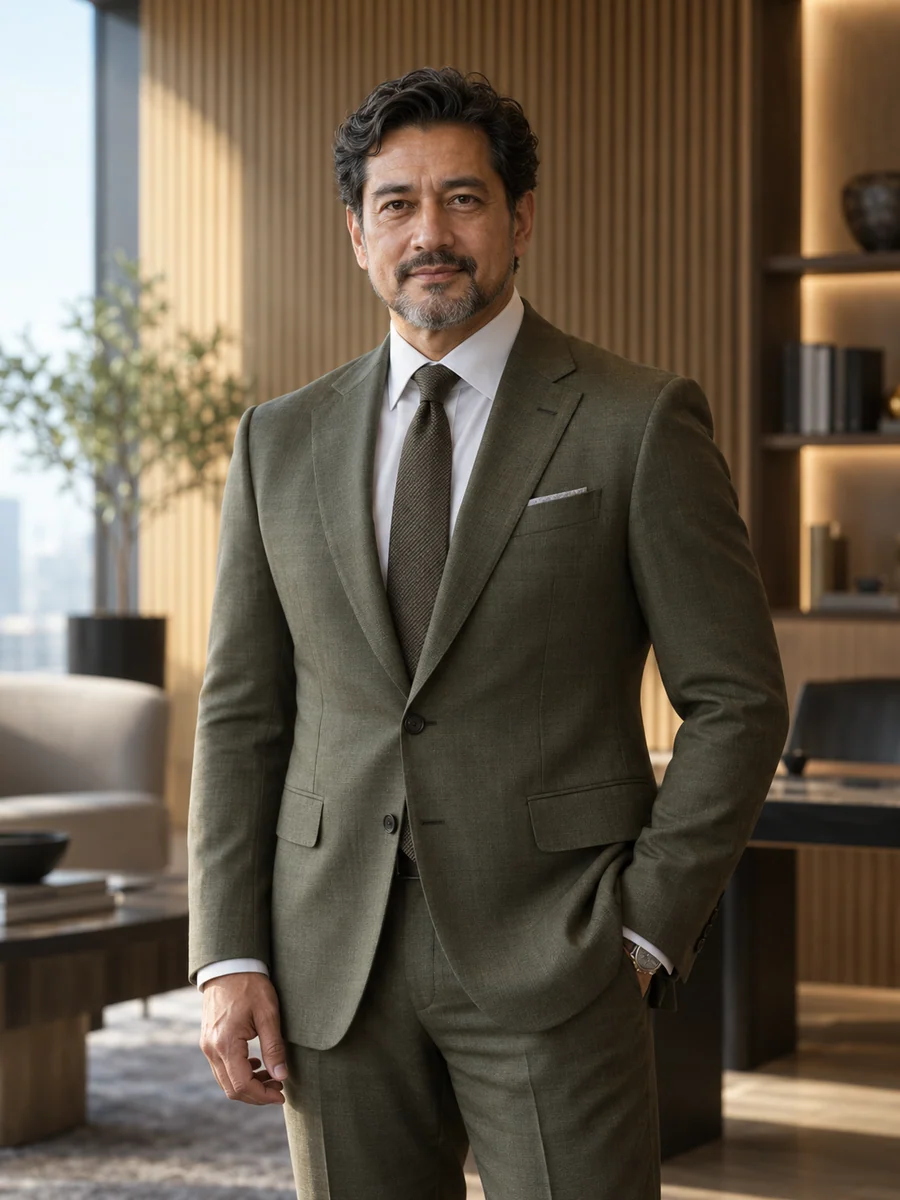
My father climbed electricity poles for a living in Kuantan, and when the monsoon brought lines down he would be gone for days. I grew up thinking of a network as something that fails in the rain and is mended by people standing in water. That is still how I think of it, although the network I am responsible for now carries 13.6 million phone numbers rather than a few villages' lights.
I studied electrical and electronic engineering at Seri Kembara University of Technology, graduating in 1995, and joined Valdren Systems Malaysia, the local arm of a fictional Nordic equipment maker, as a field engineer. Mobile networks were being built across the Klang Valley and Penang, and my job was to drive test routes with a laptop on the passenger seat, find where calls dropped and retune the sites. The 1997 financial crisis froze two of our customers' rollouts within weeks. I learnt early that a network plan is also a financing plan, and that equipment ordered in a boom can sit in a warehouse for a year.
In 2001 I moved to the operator side, joining Lembayung Mobile as a radio planning engineer. Lembayung was then a young operator preparing to list on Bursa Malaysia, and over ten years I rose to lead radio network planning, with 85 engineers by 2010. We planned its 3G network across 4,200 sites between 2005 and 2008. I also negotiated Lembayung's first site-sharing agreement in East Malaysia in 2009, which let two operators put equipment on the same towers in Sarawak instead of building twice. That agreement taught me a habit I have relied on since: the cheapest site is usually one that already exists.
In 2011 Corvantis Group, a fictional Singapore-based group with mobile operators in four South and Southeast Asian markets, asked me to lead network strategy and infrastructure sharing from its head office. For five years I worked on the parts of the business that rarely reach a press release: selling 3,800 towers in two markets to independent tower companies and leasing space on them back, consolidating radio equipment suppliers, and writing the group's template for sharing networks with rivals. I completed an executive MBA at Larkhaven Graduate School of Business in the evenings, and it gave me the language of capital allocation for work I had been doing by instinct.
Corvantis sent me to Phnom Penh in 2016 as chief executive of Veyara Mobile, the third-largest of Cambodia's mobile operators. We had a small capital budget, a 4G network that covered 38 per cent of the population and two larger competitors. The decision that defined those years was to share our rural radio network with one of them, which marketing colleagues saw as surrender and I saw as the only way to reach the provinces at all. By 2019 our 4G network reached 81 per cent of the population. I also learnt what it is to be a foreign chief executive: to listen longer than you speak, and to make sure your local team, not you, is the face of the company.
In July 2020 I returned to Malaysia as chief executive of Altirra Wireless, a loss-making challenger owned by Teguh Permata Holdings and Corvantis. We cut costs, grew our postpaid base and launched fixed-wireless broadband, but a fourth-ranked operator could not fund a network to match the larger ones. In 2022 I recommended to Altirra's board that we seek a merger. The partner that made sense was Lembayung, my old employer. The merger agreement was signed in March 2023, and I was named chief executive of the combined company.
I lead Seralis with eleven direct reports and about 3,900 colleagues, down from 5,000 before integration through a voluntary separation scheme agreed with our union. I sit on the board as its only executive director. The chair and I meet weekly, and I try to bring her the decision I am least sure of rather than the one I am most proud of. I ask my leadership team for two things: that every network decision be stated in terms of what a customer will notice, and that bad news reaches me before the monthly report does.
Inside the industry I am probably known for three positions: that remedies are best offered rather than extracted, that network sharing should go as far as the point where a customer could tell the difference, and that public purposes are better written into licences than into shareholder letters. Each has cost money in the short run. I am now ready to learn the director's role from the other side of the table, on a board outside telecommunications.
Open to Board appointments · Speaking invitations
Languages / Malay · English · Khmer (basic)
A leadership conviction
A mobile network is a promise kept in places the board will never visit. I judge an integration plan by the last town it would switch off, and by whether I could explain that choice to the people who live there.
- Mobile subscriptions, June 2026
- 13.6 million
- About 68 per cent prepaid, alongside 410,000 fixed-wireless homes
- Revenue in 2025
- RM6.18 bn
- EBITDA of RM2.51 billion, a 40.6 per cent margin
- Net debt to EBITDA, December 2025
- 2.2x
- Including leases; down from 2.7x when the merger completed
Board & advisory record
Current appointments
Seralis Communications Berhad
Executive director and chief executive officer
2024–present
Earlier appointments
Veyara Mobile Co., Ltd.
Director of the Cambodian operating company, in an executive capacity
2016–2020
Education & credentials
- Bachelor of Engineering in electrical and electronic engineering
- Seri Kembara University of Technology · 1995
- Executive Master of Business Administration, part-time
- Larkhaven Graduate School of Business · 2014
Perspectives from colleagues
Amir brings the board the decision he is least sure of, with the alternative costed beside it. When we lowered the dividend he insisted that the borrowing case be written as carefully as his own. Two directors changed their minds after reading it, one in each direction, and that is how a board paper should work.
We competed in every shop in Phnom Penh and shared two thousand rural sites. When restoration on our side fell behind, Amir did not complain to my chief executive. He came to our fault centre with three of his engineers and asked what they could take off our hands.
I argued against keeping the 900 rural sites, and on the numbers we had I would make the same argument again. Amir put my objection into the board paper word for word. The floods proved his point, and he has never once reminded me of it.