Chief Human Resources Officer India
What a classroom could not decide for an employer
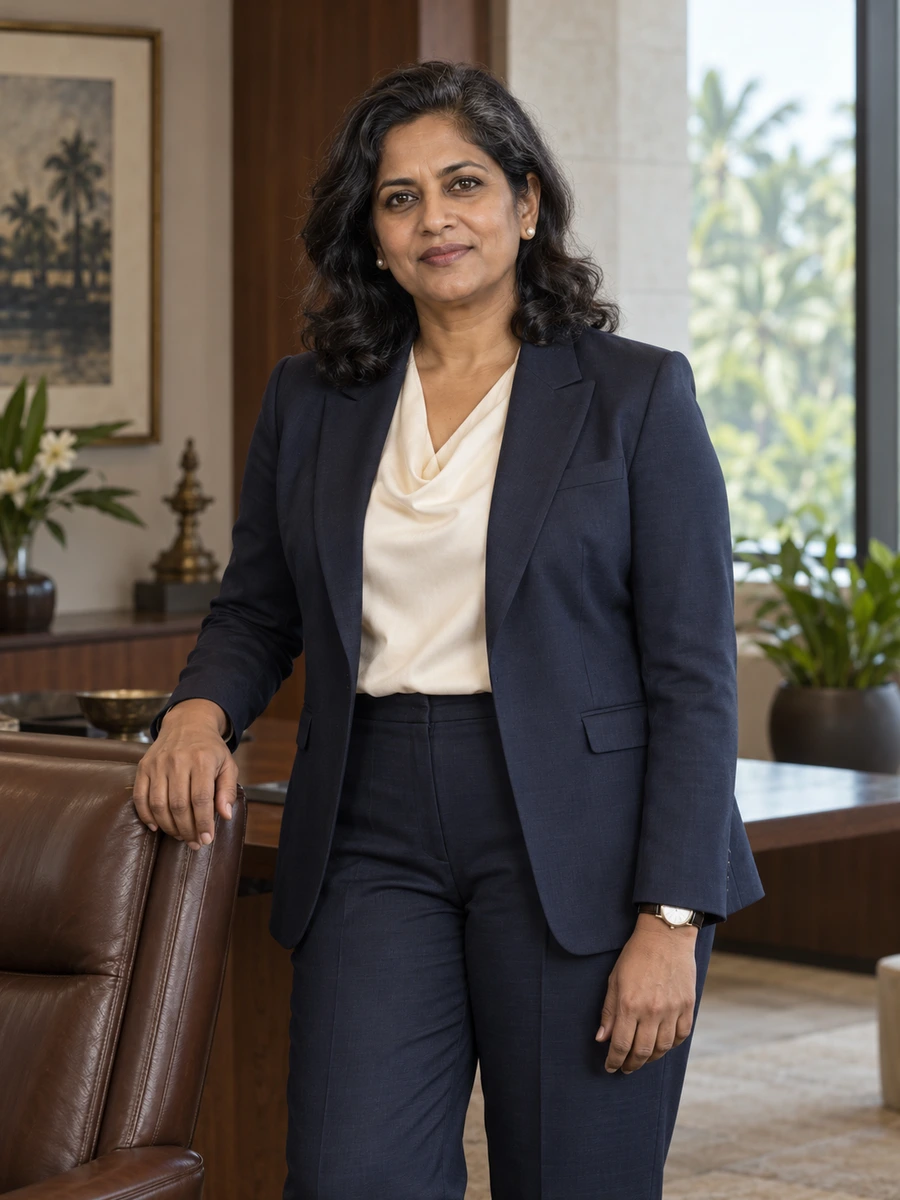
I studied psychology at Elarvethi Arts College and completed my degree in May 1996. That September I joined Hesparali Skills Institute in Thrissur as a learning coordinator. The institute worked with adult learners preparing for office and customer-service roles. My first responsibilities were practical: organising sessions, observing exercises, speaking with trainers and helping participants understand the feedback they received. I was struck by how differently people performed when an exercise changed from repeating a prepared answer to responding to a realistic situation. That observation shaped my interest in the design of assessment and, eventually, the way organisations decide whom to trust with responsibility.
Over six years at the institute I took on programme coordination and worked more closely with employers. Some wanted a certificate confirming that a person had attended training. Others wanted to know whether the person could handle a particular interaction or document accurately. I learnt to distinguish those requests. Attendance was easy to record; capability required a defined task, observation and feedback. We could help a learner prepare, but an employer still had to decide whether the person was ready for its work. I became cautious about language that allowed a training provider to appear to promise an employment outcome it did not control.
In August 2002 I joined Dovareli Securities as employee-development manager. A securities business brought a different level of consequence to the questions I had encountered in training. A colleague might need to recognise the boundary of an authorised task, identify when a client question required escalation or preserve a record accurately under time pressure. Compliance colleagues determined the requirements applicable to the role. My team designed learning and practice around the work, while operating managers remained responsible for supervision and deployment. I did not treat a successful classroom exercise as a substitute for a required credential or a formal authorisation.
The business expanded across languages and locations during my years in employee development. That made me attentive to the difference between fluency in a selection format and competence in the job. A person could write a polished answer in English yet struggle to explain a process to the clients they would actually serve. Another could reason carefully through the situation but be disadvantaged by the wording of the assessment. I worked with managers to make exercises more representative without removing the communication requirements the role genuinely needed. The objective was a more accurate assessment, not a lower expectation.
I became a business people partner in April 2010. The appointment took me beyond learning into recruitment, employee relations and the practical conditions under which branch teams worked. I spent time with managers who had to balance service coverage, leave, preparation and unexpected absences. It became clear that a policy could be well intended and still fail if nobody had funded the work it moved to someone else. I learnt to ask who would provide cover, who would supervise a changed arrangement and how the company would know whether the design was working for colleagues and clients.
In April 2016 I was appointed HR director, a functional title rather than a statutory board appointment. I led teams across recruitment, development, people operations and business partnering. The wider remit required consistency without assuming that every role had identical demands. We began reviewing the evidence used in senior selection and the way managers explained exceptions. A recommendation from a respected person could justify considering a candidate, but it could not establish the candidate's suitability on its own. I also learnt to protect confidential employment information while giving decision-makers enough evidence to fulfil their responsibilities.
The CHRO appointment followed in April 2022. I now lead 31 colleagues through four functional heads, manage a ₹6.8 crore annual people-function budget and report to the CEO. The company's ₹52 crore employee expense in FY2026 is a separate enterprise figure; it is not my function budget. Dovareli had 620 employees and 27 offices at March 2026, with ₹168 crore operating revenue for the year. My board exposure comes from presenting people, capability and employment matters to the board's people committee. I am not a director and do not describe a presentation as an appointment to the body receiving it.
The cases on this site concern decisions made during that CHRO appointment. They show how I respond when an apparently straightforward measure fails to describe the underlying responsibility: course completion, an assessment score, a return-to-work policy or a trusted referral. I have retained the costs and unfinished questions because those are part of the decision. Twenty-nine colleagues needed more practice; two working-pattern requests could not proceed as proposed; a senior vacancy remained open. I would bring the same attention to a future board contribution, while recognising that oversight requires questions and collective judgement rather than personal intervention in each employee's case.
Open to Board appointments
Languages / English · Malayalam
A leadership conviction
I want an assessment to reveal whether someone can carry the responsibility in front of them. A certificate, a fluent interview and a trusted referral each tell us something, but none answers every question. The employer has to provide the conditions in which people can learn, demonstrate their judgement and do the work consistently. That includes time, supervision and a fair account of what the role actually requires.
- Colleagues across the business
- 620
- Dovareli Securities; March 2026
- Regional offices
- 27
- Kerala, Tamil Nadu and Karnataka
- People-function colleagues
- 31
- Led through four functional heads
Career chapters
2022–present 01
Chief Human Resources Officer
Dovareli Securities
Lead the people function across 27 offices; report to the CEO and present to the board's people committee.
2016–2022 02
HR director — functional appointment
Dovareli Securities
Led recruitment, development, people operations and business partnering; held no statutory directorship.
2010–2016 03
Business people partner
Dovareli Securities
Connected branch employment decisions with the practical work of managers and service teams.
2002–2010 04
Employee-development manager
Dovareli Securities
Designed role practice with compliance and operations while preserving their qualification and authorisation responsibilities.
1996–2002 05
Learning coordinator
Hesparali Skills Institute
Coordinated adult learning, observed practical exercises and developed employer-facing assessment experience.
Education & credentials
- Bachelor of Arts in Psychology
- Elarvethi Arts College · 1996
Perspectives from colleagues
Reena asked who would cover the work before we promised a changed pattern. That made the return-to-work discussion practical for the employee and the manager responsible for service.
Her paper showed why the promotion exercise needed to change and what the revised result did not establish. We could examine the method without being asked to endorse every candidate.