Chief Financial Officer India
Following the money back to the plant and the stockist
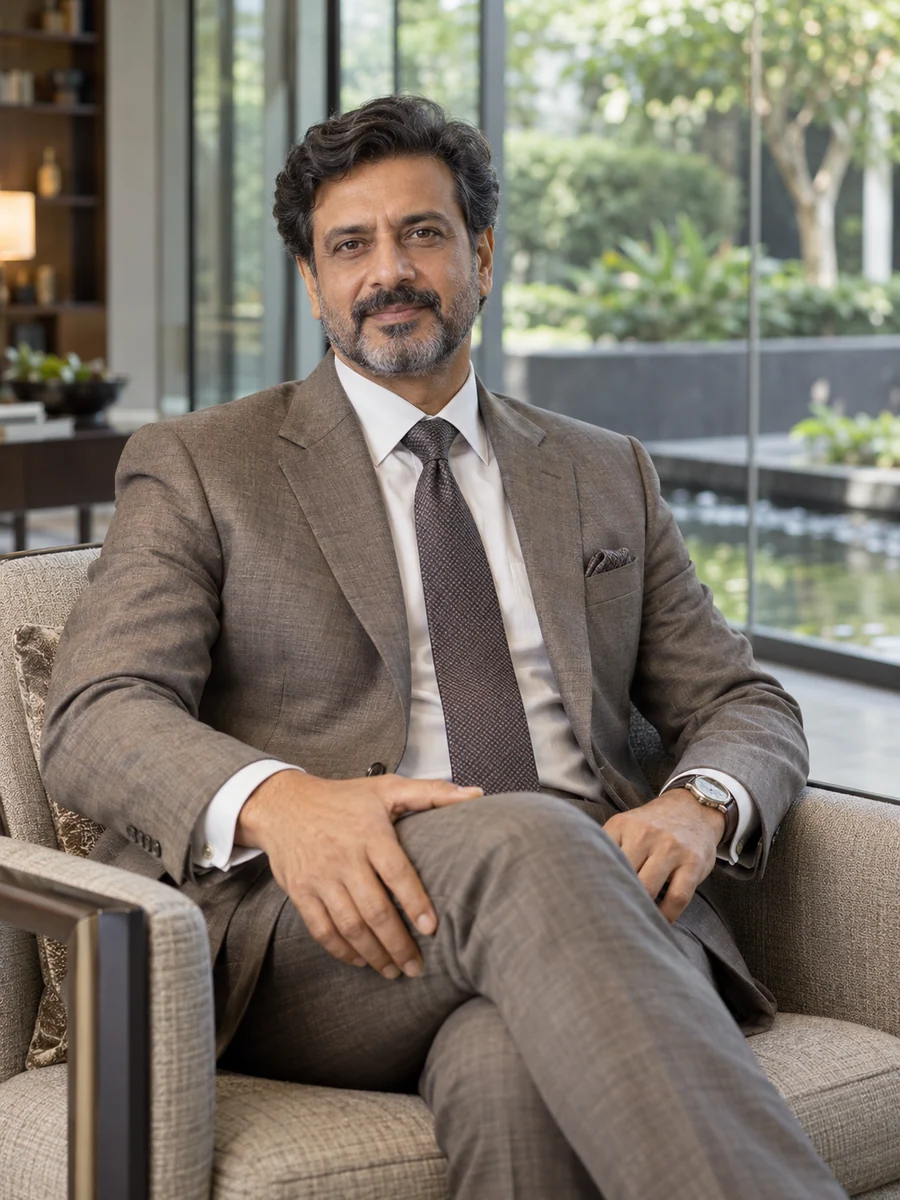
My father kept accounts for the railways in Secunderabad, and I grew up believing that a ledger was a record of things people had actually done. The first time I saw that belief tested was in 1998, as a young audit senior at a bulk-drug manufacturer's year-end. The stock sheets balanced. The solvent-recovery tanks, when we dipped them, did not. Nobody had stolen anything; the plant had simply stopped recording what it recycled. I have been asking to see the tank ever since.
I studied commerce at Velicheti College of Commerce in Secunderabad, graduating in 1994, and qualified as a chartered accountant in 1997 after three years of articled training with Vedagiri Sundaram & Co., a Hyderabad audit practice. I stayed on as an audit senior until 2001. The firm's clients included several pharmaceutical units north of the city, and I learnt more chemistry from plant managers explaining their yields than from any textbook. I also learnt that an auditor arrives after the decisions have been taken. I wanted to be present when they were made.
In April 2001 I joined Meruvel Pharmaceuticals, then an unlisted, founder-run manufacturer, as cost accountant at its Unit II oral-solid plant. I became the plant's finance controller in 2003. Unit II was preparing for its first USFDA pre-approval inspection, and my small team rebuilt batch costing so that every exhibit batch could be traced from raw material to finished pack. It was unglamorous work. It taught me that an inspection and a cost sheet draw on the same evidence, and that a plant which cannot account for its materials will struggle to account for its processes.
By 2006 I wanted to understand how the medicines we made became money in another country. Kavyansh Remedies, a listed generics company in Ahmedabad, hired me to build finance for its regulated-markets business. In US generics the price is settled after the invoice, through chargebacks to wholesalers, rebates to buying groups, returns, shelf-stock adjustments and penalties for failing to supply. The business estimated those deductions as a percentage. I spent four years replacing the percentage with product-level arithmetic, and from 2010 led finance for the North America business as it grew to ₹1,650 crore. I learnt to distrust the size of a catalogue and to ask how many products earned their freight.
In 2015 I moved to Mumbai as director of finance for the Indian subsidiary of Brennholt, a fictional European speciality pharmaceutical group. The subsidiary sold branded medicines to Indian doctors through 1,900 medical representatives, and it showed me everything the export business had kept from view: ceiling prices under the Drugs (Prices Control) Order, stockists who expected quarter-end schemes, scrutiny of the royalty we paid our parent, and the move to GST in July 2017. Reporting to a parent abroad taught me to write for a reader who could not be in the room.
Meruvel's managing director asked me to return as CFO in July 2020. The company had grown to ₹3,620 crore of revenue and was carrying more debt than its cash flows comfortably supported. Within two years a USFDA inspection of Unit III was classified Official Action Indicated, and a warning letter followed. The plant supplied 31 per cent of our US revenue. Our US commercial president wanted a quick, consultant-led remediation; our head of quality wanted the laboratory rebuilt. I supported the slower and more expensive answer, and helped the board accept lower output, a reduced dividend and a year of awkward results calls.
I lead 210 people in finance, tax, treasury, investor relations and management reporting across Hyderabad, the plants, Mumbai and New Jersey. Internal audit reports to the chair of our Audit Committee rather than to me, and I prefer it that way. I ask my team for two things: numbers a plant head would recognise as true, and the nerve to bring me a bad one early. I attend every Audit Committee meeting as an invitee, and I have learnt that the most useful thing a CFO can offer there is an answer to the question the committee should have asked.
Inside the industry I am probably known for three opinions that cost money in the short run: that quality spending is capacity rather than an exceptional item, that domestic revenue should be judged on secondary sales, and that an ANDA filing is an option to be priced rather than an asset to be counted. I hold them because I have watched the alternatives fail. I am now preparing for a second role alongside my executive one: a single independent directorship, on the other side of the Audit Committee table.
Open to Board appointments · Speaking invitations
Languages / English · Hindi · Telugu
A leadership conviction
The numbers should be true at the plant gate, in the stockist's godown and at the inspector's table, or they are not true anywhere.
- Revenue, year to March 2026
- ₹4,860 Cr
- 56 per cent US generics, 22 per cent India branded formulations
- Finance colleagues led
- 210
- Finance, tax, treasury, investor relations and reporting across five locations
- Net debt to EBITDA, March 2026
- 0.5x
- Down from 1.9x in March 2023, during a plant remediation
Board & advisory record
Current appointments
Meruvel Pharma Inc.
Director of the wholly owned US subsidiary, in an executive capacity
2020–present
Education & credentials
- Bachelor of Commerce
- Velicheti College of Commerce · 1994
- Chartered accountant, after articled training
- Vedagiri Sundaram & Co. · 1997
Perspectives from colleagues
Raghav brings the committee the judgement he is least comfortable with first. When the warning letter arrived, his paper set out the provision, the disclosure and the cost to the dividend before any of us asked. I have chaired committees where the CFO managed us. He informs us.
Most finance heads ask quality how little a remediation can cost. Raghav asked how much laboratory capacity we needed to release batches properly, and then defended that answer at the board when the commercial plan pointed the other way.
Raghav wrote for a parent company that could not see India, and he never let distance become an excuse for vagueness. His price-control and transfer-pricing papers were the ones our regional board read first.