Chief Strategy Officer India
The people behind the cooperative's growth
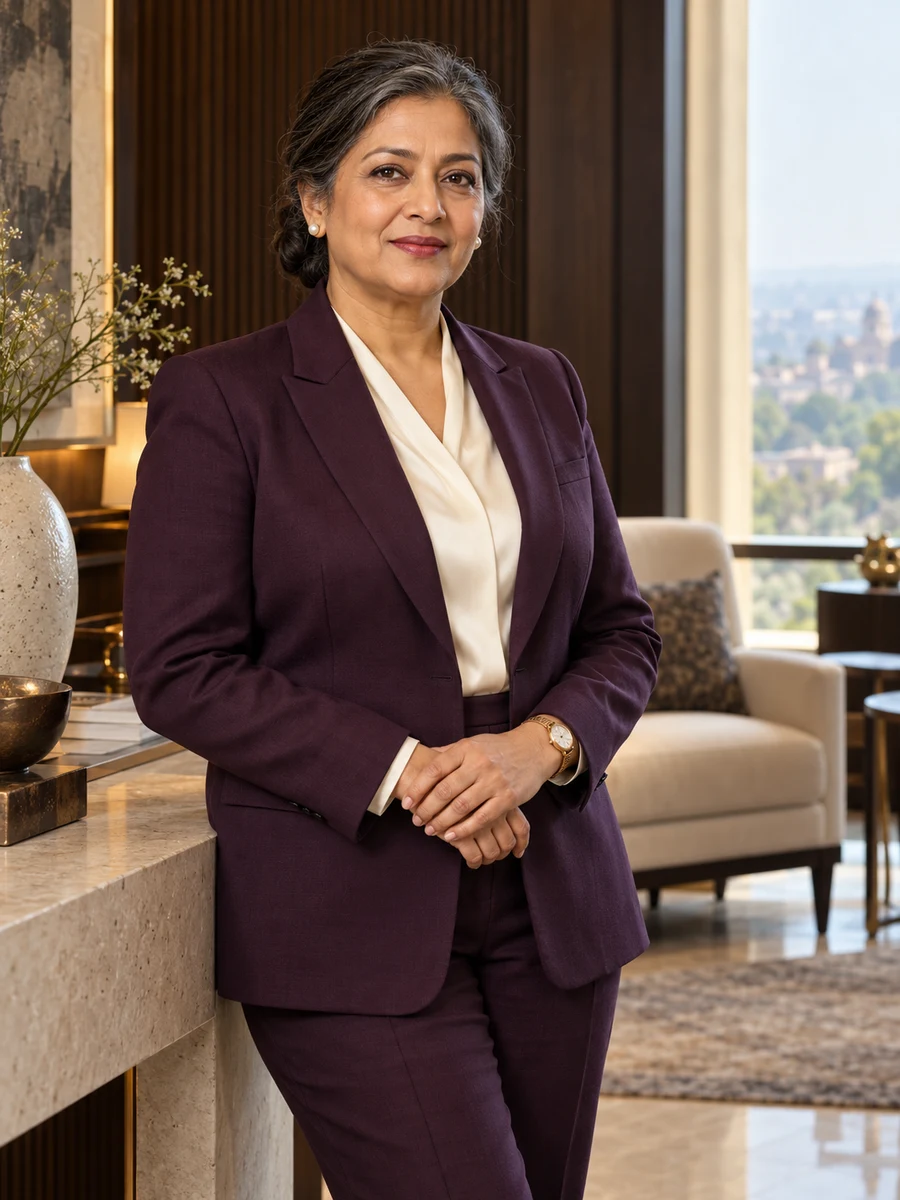
I first learned to read a commercial opportunity through the customer billings it might bring. That is a useful starting point, but a cooperative taught me to ask what else changes when the opportunity is accepted. The people doing the work may also own the enterprise. A proposal can move decision-making toward a large customer, concentrate travel around one hub or add a responsibility that members never intended their service to include. Those consequences belong in the strategy account before the growth figure becomes its headline.
I grew up in Bhopal in a Muslim family and completed commerce at the fictional Qezvali College of Commerce in June 1992. Tezvori Trade Services employed me that July as a commercial analyst. The distributor had thirty-six employees and₹9.5 crore revenue for FY ending March 1993. I worked in a six-person planning group under its manager, without reports or delegated spending. My early work involved understanding enquiries and the commercial assumptions behind them. I learned that a customer category was not enough to explain the work a proposed relationship would require.
In April 1999 I became commercial-planning lead. Tezvori employed 110 people and recorded₹41 crore revenue for FY ending March 2000. Nine colleagues worked through two leads within₹78 lakh annual expense, and I reported to the head of commercial services. The remit brought several opportunities into one comparison. A larger account might simplify selling while increasing dependence on a buyer's terms. A local arrangement might look expensive centrally while making the wider service possible. I began to look beyond the first financial line to the responsibilities and alternatives embedded in the proposal.
I joined Qemravi as network-proposition manager in September 2006 and moved to Belagavi. The cooperative then had 210 working members and forty-eight separate employees. FY 2007 gross billings were₹24 crore, with₹18 crore paid to members and₹6 crore retained before central costs. Seven strategy colleagues worked through two leads within₹64 lakh annual expense, and I reported to the head of planning. I joined as a salaried nonmember, not as an elected representative. The move required me to understand a business whose working owners had interests that a central-office account might not fully describe.
The head-of-strategy appointment began in June 2013. Qemravi had 440 working members and ninety-six separate employees. FY 2014 gross billings were₹68 crore, member payments₹52 crore and retained income₹16 crore before central costs. Nine strategy colleagues worked through two leads within₹1.4 crore annual expense, and I reported to the CEO. I learned to present choices through the cooperative's governing process without treating the strategy function as a substitute for it. Members could support commercial ambition while disagreeing about the form of control or work it would bring.
I became CSO in February 2020. Today twelve colleagues work through three leads within₹2.6 crore FY 2026–27 expense. The cooperative has 800 working members and 164 separate employees. FY 26 gross billings of₹128 crore comprise₹99 crore member payments and₹29 crore retained before central costs;that last amount is not profit. Deepak Zevmethi is CEO and Farida Qemzuli leads operations. I have no personal ownership or elected board seat. Strategy recommends;the relevant governing bodies and executive, financial, legal and operating owners retain their decisions.
The 2022 federation review examined twelve proposed handoffs with three neighbouring cooperatives. Seven reached an agreed basis and five remained unresolved after₹42 lakh of review work. We took only the agreed scope into a limited next stage. The partnership did not make every organisation's capacity or authority ours. In 2023 I initially found the₹24 crore gross-billings model of an exclusive platform proposal especially attractive. The subsequent control discussion led to a nonexclusive arrangement with a₹9 crore forecast. Actual FY 25 gross billings reached₹6 crore, including₹4.7 crore member payments and₹1.3 crore retained before central costs.
A hub proposal then exposed a different boundary in the central account. Modelled annual expense was₹1.9 crore for full consolidation and₹2.8 crore for a distributed arrangement. In a review involving sixty members, estimated median one-way travel rose from twelve to thirty-five minutes under full consolidation. The selected arrangement retained eight pickup clusters and moved six, with₹37 lakh transition work. We did not turn those estimates into observed travel outcomes or claim that the choice had already produced a financial return.
The latest adjacency review concerns cash collection alongside parcels. Of fifty selected retail requests, thirty-two wanted that service and eighteen concerned prepaid parcels. A₹36 lakh feasibility study did not settle the custody, skills, relationships and responsibilities required for the additional service. We deferred cash collection while continuing the prepaid parcel offer. No cash-collection income or operating result is claimed. A strategy can preserve a possible opportunity without making its launch an accomplished fact.
I speak Hindi, Urdu, English and working Marathi. My IICA databank registration began in June 2026, but proficiency preparation remains unfinished and I claim no exemption. I have no statutory directorship and provisionally allow twenty-six days for a first external contribution. I would bring questions about the form of growth and the people whose work supports it, while learning the proposed enterprise's own financial and legal setting. My record is a reason to begin that conversation, not proof that a cooperative perspective supplies every other organisation's answer.
Open to Board appointments · Advisory roles
Languages / Hindi · Urdu · English · Marathi — working proficiency
A leadership conviction
The scale of an opportunity does not tell us what we would become by accepting it. I want a strategy paper to explain who gains a decision, who carries the work and which obligations the next step creates.
Education & credentials
- Bachelor of Commerce
- Qezvali College of Commerce · 1992
Perspectives from colleagues
As CEO, I saw Shazia revise her initial preference for the larger platform model. She kept the smaller arrangement's forecast shortfall visible instead of presenting a channel-control decision as a financial success already achieved.
I lead operations alongside Shazia. In the hub discussion, she brought the members' estimated travel into the comparison without claiming those estimates were observed results or asking strategy to approve the operating design.