Chief Product Officer India
Twenty-eight years learning what happens after the sale
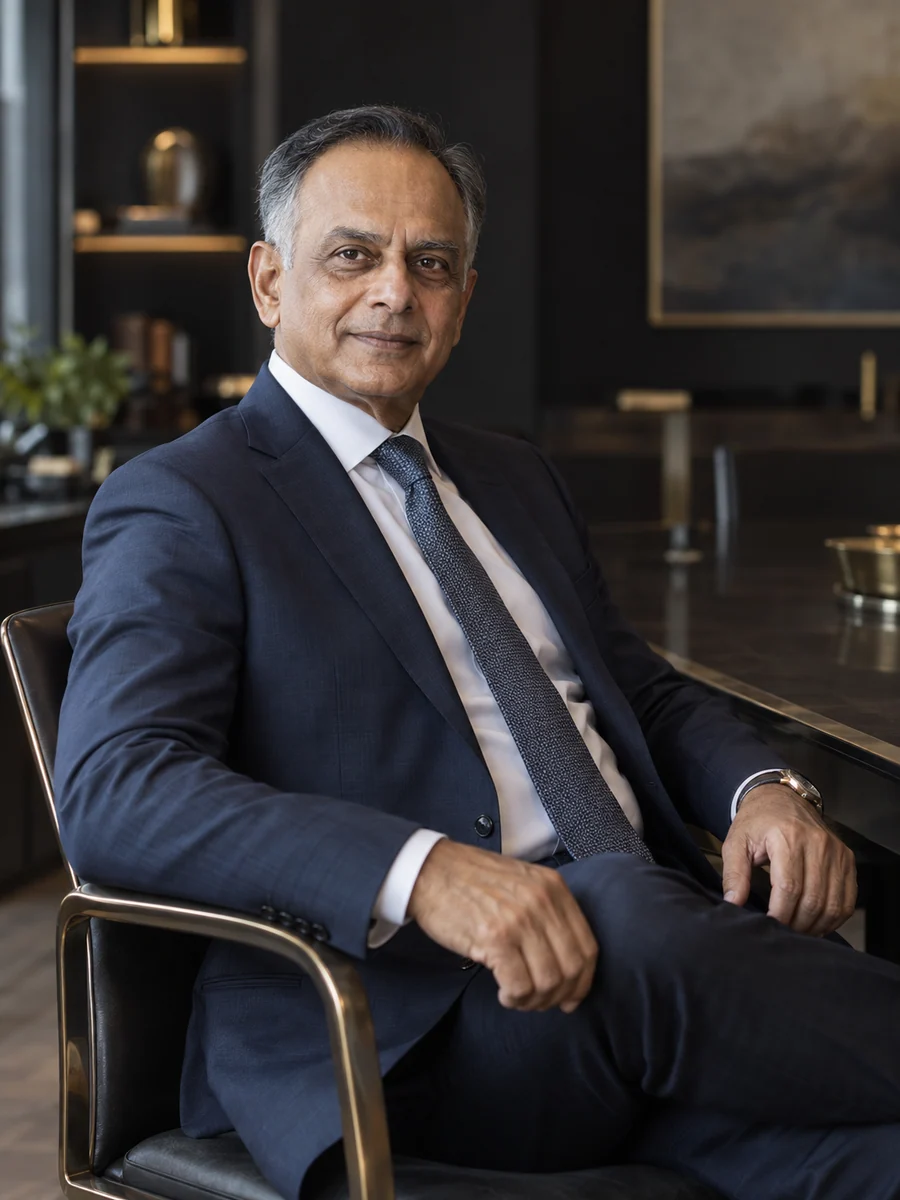
The first rooftop I ever climbed belonged to a knitting unit in Tiruppur, in 1999, and I went up to trace the supply line because a UPS I had repaired twice kept failing. The answer was not inside the box. The unit's supply sagged every evening when the looms nearby started, our UPS switched to battery thirty times an hour and its batteries were dying of exhaustion. I rewired nothing that day. I wrote a two-page note asking our design team for a wider input-voltage window, and it was the first product requirement I ever wrote. Most of what I believe about products for Indian customers began on that roof.
I grew up in Coimbatore, where my father ran a small motor-rewinding workshop and my mother taught mathematics at a government school. I studied electrical and electronics engineering at Kovaimalai College of Engineering, graduating in 1998, and joined Velmuran Power Electronics Private Limited, a Coimbatore maker of UPS units and voltage stabilisers, as a graduate engineer trainee. Within a year I was a service engineer covering western Tamil Nadu and parts of Kerala. I learnt to read a failure as evidence about a customer's day: when the load arrived, how the wiring had been done, who had been asked to look after the battery and who had not.
In 2002 I moved to Kodaivel Pumps Limited, a listed pump manufacturer in the same city, as product manager for domestic pumps, and studied for a part-time postgraduate diploma in management at the Velvizhi Institute of Management on weekends, completing it in 2006. From 2007 I led product management for agricultural pumps, a business sold to farmers through some 2,800 dealers and kept running by village mechanics who never appeared in any of our plans. I spent my first months riding with those mechanics in the Kongu belt and in Vidarbha. We redesigned our motors around the low, unsteady voltage that farm feeders actually delivered, and in 2010 we ran a solar pump pilot with 120 farmers. Most of the pumps worked. The financing did not: few farmers could raise the money without a subsidy, and the subsidy took months to arrive. I carried that lesson for twelve years.
In 2011 I joined Taravani Digital Television Limited, a satellite television operator in Noida, to run product for prepaid subscriptions and, from 2013, for installation and field services as well. Taravani served more than nine million households, most of them paying a few hundred rupees a month in advance, and relied on 7,500 contracted technicians to install dishes and repair set-top boxes. It taught me two things that rooftop solar later needed. A prepaid household watches its balance closely and abandons a service that surprises it. And a field network will do what it is paid to do, which is not always what the product needs.
By 2016 I wanted to understand how households in smaller towns pay for larger purchases. In February 2017 I joined Prayavan Consumer Finance Limited, a Pune-based non-banking finance company, as head of product for point-of-sale loans. We approved loans within minutes at about 14,000 shop counters for televisions, refrigerators, phones and, among other things, home inverters. In 2019 I designed a loan for small rooftop systems, which our credit team allowed only as a pilot. It was the first time I saw a solar product from the lender's side: a twenty-five-year asset, an instalment due every month and an installer the lender had never met.
Dhruvanta's managing director, Ambar Sethia, had seen that pilot because our loans financed his inverters at many of the same counters. In April 2021 he asked me to join as chief product officer, with a specific worry. Better grid supply in many of the towns where Dhruvanta sold was slowly shrinking demand for backup, and the company's solar business was a catalogue of panels rather than a product. I accepted because the job joined every part of my career: power electronics, rural service networks, prepaid behaviour and household finance.
I lead 260 people across product management, design and customer research, the Dhruvanta app, solar system engineering and installation standards. Our chief technology officer leads core power-electronics research; I decide what we build and the standards it must meet in a customer's home. I present to the board twice a year and report to its Risk Management Committee on product safety and customer data. I ask every product manager to spend four days a quarter in towns where we have no office, and I keep to the same rule. Many of our best decisions began with something a technician or a retailer said to one of us on such a visit.
Inside the industry I am probably known for three opinions that cost money in the short run: that a rooftop system should be priced before the subsidy, not after it; that installers and service technicians belong to the product rather than the sales channel; and that small-town customers buy reliability in the evening more than they buy kilowatts. I hold them because I have watched the alternatives fail in farmers' fields, on satellite dishes and in loan books. I am now preparing for one role alongside my executive work: a single independent directorship, with a board that wants someone who has spent his career close to the customer at the far end of a long distribution chain.
Open to Board appointments · Speaking invitations
Languages / English · Tamil · Hindi
A leadership conviction
A household judges our product on the evening the grid fails and the month the bill arrives, never on the day we install it.
- Solar revenue, year to March 2026
- ₹1,020 Cr
- Up from ₹110 Cr in FY2020-21; 32 per cent of company revenue
- Residential rooftop systems installed since 2021
- 1.12 lakh
- Plus 1,400 small-factory systems in FY2025-26
- First-year service tickets per 100 rooftop systems
- 11
- For 2025-26 installations, down from 38 for 2022-23
Board & advisory record
Current appointments
Dhruvanta Solar Services Private Limited
Director of the wholly owned installation and service subsidiary, in an executive capacity
2023–present
Education & credentials
- Bachelor of Engineering, Electrical and Electronics Engineering
- Kovaimalai College of Engineering · 1998
- Postgraduate Diploma in Management, part-time weekend programme
- Velvizhi Institute of Management · 2006
Perspectives from colleagues
Karthik is the only executive who has ever asked me, in writing, to slow the business down. When our roofs were leaking he brought the board a plan, a cost and a monthly report, and he kept sending the report long after the problem had eased.
Before Karthik, installers were something sales managed and service cleaned up after. He spent three days at our Lucknow academy, learnt to seal a roof anchor himself, and then rewrote the standard with the instructors rather than for them.
Karthik designed loan journeys as though he would be the one collecting the instalments. Our credit team trusted his product changes because he brought them the arrears data before they thought to ask for it.