Chief Financial Officer Australia
The engine was always the expensive part
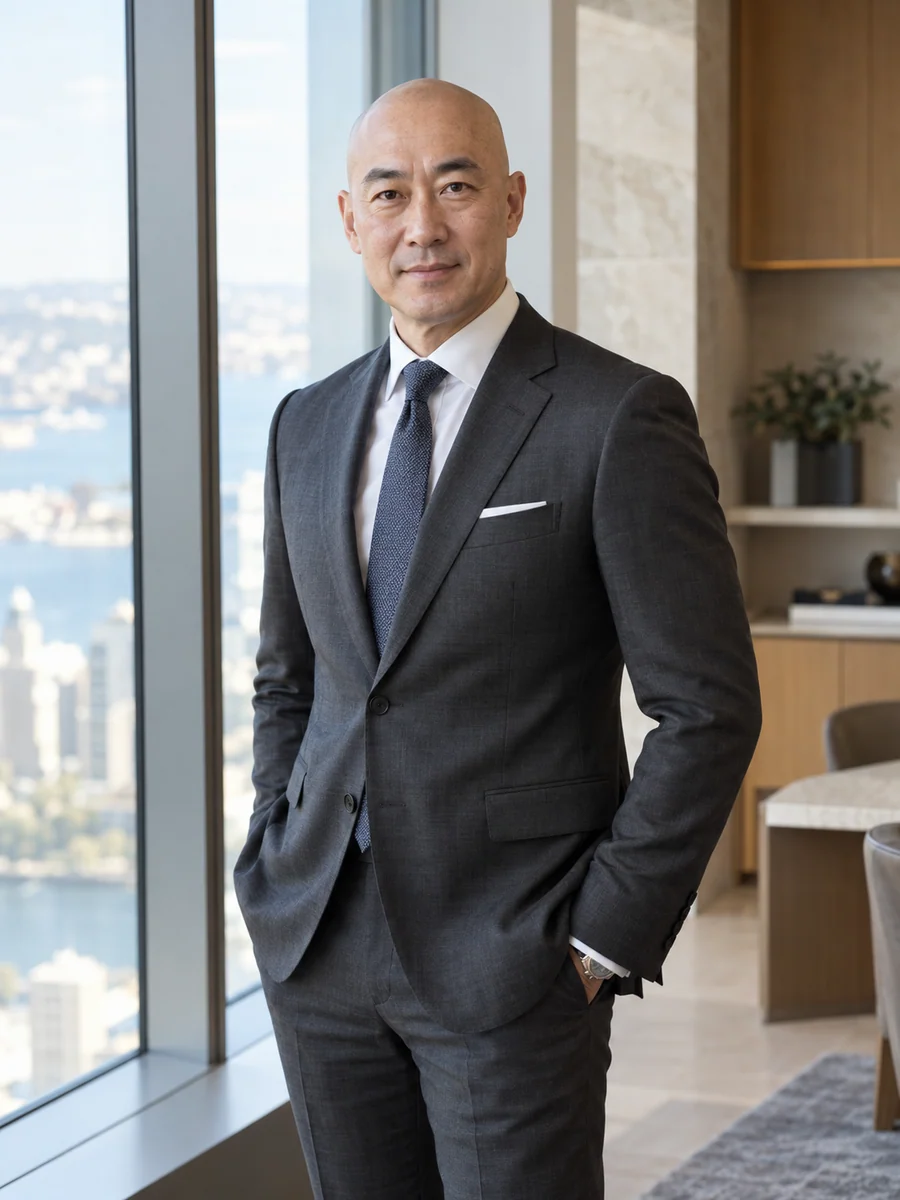
I grew up in Geraldton, on the coast north of Perth, where my father was a licensed aircraft maintenance engineer for a small charter and freight operator. When I was twelve, an engine on one of its two twin-engine aircraft failed an inspection, and the owner could not pay for the overhaul. The aircraft sat in the hangar for months while the other flew every hour it could. Within a year the business had closed and my father was working at the port. I did not follow the finance then, but I remember him saying that the aeroplane had never been the expensive part. The engine was. I have spent most of my career finding out how right he was.
I studied commerce at Bellmere University in Perth, majoring in accounting and finance, and graduated in 1996. In February 1997 I joined Lockyer Pearce, a Perth chartered accountancy practice, as a graduate, and qualified as a chartered accountant through part-time study while working there. Our clients included mining contractors, a regional trucking company and a small charter airline. At that airline I met my father's lesson from the other side. Its accounts expensed engine work when it happened, so profits looked healthy in the years between overhauls and collapsed in the years when they fell due. I wrote my first serious audit memo about it, and the engagement partner took it to the client's board.
In August 2001 I moved to Brisbane to join the fleet finance team at Corrella Airways, a listed domestic carrier. A month later a much larger domestic airline collapsed, and for the next two years the industry rearranged itself around us. I learnt fuel hedging, aircraft financing and sale-and-leaseback transactions quickly, and by 2003 I managed treasury and fleet finance. The rise in fuel prices from 2004 onwards showed me how easily a hedge programme drifts away from the exposure it was written to cover.
In 2007 I went to Dublin to join Kilbarron Aviation Capital, an aircraft lessor, first pricing leases and later managing its Asia-Pacific portfolio. I arrived a year before the financial crisis. Over the following years I watched airlines in several countries fail, and I helped recover aircraft from three of them. Repossession teaches you what a lease actually says. The rent was rarely the difficulty. The difficulty was the condition in which an aircraft came back, the records that travelled with it and who paid to make it fit to fly again. Six years on the lessor's side made me a more sceptical buyer of leases, and a more respectful one.
My parents were growing older in Geraldton, and in 2013 my wife and I brought our children home to Perth. I joined Harlowe Transit Group, a bus operator owned by an infrastructure fund, as general manager of commercial finance, and became its chief financial officer in 2016. Harlowe ran metropolitan bus services under gross-cost contracts with state governments in two cities, plus school and regional coach services. It was a different discipline from aviation: thin margins, a large unionised workforce, government counterparties and contracts that ran for a decade. It taught me contract economics, and it taught me to say no. In 2019 I priced our largest contract region at a margin the fund disliked, and we lost it. The business that remained was smaller and sounder, and the fund sold it in late 2020 for more than it had forecast.
I joined Saltbush in March 2021. Scheduled traffic was a fraction of its earlier level and the charter business was carrying the company. The work since then has been a reconstruction of how we think about risk: hedging only the fuel we actually bear, matching aircraft commitments to the contracts that pay for them, and treating our pilots and engineers as capacity we must keep rather than a cost we must contain. Revenue has grown from A$486 million in the 2021 financial year to A$742 million in 2026, and the balance sheet is stronger than when I arrived.
I lead 88 people across financial reporting, treasury, tax, fleet finance, commercial finance, investor relations and procurement. Internal audit reports to the chair of our Audit and Risk Committee, and I attend that committee and every board meeting without being a director of the company. I ask two things of my team: that every forecast names who carries each risk inside it, and that bad news reaches me before it reaches the board. I would rather discuss an unbudgeted engine shop visit in March than explain it in August.
Inside the industry I am known, sometimes wearily, for three habits: reading the maintenance clauses of a lease before its rent, asking who is already paying for a risk before we hedge it, and arguing that thin regional routes should be contracted the way governments buy bus services. I am now preparing for a non-executive role alongside my executive one, on the other side of an audit committee table.
Open to Board appointments · Speaking invitations
Languages / English
A leadership conviction
Every dollar of risk in an airline already belongs to somebody. My work is to find out whose it is before the invoice does.
- Revenue, year to June 2026
- A$742m
- 56 per cent resources charter, 36 per cent scheduled regional services
- Aircraft in the fleet
- 44
- 21 owned and 23 leased, against 11 owned when I joined in 2021
- Net debt to underlying EBITDA, June 2026
- 1.2x
- Excluding lease liabilities; down from 3.1x in June 2021
Board & advisory record
Current appointments
Kalmara Community Housing Ltd
Non-executive director; chair of the Finance, Audit and Risk Committee since 2021
Finance, Audit and Risk (chair)
2019–present
Saltbush Aircraft Finance Pty Ltd
Director of the aircraft-owning subsidiary, in an executive capacity
2021–present
Education & credentials
- Bachelor of Commerce (Accounting and Finance)
- Bellmere University · 1996
- Chartered accountant, through part-time study in audit practice
- Lockyer Pearce · 1999
Perspectives from colleagues
Max brings the committee the risks management would rather not own. His fuel paper showed what the old policy would have earned in a rising market before any director asked, and then explained why we should not want it. I have read a great many treasury papers. His were the first I had seen that began with the customer contracts.
During a repossession in 2009 Max spent two days in a hangar with the records clerk before he opened the valuation. He priced leases afterwards like someone who had seen what comes back. Airline treasurers who negotiated with him told me he was the hardest analyst in our office to deal with, and the fairest.
Max and I disagreed about the pilots' agreement for most of 2023, and we lost captains while we argued. He never pretended that cost away. He sent me the attrition figures every fortnight, and when the structure worked he told the board it was my team's result.