Chief Technology Officer India
The device did not wait for my next instruction
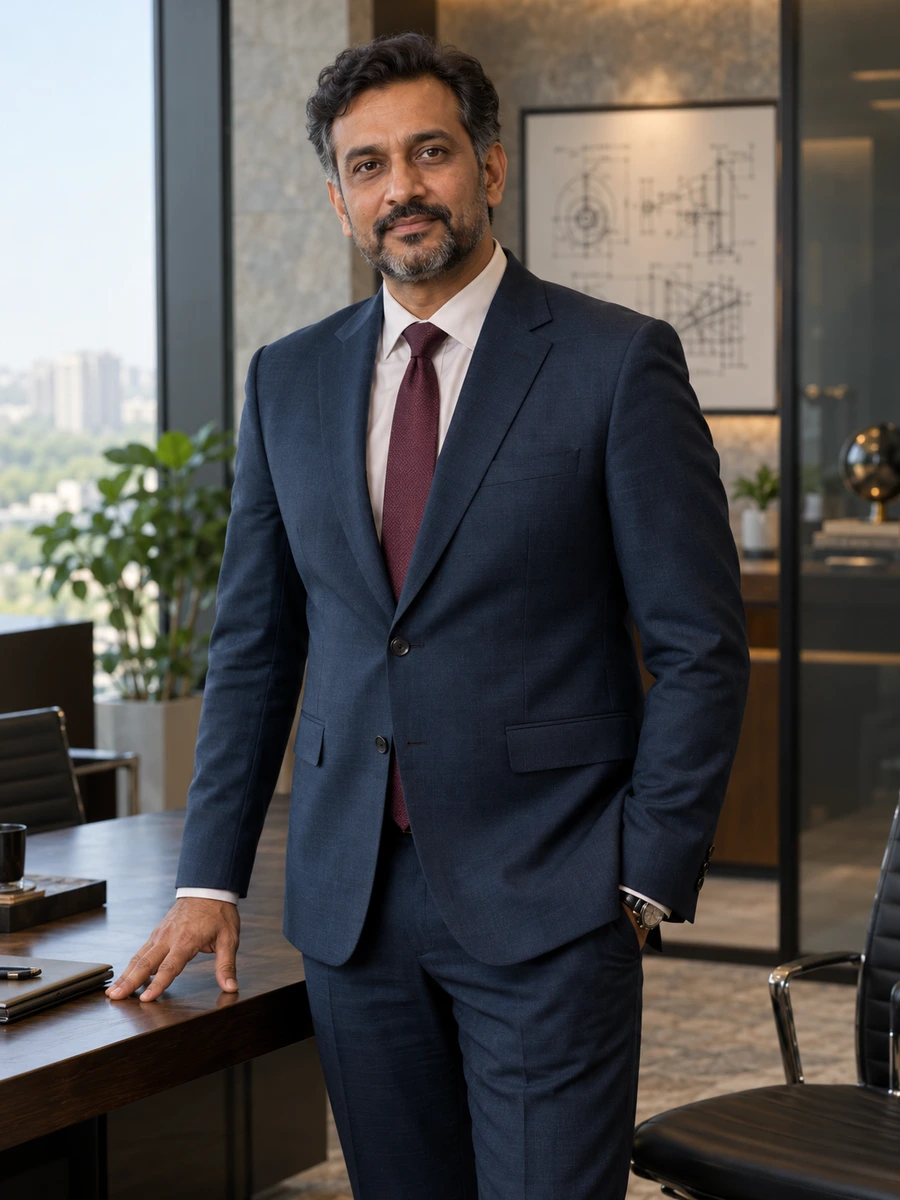
My first firmware demonstration worked beautifully until a colleague switched the device off at the wrong moment. I had tested the ordinary sequence and assumed the next instruction would always get its turn. The resulting fault was recoverable on our bench, but the customer would not have a developer sitting beside every installed unit. That was an early lesson in the difference between demonstrating a feature and designing a product's behaviour when its environment refuses to cooperate. It still shapes the questions I ask as CTO.
I was born in 1978 and completed a BE in Electronics Engineering at Narvethi Technical Institute in May 2000. In July I joined Velshori Control Devices in Nagpur as a firmware engineer. The privately owned company built small industrial monitoring accessories. I worked in a six-person development group under the electronics development manager, without budget authority. Much of my work concerned the ordinary details of storing a setting, reading an input and telling another component what had happened. Small mistakes were easy to make visible on a bench and much harder to explain after a device had left it.
In September 2005 I moved to Heshvani Firmware Works as a technical lead. The company supplied embedded-software services to equipment businesses, and I led eleven engineers with ₹1.8 crore annual team expense. Working across client designs taught me that an apparently familiar interface could carry a different assumption about timing, retries or error handling. I learned to ask for those assumptions before proposing a reusable implementation. I also became responsible for explaining why an unusual test condition deserved time in a commercial schedule, even when the requested feature already looked satisfactory in a normal demonstration.
Pelvori Embedded Systems recruited me as an embedded architect in February 2011. I led a twenty-four-person architecture and validation group with ₹5.6 crore annual expense. The company then had 180 employees and FY 2011 revenue of ₹42 crore. Its work included firmware and communications software for industrial data recorders and diagnostic equipment. The client manufacturer retained responsibility for the complete product. That boundary mattered: a software test could support a particular claim, but it did not authorise us to certify every aspect of the device or decide how a customer should deploy it.
My promotion to head of engineering in August 2016 added responsibility for eighty-two engineers through three managers, with ₹18.2 crore annual expense and a separate ₹2.4 crore laboratory-equipment programme. Pelvori had grown to 330 people and ₹96 crore revenue by FY 2017. The challenge was to make difficult test conditions part of ordinary delivery rather than a late intervention by a few experienced engineers. I wanted a project manager to know which questions remained open, why they mattered and what evidence would justify closing them. More tests were not automatically better; they had to examine the assumptions relevant to the promised use.
I became CTO in April 2022, reporting to chief executive Nadia Relshani. At March 2026 Pelvori employed 520 people in Nagpur, Nashik and Kochi, with ₹164 crore revenue and ₹19 crore operating profit for the financial year. Dorvellen Embedded Group, our fictional Austrian parent, holds seventy-four per cent and an employee ownership trust twenty-six per cent. My remit is 154 engineers through five heads, ₹36.8 crore annual engineering expense and ₹7.2 crore approved laboratory and equipment investment. Those are delegated engineering responsibilities, not ownership of the company's P&L or a seat on its board.
The recent examples here all required an engineering result to be interpreted with care. A power-interruption exercise led us to retain an earlier usable software image and accept additional device memory. A message parser passed the examples used to repair it, then failed on two new holdout cases. A disconnected-recording trial showed that successful transmission did not by itself prevent a record from being counted twice. A compression experiment saved more bytes with one setting while consuming substantially more processing time. In each case, the useful decision involved a trade-off that a single performance figure would have hidden.
I now spend more time helping others make those trade-offs explicit than choosing individual implementations. Engineers should be able to challenge the conditions of a demonstration without being seen as opponents of delivery. Commercial colleagues should receive an account they can explain accurately to a client. As I prepare for a possible first external board role, I want to bring that same discipline to technology-risk discussions: ask what was tested, understand the consequence of the remaining uncertainty and leave the authorised product decision with the people who own it. My continuing education includes governance and financial literacy, because technical depth alone is not sufficient preparation for collective oversight.
Open to Board appointments
Languages / English · Hindi · Marathi
A leadership conviction
I am less interested in a flawless demonstration than in what the team learns when a condition changes. Power disappears, a message is incomplete, a connection returns twice, or an optimisation consumes more of another resource. Engineering leadership should make those conditions part of the decision while there is still time to change the design.
- Engineers led
- 154
- Through five heads in a 520-person company
- Annual engineering expense
- ₹36.8 crore
- Separate from ₹7.2 crore laboratory/equipment programme
- Embedded engineering experience
- 26 years
- July 2000 to October 2026
Career chapters
April 2022 – Present 01
Chief Technology Officer
Pelvori Embedded Systems
Leads 154 engineers through five heads, with ₹36.8 crore annual engineering expense and ₹7.2 crore laboratory/equipment investment, reporting to the CEO.
August 2016 – March 2022 02
Head of Engineering
Pelvori Embedded Systems
Led eighty-two engineers through three managers and made validation assumptions part of delivery planning.
February 2011 – July 2016 03
Embedded Architect
Pelvori Embedded Systems
Led twenty-four architecture and validation colleagues, clarifying firmware interfaces and the client's product-acceptance authority.
September 2005 – January 2011 04
Technical Lead
Heshvani Firmware Works
Led eleven engineers delivering firmware services for varied equipment makers, with ₹1.8 crore annual team expense.
July 2000 – August 2005 05
Firmware Engineer
Velshori Control Devices
Developed monitoring-accessory firmware within a six-person group, without budget authority.
Education & credentials
- BE in Electronics Engineering
- Narvethi Technical Institute · 2000
Perspectives from colleagues
Arman brought the extra memory cost and the recovery test into the same decision. He gave us a commercial explanation for the redesign without pretending that a clean laboratory result approved the whole customer's product.
When the holdout messages found two more parser failures, Arman supported reopening the issue. He wanted the additional evidence preserved, including the first repair, rather than a final green status that erased how we got there.