Chief Strategy Officer India
Counting viewers before counting the money they bring
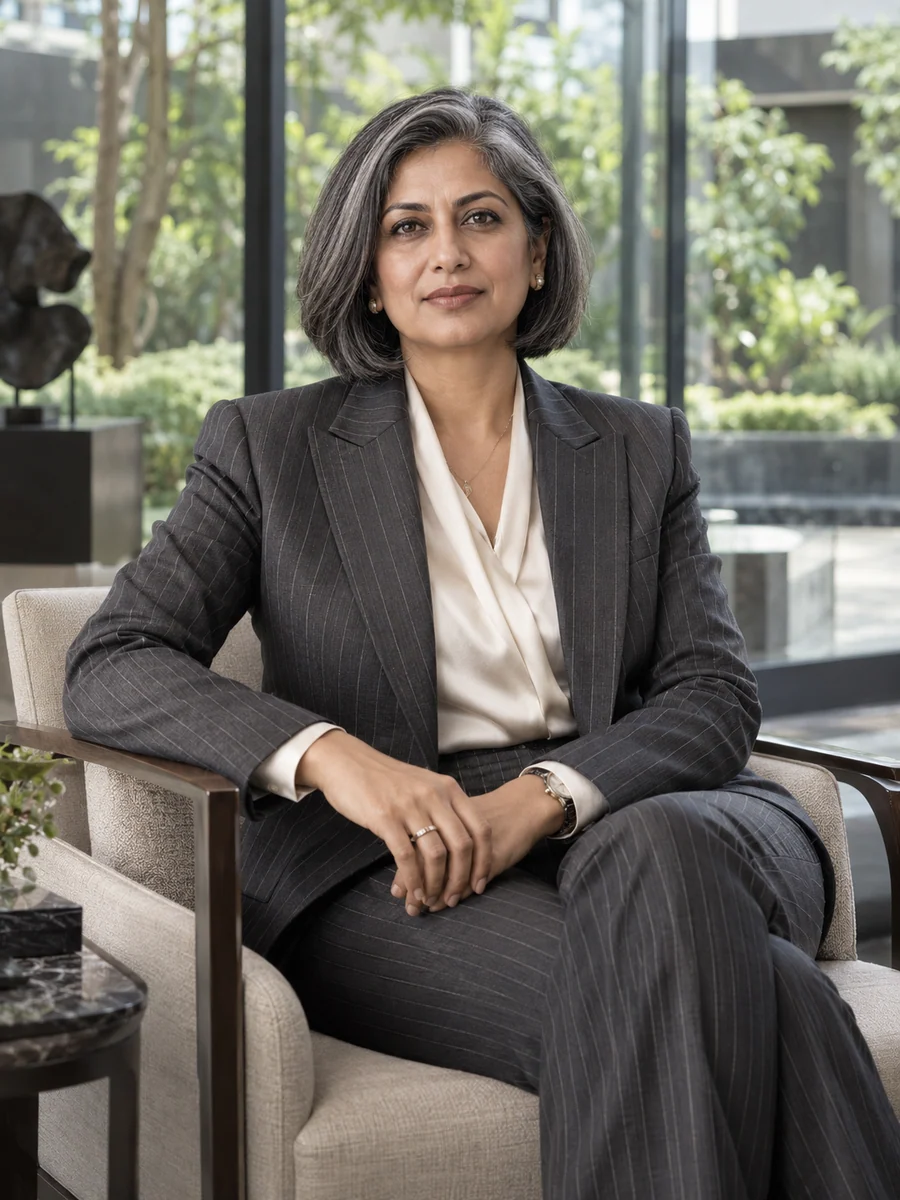
I grew up in Nagpur in a household with one television set and firm opinions about who controlled it. My grandmother watched Marathi plays recorded for television; my father, a civil engineer with the state irrigation department, watched the news; my brother and I watched whatever the cable operator downstairs had decided to carry that month. When I later spent years studying why people watch what they watch, I kept returning to that room. The choice was never only about the programme. It was about language, about who was in the room, and about what was available at the price the household would pay.
I studied economics at Ambavane College of Arts and Economics in Pune, graduating in 1998, and completed the two-year postgraduate diploma in management at the Sindhurang Institute of Management in Mumbai in 2000. My first job was as a research executive with Lokmanas Research, a media research firm in Mumbai. For three years I ran household surveys and viewing diaries, often sitting in living rooms in Thane and Nashik while families explained, with great patience, why a channel they claimed to dislike was on every evening. In 2003 the firm sent me to Chennai to build a regional-languages unit. I learnt working Tamil there, and I learnt that the southern markets were not one market: a Telugu household in Hyderabad and a Tamil household in Madurai organised their evenings, their film-going and their loyalties in quite different ways.
By 2006 I wanted to understand how audiences became money. I joined Dhavalgiri Securities, a Mumbai institutional broker, as an equity analyst covering listed media and telecom companies, and later became its senior analyst for the sector. Those six years covered the 2010 auction of third-generation spectrum, the phased digitisation of cable television that began in 2012 and the first serious attempts by Indian broadcasters to sell programmes online. Writing for fund managers taught me to put a number on every claim and to say what would prove me wrong. It also taught me the limits of the analyst's chair. I could forecast a decision, but I was never in the room when it was made.
In 2012 I joined Varanya Towers, a tower company in Mumbai owned by two infrastructure funds, to run corporate development. Tower companies are the most patient businesses in telecom: they build a site, sign long contracts with mobile operators and earn more as each additional operator shares the same steel. I helped buy a portfolio of 2,300 towers in 2014, and from 2015 I also led strategy and the master service agreements with our tenant operators. When a new operator launched free voice calls in September 2016, the industry consolidated within two years, and our customers began giving notice on thousands of tenancies. The settlement I negotiated in 2017 traded part of our contractual exit charges for new equipment and longer commitments. It is the decision of my career I have examined most often.
I returned to content in February 2018. Ilavenil's managing director, the founder's son, hired me to rebuild the company's distribution agreements before TRAI's new tariff framework for broadcasting took effect, under which every pay channel carries its own declared price and viewers choose what they pay for. That work put me in every negotiation with the direct-to-home, cable and broadband platforms that carry our channels, and in the board's discussions of how the framework would change our income. The managing director made me chief strategy officer in April 2021, when he created the role.
The defining decisions since then have each meant refusing something attractive. I argued for a Marathi broadcaster instead of a stake in a Hindi network, for pricing films by the hours they would earn instead of the stars they featured, and for keeping the long-term rights to series we made with a global streaming service. Twice the managing director disagreed with me before agreeing. Once he overruled me, on a sports bid in 2024, and we still lost the rights to a rival at a price I think was too high for anyone.
I lead thirty-four people across strategy, corporate development, audience research and partnerships, in Chennai, Hyderabad and Pune. I ask my team for the arithmetic behind every recommendation and for the strongest case against it, written by the colleague who would most like to make it. In a promoter-led company the strategy office is most useful when it gives the board a second view that is neither the family's instinct nor the bankers' deck. I attend the board when strategy, acquisitions or major partnerships are discussed, and I report twice a year to the Risk Management Committee on audience and distribution risk.
Inside the industry I am probably known for counting hours rather than reach, for distrusting the word strategic when it is used to justify a price, and for the view that regional broadcasters should be careful buyers of sport. I am now preparing for a second role alongside my executive one: a single independent directorship, where I would be the outsider asking for the arithmetic.
Open to Board appointments · Speaking invitations
Languages / English · Hindi · Marathi · Tamil
A leadership conviction
Count the hours people actually spend with us, language by language, before counting reach, rank or rights.
- Revenue, year to March 2026
- ₹2,460 Cr
- 43 per cent advertising, 36 per cent distribution platforms
- Television channels in four languages
- 11
- Tamil, Telugu, Kannada and, since 2022, Marathi
- Paying Ilavenil Play subscriptions, March 2026
- 2.3 million
- Up from 0.9 million in 2021; about half through bundles
Board & advisory record
Current appointments
Ghatmatha Entertainment Private Limited
Director of the wholly owned Marathi subsidiary, in an executive capacity
2022–present
Education & credentials
- Bachelor of Arts in Economics
- Ambavane College of Arts and Economics · 1998
- Postgraduate Diploma in Management
- Sindhurang Institute of Management · 2000
Perspectives from colleagues
When a film from a firm connected to our promoter family came to the committee, Sanjana had already priced it with the same model she uses for every other film, and she showed us both numbers side by side. She makes it straightforward for an independent director to do the job properly.
I argued against her ceiling on film prices, and I still think we gave away one premiere too many in 2022. But she put my objection into the board paper in my own words, and a year later she changed the rule to make room for it.
In 2017 our investors wanted a fight with the operators and Sanjana wanted a settlement. She modelled both, told our lenders the bad news before they asked for it, and was right about which customers would still be on our towers ten years later.