Chief Financial Officer India
Tracing every tariff back to the buyer who pays it
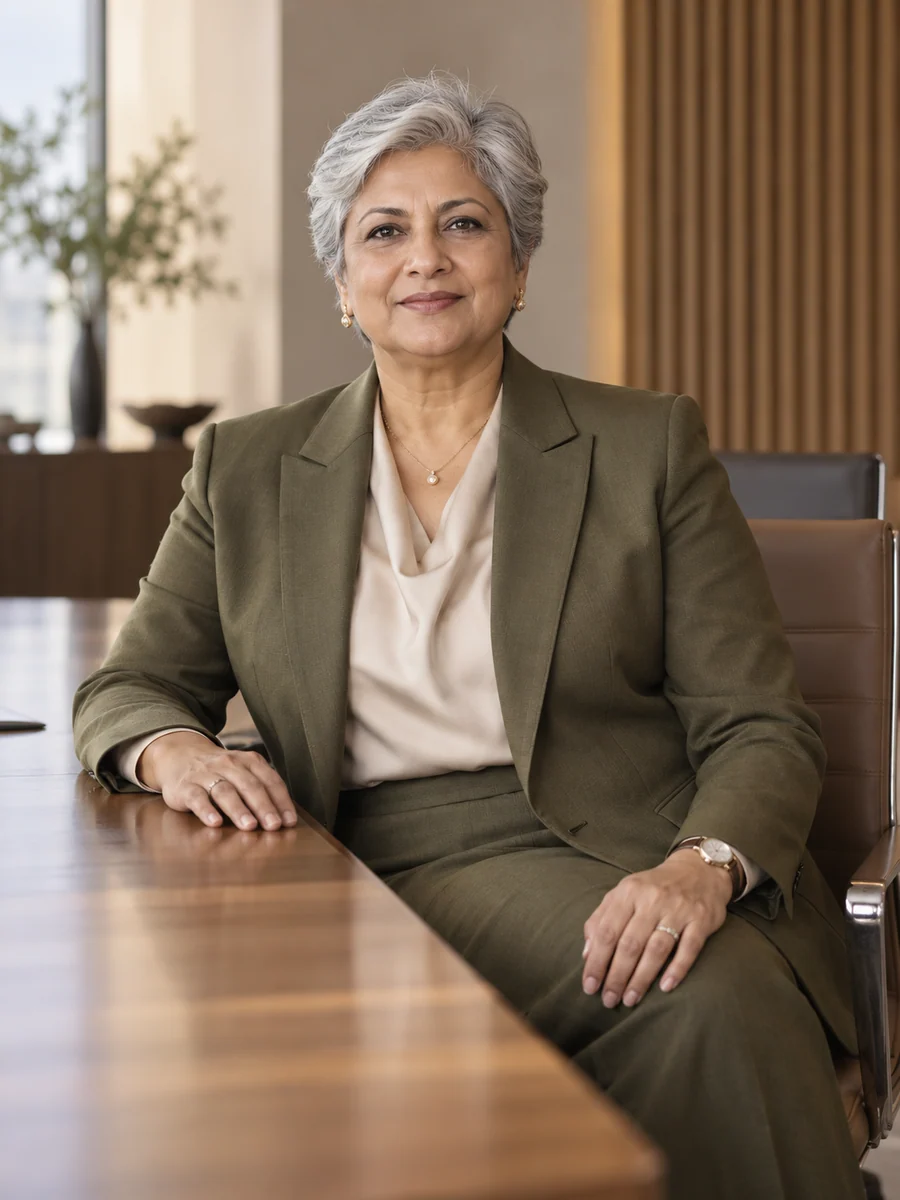
I grew up in a staff colony beside a state-owned thermal power station in Haryana, where my father was a maintenance engineer. Some summers, units were shut not because anything had broken but because the coal had not been paid for. I did not understand the accounting then. I understood that a power plant could be perfectly sound and still stop, because money had failed to arrive from somewhere further down the line. Most of my working life has been spent tracing that line.
I studied commerce at Amaltas College of Commerce in Delhi, graduating in 1995, and qualified as a chartered accountant in November 1998 after articleship with Sehgal Narang & Co., a mid-sized New Delhi practice whose clients were mostly manufacturers and traders. The audits taught me to count; they did not teach me to price risk. For that I went to Mumbai in December 1998 as a credit analyst at Velkaran Infrastructure Finance Limited, a listed lender to roads, ports and power. By 2000 I was appraising power projects. I learnt to build a debt-service model and, from a senior colleague who had lent to state utilities since the early 1980s, to ask for the payment history before reading the tariff schedule.
In June 2003 I crossed to the borrower's side. Dhaulagarh Power Projects Limited, a promoter-led developer in New Delhi, was planning a 1,320-megawatt coal plant in central India, and I joined to help finance it. Over five years we assembled fourteen lenders for ₹6,240 crore of debt, and I watched a project's risks being allocated in a data room: fuel to a linkage, payment to a state utility's letter of credit, construction to a contractor. Each allocation looked secure on paper. I left in January 2009 because the fuel arrangements were weakening and I had begun to doubt the plant's economics. It was commissioned in 2013 and its debt was restructured five years later. I take no satisfaction in having been uneasy. I took a lesson: a contract moves a risk to someone else, and the question is whether they can carry it.
From February 2009 I ran finance and treasury for Skarvholm Wind India Private Limited, the Pune-based subsidiary of a fictional Danish wind developer. We grew from 90 megawatts to 640 megawatts in five years, selling power at tariffs that state commissions set for wind. It was my first experience of being the supplier who waits. Our largest buyer, a state distribution company in southern India, took eleven months to pay at its worst, and our parent's treasury in Europe could not see why a regulated tariff did not produce regulated cash. I spent much of 2012 explaining it to them, and borrowing working capital to cover it.
In April 2014 I joined Tejovan, then a private company with 310 megawatts of operating wind and solar plants, as vice president for corporate finance and treasury. Central auctions for large solar plants were about to bring tariffs down sharply, and the founders wanted to grow. Over five years we financed twenty-one project companies, brought in Aldermoor Infrastructure Partners as a minority investor in 2016 and issued a five-year dollar green bond in 2018. I became deputy CFO in July 2019, responsible for preparing the company for listing, and CFO in April 2021. We listed on the NSE and BSE in March 2022.
My first year as CFO set the agenda for the next four. Two state utilities were falling far behind on their bills, the GST rate on solar equipment had risen in the middle of construction, and the bankers managing our listing wanted a profit figure that included compensation we had not yet been awarded. I held out against booking the claim. A few months later I recommended accepting instalments, and waiving part of the surcharge we were owed, rather than spending years in litigation. Neither choice was popular at the time.
I lead 140 people in finance, treasury, tax, investor relations and project accounting, with seven direct reports, in New Delhi, Jaipur and Bengaluru. I ask them for two habits. The first is to show every rupee of receivable with the name of whoever owes it and the date it fell due. The second is to tell me when a model we rely on assumes that someone pays on time, because in our business nearly every model does. Our head of internal audit answers to the Audit Committee chair, not to me, and I attend every meeting of that committee and of the board as an invitee.
Colleagues in the sector would probably name three arguments of mine that have slowed our growth: that a tariff should be judged by its buyer's payment record, that currency cover belongs inside a bid rather than after it, and that installed megawatts are a poor measure of a renewable company's progress. I hold them because I have seen each alternative fail, in a coal plant, a wind portfolio and a stretched balance sheet. I am now preparing for a different seat, on the far side of an Audit Committee table.
Open to Board appointments · Speaking invitations
Languages / English · Hindi · Punjabi
A leadership conviction
I would rather report a smaller number that a distribution company has paid than a larger one it has merely signed.
- Operating solar and wind capacity, March 2026
- 4.2 GW
- With a further 1.6 GW under construction
- Revenue, year to March 2026
- ₹3,640 Cr
- EBITDA of ₹3,120 Cr from 9.4 billion units generated
- Receivable days, March 2026
- 64 days
- Down from 238 days in March 2022
Board & advisory record
Current appointments
Tejovan Green Assets Private Limited
Director in an executive capacity; also a director of three Tejovan project companies
2021–present
Education & credentials
- Bachelor of Commerce (Honours)
- Amaltas College of Commerce · 1995
- Chartered accountant, qualified through articleship
- Sehgal Narang & Co. · 1998
Perspectives from colleagues
Meera's papers tell the committee what she is unsure of before they tell us what she recommends. When the bankers wanted our change-in-law claim in the pre-listing accounts, she set out the case for booking it as fairly as the case against, and then gave us her view. We have not had to reverse a judgement she brought to us.
In 2012 our Indian buyer was eleven months late, and head office wanted to know why a regulated tariff was not producing cash. Meera explained it to our treasury committee without once blaming the utility, and then arranged the money to wait it out. She made India legible to people who had never been there.
She asks for the name of whoever owes us each rupee and the date it fell due, and she asks every month. It sounds like detail until a lender's covenant test arrives and every figure is already where it should be.