Chief Operating Officer India
Learning to ask what actually happened
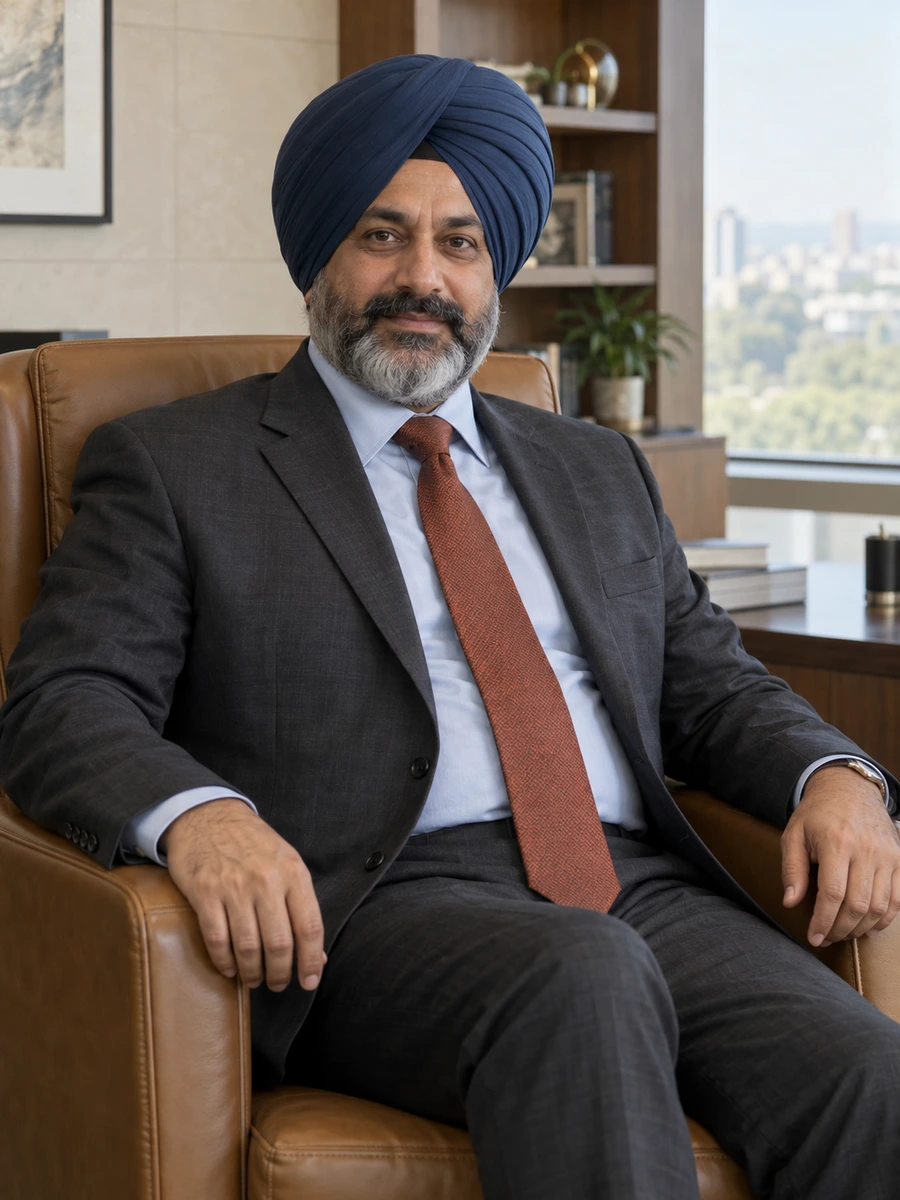
I completed a commerce degree at Garelvian College of Commerce in May 1993 and joined Doraveth Machinery Services in Ludhiana that July. The business coordinated repairs and replacement components for small workshops. I began as a service coordinator, arranging visits and checking whether the record matched what the technician and customer said had happened. A machine model, a serial number and an invoice could each identify part of a job without proving that the right work had been completed. I learnt to ask which physical event a status described before treating it as a basis for the next action.
During those first years I spent time with technicians and workshop owners. A delayed component could keep a machine idle, and an inaccurate service record could send the next technician to the wrong problem. I was not an engineer and did not make technical diagnoses. My contribution was to keep the coordination record accurate, obtain the missing evidence and make sure that someone owned the next step. Later I supervised a small team and took responsibility for the service schedule. The work made me comfortable asking a practical question even when everyone around a desk thought the paperwork was sufficient.
In April 2000 I joined Tavresh Equipment Finance as branch operations manager. Lending introduced responsibilities I had not held in the machinery business. Credit colleagues decided whether to lend and on what conditions. Operations needed to establish that the required documents and release conditions were satisfied before a payment proceeded through the authorised process. I learnt that an invoice was a claim about a transaction, not a substitute for every other part of the evidence. The borrower, supplier, asset and bank details had to describe the same financing proposition. A discrepancy could have an innocent explanation, but it still needed resolution.
The regional operations role followed in April 2008. I began leading managers across offices rather than checking every file myself. Our challenge was to make the evidence requirement consistent without forcing every business situation into a single explanation. An invoice correction, a changed delivery date and a different beneficiary account were not interchangeable exceptions. I asked managers to identify the decision affected and the function authorised to resolve it. That helped operations avoid two opposite errors: releasing money on an unsupported assumption or taking a credit decision that belonged to someone else.
In April 2014 I became head of loan operations. The remit included central processing, servicing and document administration. I worked more closely with finance and technology because a date or account mapping chosen in one process could change the customer's experience elsewhere. A system entry might be used to schedule interest, produce a statement or close a service request. I wanted its meaning defined before it was reused. We also examined the custody of records after a loan had closed, when responsibility could become less visible even though the documents still required an accountable retention and access process.
The company's ownership changed in 2020 when a private investment fund acquired a controlling stake and the founding family retained a minority. The change brought more formal reporting expectations and plans for regional growth. I became COO in April 2021, reporting to the CEO. I now lead 284 operations colleagues through six managers, with a ₹48 crore annual operating budget. At March 2026 Tavresh had 42 offices and 870 employees, loans of ₹2,180 crore and FY 2026 income of ₹384 crore. Those company measures describe our scale; they are not amounts I can approve for lending on my own.
My present remit depends on clear working relationships with credit, compliance, finance, technology and collections. I present material operating issues to the board risk committee when invited, but I am not a director or a committee member. I want the paper to show what our records establish, which decisions remain open and who is accountable for resolving them. A report should not turn a paused release into a credit rejection, a corrected charge into a saving or a refund receipt into proof that the right borrower account has already been adjusted.
The cases on this site come from that COO appointment. They retain the inconvenience of checking machine identifiers, the cost of refunding excess interest and the additional expense of document custody that we could actually account for. They also retain seven unresolved supplier-refund cases at the review date. My experience does not suggest that every operating uncertainty can be eliminated before business proceeds. It suggests that people make better decisions when the record states which event has happened and which has not. That is the discipline I would bring to a future board contribution while learning to exercise oversight without becoming another operating manager.
Open to Board appointments
Languages / English · Punjabi · Hindi
A leadership conviction
The screen tells us what somebody recorded. The operation has to establish what actually happened: which machine was inspected, when money moved, who received a document and whose account a refund belongs to. I want colleagues to preserve those distinctions when the pressure is to complete a queue. A faster process is useful only when the next person can rely on the event it claims to represent.
- Company loan portfolio
- ₹2,180 Cr
- Tavresh; March 2026, not delegated lending authority
- Operations colleagues
- 284
- Led through six managers
- Regional offices
- 42
- Four northern Indian states
Career chapters
2021–present 01
Chief Operating Officer
Tavresh Equipment Finance
Lead equipment-finance operations through six managers, preserving separate credit, finance and compliance authority.
2014–2021 02
Head of loan operations
Tavresh Equipment Finance
Connected central processing, servicing and document administration across a growing regional lender.
2008–2014 03
Regional operations head
Tavresh Equipment Finance
Led office managers in applying release conditions and referring exceptions to the appropriate decision-maker.
2000–2008 04
Branch operations manager
Tavresh Equipment Finance
Established the operating evidence needed between an approved credit proposition and disbursement.
1993–2000 05
Service coordinator, later coordination supervisor
Doraveth Machinery Services
Connected technician visits, parts and customer records in workshop machinery servicing.
Education & credentials
- Bachelor of Commerce
- Garelvian College of Commerce · 1993
Perspectives from colleagues
Jasdeep brought us the exact difference between the inspected machine and the financing record. We could make the credit decision without asking operations to guess what the change meant.
He kept the supplier receipt separate from the borrower-account action. The refund report showed the progress made and the work that still needed an accountable owner.