Chief Product Officer Europe
How a box of cassettes led me into product
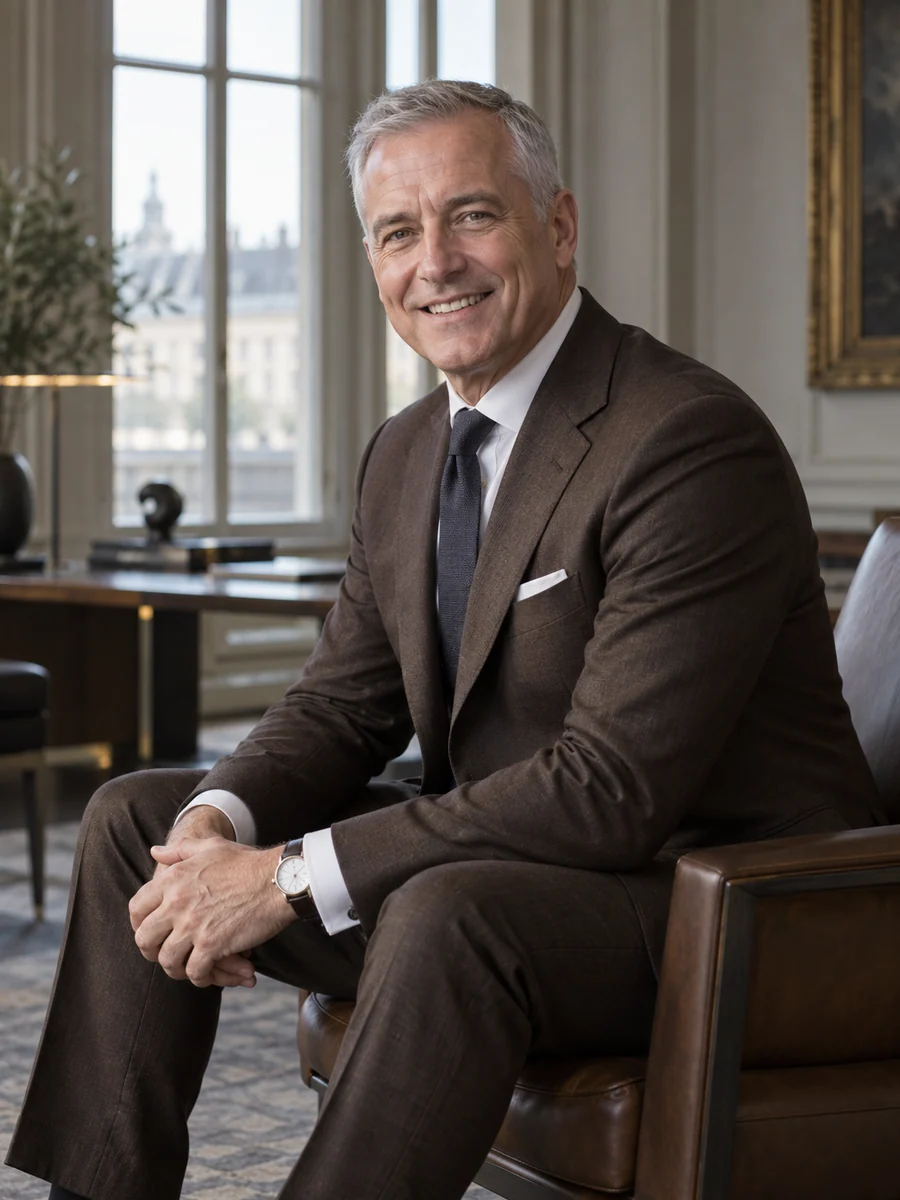
The first product I built for older listeners was a box of cassettes. In 2001 I was a reporter and documentary producer at Radio Clairval, a network of fourteen local commercial stations in the Rhône and Loire valleys, and I had made a four-part series about the last silk weavers of the Croix-Rousse in Lyon. It went out on Sunday evenings. In the week after the final episode the station received more than three hundred letters and calls, most of them from listeners over seventy, asking to hear it again. We had no way of replaying it. A technician and I spent several evenings copying the series onto cassettes and posting them. Many of the letters also asked how to hear other programmes their writers had missed. I kept them. That box held most of the questions I have worked on since: what people want to hear again, how they find it, and what stands between them and it.
I grew up in Saint-Étienne, read modern history at the Université de Montbrenne and trained as a radio journalist at the Institut Belcombe de journalisme, finishing in 1998. Radio Clairval hired me that September. For five years I reported local news and produced a weekly documentary slot, ninety-six programmes in all, with one sound engineer and a budget that seldom stretched beyond the region. Radio taught me to write for the ear, to cut anything a listener would not miss and to respect an audience I could not see.
In 2003 the station asked me to take over its website, which nobody else wanted. Two years later I persuaded the programme director to let me publish the documentary slot and a daily news bulletin as podcasts. By 2007 they were downloaded about 160,000 times a month, and I had become, without meaning to, the person at a radio station who thought about software. When two former colleagues founded Ondaline in 2008, an app for catching up on local radio, I joined them as its product manager.
Ondaline was where I learnt the trade. We were nine people when I arrived and thirty-four when we sold the company. I learnt to write a specification, to run a usability test at a café table and to read a retention curve. I also learnt how easily a product team falls in love with its heaviest users. Our first recommendation feature, which queued the next episode, served people who already listened every day and did almost nothing for those who opened the app once a week. When Groupe Hérisart, a Lyon regional newspaper group, bought Ondaline in January 2012, I moved into its digital team to build paid subscriptions.
At Hérisart I met subscription economics and older customers in the same week. The newspapers' most loyal readers were print subscribers with an average age above sixty-five, and our digital edition required them to create accounts that most of them never finished. We set up a telephone activation line staffed by former subscription clerks, who linked 48,000 print subscribers to digital accounts in two years. Digital subscriptions grew from 9,000 to 71,000. In the evenings I took an executive master's in digital economics at the École Varonne de management, which gave me words for what I had been doing by instinct: price architecture, cohort analysis, the economics of bundles.
In October 2016 I moved to Merovia Mobile in Brussels to run its customer app and website and the streaming bundles it sold with its tariffs. Telecoms taught me scale and some humility. The app had 1.1 million monthly users who opened it mainly to check their bill, and it greeted them with offers. We put the bill first, which cost the marketing team in-app sales and cut calls about bills by more than a quarter. I also found that 41% of the streaming subscriptions bundled into our tariffs had never been switched on. A subscription nobody uses is a cancellation waiting for its renewal date, and we changed the bundles so that customers had to activate them.
Solène Varadier, Lisandre's chief executive, approached me in late 2020 while I was leading Merovia's side of a bundle negotiation with her company. I told Merovia's chief commercial officer the same afternoon and handed the file to a colleague. I joined Lisandre in April 2021. Since then my work has been to turn an app built for devoted audiobook listeners into a service that can grow with lighter, older and Spanish-speaking listeners without the royalty bill outgrowing the subscription. That has meant replacing our unlimited plan with hour-based plans, giving each obligation on our home screen its own labelled row, building a reduced mode for older listeners and launching a free podcast tier carrying advertising.
I run the product organisation on a few habits. Every significant proposal begins with a one-page note describing what a listener will see, read or lose, written before any design work starts. I listen to an hour of recorded support calls every Monday morning. When a colleague disagrees with one of my proposals, I ask them to put the objection in writing and I attach it to the paper; I have lost several of those arguments, including one about the timing of our plan change. Colleagues would probably say that I am slow to call a launch a success and quick to ask which customers it made life harder for. Outside Lisandre I sit on the board of Les Voix Partagées, a Lyon association whose volunteers record books for blind and partially sighted readers, which keeps me honest about who our own product still leaves out.
Open to Board appointments · Advisory roles · Speaking invitations
Languages / French · English · Spanish
A leadership conviction
A product tells its customers what it values through what it shows first, what it counts and what it makes difficult. Those are design choices, but they are also promises, and I try to make the promise on the screen match the one in our terms and the one in our finance model. When the three cannot be made to agree, I would rather change the product than the wording.
- Paid subscriptions
- 1.58m
- Lisandre Audio, June 2026; 190,000 of them through operator bundles
- Average monthly churn
- 2.8%
- First half of 2026, from 3.4% in 2022
- Company revenue
- €268m
- 2025; my product, design and data budget is €29m
Board & advisory record
Current appointments
Les Voix Partagées
Director (unpaid); lead of the digital and accessibility working group
Digital and accessibility working group
April 2019–present
Education & credentials
- Licence in modern history
- Université de Montbrenne · 1996
- Postgraduate diploma in radio and audio journalism
- Institut Belcombe de journalisme · 1998
- Executive master's in digital economics (part-time)
- École Varonne de management · 2015
Recognition
Regional radio documentary prize for a series on Lyon's last silk weavers
Cercle Rhodanien des Journalistes · 2002
Books & papers
Listening without sight: design notes for accessible audio apps
Les Voix Partagées · 2025
In conversation
La Lettre Sonore / 2023
Why Lisandre put a meter on its listening plans
Perspectives from colleagues
When the proposal to ration our heaviest listeners quietly reached the executive committee, Hugo wrote the dissent himself and attached it to the paper. He told me roughly how many subscribers we would lose and that some of them would be right to leave. His estimate was close.
Hugo joined our board as the person who understood apps. What we have come to value more is that he asks our blind readers before he asks our volunteers, and that he talked us out of a grant whose conditions would have let a funder choose our books.
I told Hugo that the promoted label made my titles look like advertisements and that a small press needed those rows more than the large houses did. He changed the wording twice and kept the label. I still dislike the label. I cannot dispute that our books are now seen.