A component maker stays independent through the electric transition by investing where its precision travels and by never letting one customer own its future.
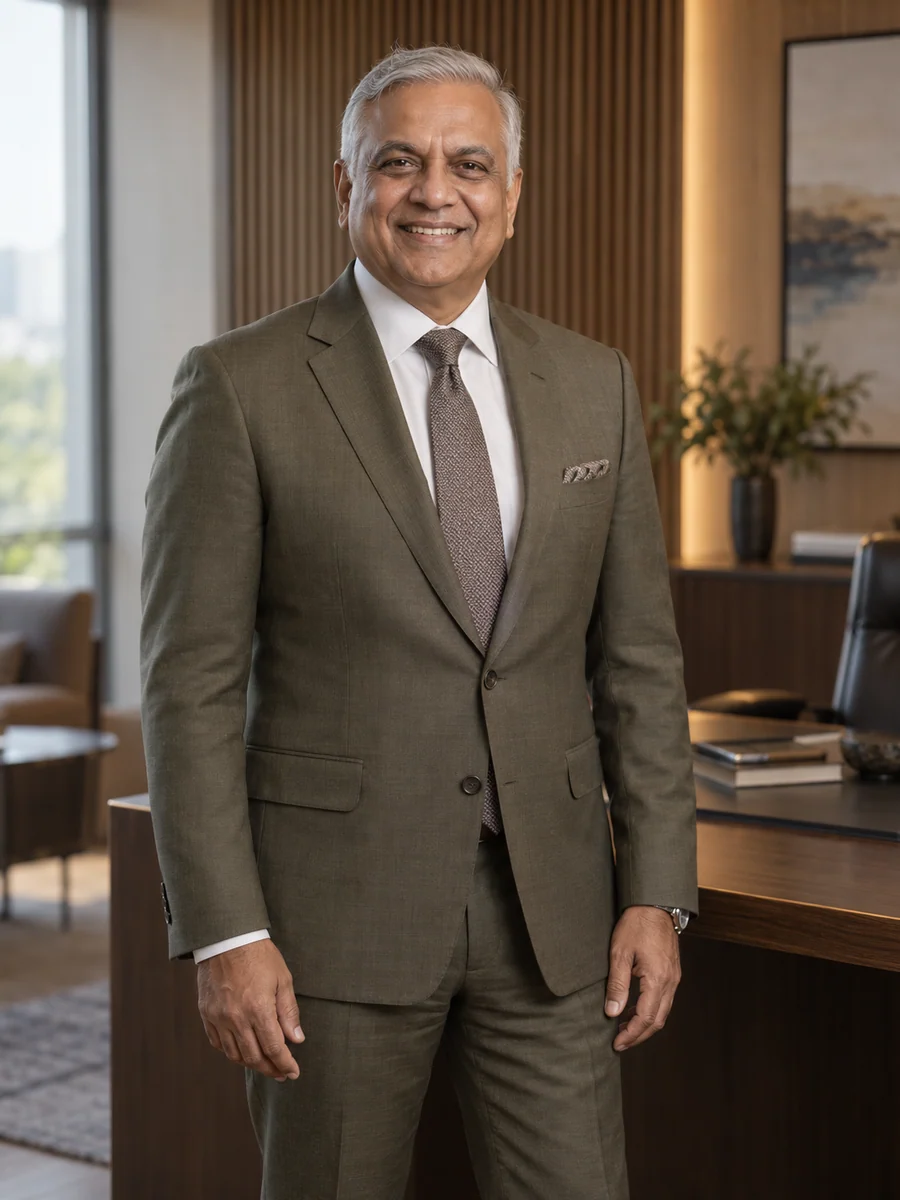
I am the managing director and chief executive of Kavirath Auto Systems Limited, a fictional Pune-based maker of transmission gears, shafts and driveline assemblies, listed on the NSE and BSE and controlled by its founding family. In the year to March 2026 we earned revenue of ₹6,240 crore and EBITDA of ₹830 crore from five plants at Chakan, Satara, Hosur and Pantnagar. About 63 per cent of that revenue still comes from gears for petrol and diesel vehicles, 20 per cent from tractor and off-highway drivelines, 9 per cent from parts for electric vehicles and 8 per cent from the aftermarket. Exports make up 22 per cent.
I am the first chief executive in the company's forty-seven years who is not a member of the Ghaisas family. I reached the role through gear shops and plants: a tractor maker's gear shop in Satara, a German driveline supplier's plants in Pune, Germany and Chennai, the export business of a listed forging company, and four years as Kavirath's chief operating officer. Before any of that I grew up around my father's machine shop in Kolhapur, which nearly closed when its largest customer took its machining in-house. I have never forgotten how quickly a supplier's independence can disappear.
Since I became chief executive in April 2021, the board and I have made three choices that define the company today. We invested in electric-vehicle parts where our grinding and noise-testing skills transfer, rather than in complete electric axles. We declined business from our largest customer that could only be won below cost, and agreed a ceiling on any one customer's share of revenue. And after a dispute at our Chakan I plant, we began moving core production roles from contract to permanent employment. Each choice made a year look worse before it made the company stronger, and each was argued out with an executive chairman who has every right to disagree with me.
Electric-vehicle revenue built on skills we already had
Revenue from electric-vehicle parts rose from ₹38 crore in 2021–22 to ₹560 crore in 2025–26, from reduction gear sets, rotor shafts and motor housings supplied to nine vehicle makers. We have spent ₹540 crore of a staged ₹620 crore programme, instead of the ₹1,400 crore electric-axle venture first proposed.
Less dependence on one buyer
Our largest customer's share of revenue fell from 38 per cent in 2021–22 to 31 per cent in 2025–26, and the top two customers' from 58 to 47 per cent, after we declined a below-cost award. EBITDA margin rose from 11.6 per cent in 2022–23 to 13.3 per cent in 2025–26.
A labour settlement that pays for skill
At Chakan I, 386 of 420 core production roles moved from contract to permanent employment by March 2026 under a four-year settlement signed in 2024. Reportable injuries at the plant fell 58 per cent and first-pass yield rose from 93.1 to 96.4 per cent.
An export base spread across seventeen customers
Exports grew from ₹610 crore, 14 per cent of revenue, in 2021–22 to ₹1,370 crore, 22 per cent, in 2025–26, sold to customers in nine countries. The largest export customer's share of our exports fell from 60 to 34 per cent.
Current focus
I am preparing the board's decision on the third stage of our electric-vehicle programme, a ₹310 crore question about whether to add a second precision-grinding line at Hosur before or after two pending customer nominations are confirmed. Alongside it, I am working with the executive chairman and the Nomination and Remuneration Committee on a written succession plan that applies the same criteria to the family's next generation and to professional managers.
Conversations I welcome
I am not looking to leave Kavirath. With my board's approval, I would consider one independent directorship at a listed manufacturer outside the automotive supply chain, joining its Nomination and Remuneration or Risk Management Committee. Twenty-five days a year is what I can honestly commit. I also accept a small number of invitations to speak to manufacturing and governance audiences.