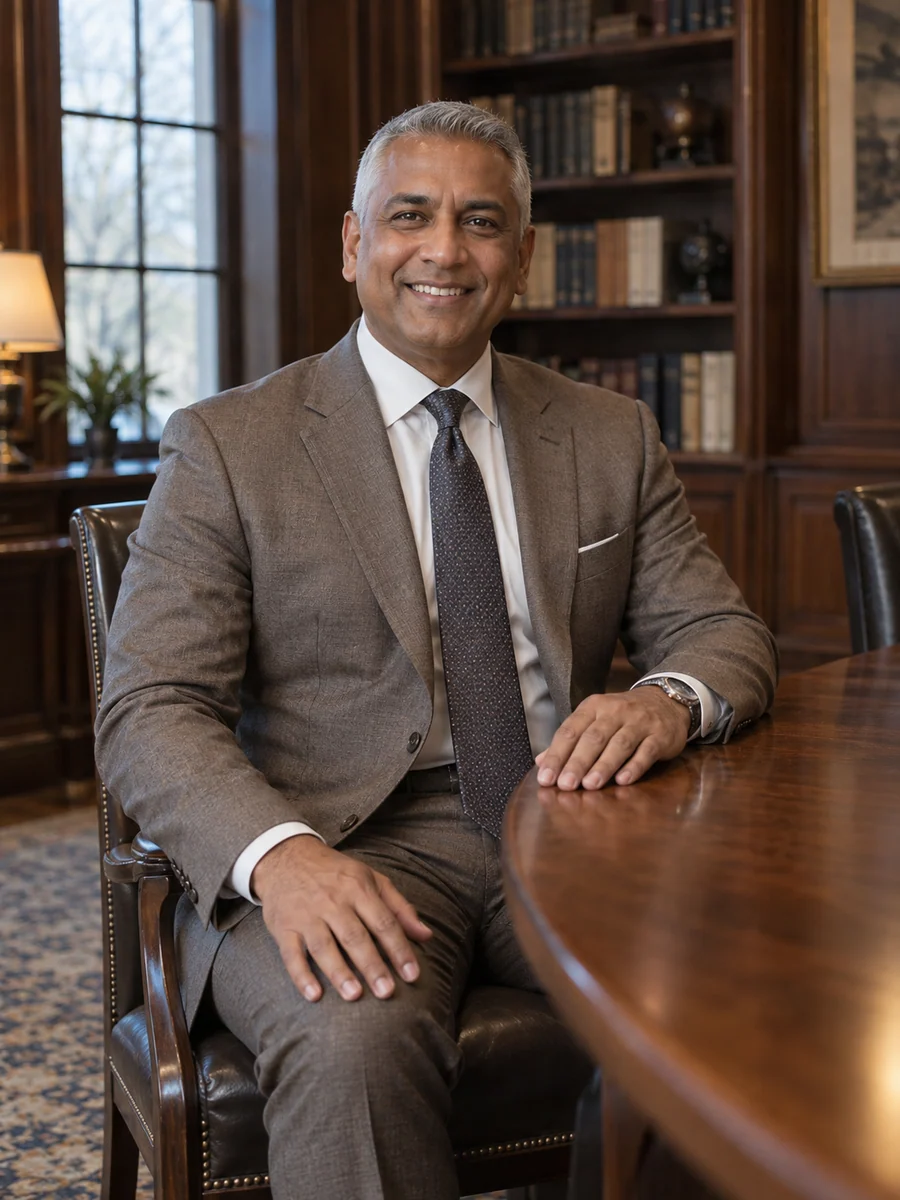
A pharmacy chain's customers lend us their shopping history; my job is to decide what we may conclude from it and what we must decline to.
Leadership paper / 01
Sensitive inference in loyalty data5 min read
What a pharmacy should never infer
Abstract
A pharmacy chain's front-store purchases can reveal pregnancies, dependencies and illnesses that no customer chose to disclose. I argue that some conclusions should be refused outright, whatever the consent form says, and that the board rather than management should own the list.
Loyalty offers already give different customers different net prices. I argue that in a pharmacy chain personalisation should only ever lower a price below the posted one, should never be sized on signals of need or urgency, and should leave essential health products out altogether.
Retail forecasting teams report average accuracy across thousands of products. For a pharmacy chain, the measure that matters is whether essential health products are on the shelf in the few weeks when everyone needs them at once, and boards should ask for that measure every autumn.
Open toBoard appointments · Advisory roles · Speaking invitations
In a chain that both fills prescriptions and sells lipstick, the important data decision is which conclusions about a shopper we decline to draw, and I write those refusals down before anyone offers to pay for them.
I am senior vice-president and chief data officer of Mirebrook Pharmacy & Beauty Inc., a Toronto-listed chain of 648 pharmacies with beauty and front-store departments in nine provinces. Fiscal 2025 revenue was C$8.3 billion: C$3.6 billion from dispensaries and C$4.7 billion from the front of the store. I am accountable for our data platforms, analytics, governance and the data behind Mirebrook Circle, our loyalty programme of 10.6 million active members. I report to our chief executive, Hartley Quenneville, and present quarterly to the board's audit and risk committee.
I arrived indirectly. For thirteen years I was a statistician at Brimscombe Research Group in Toronto, measuring what 14,000 panel households bought. I then spent six years forecasting demand and studying shoppers at Hedgecombe Brands Canada, a household and personal care supplier, and nearly five years running analytics and member data at Vellacott Rewards, a coalition loyalty operator in Montréal. I have sat on three sides of the same trade: the researcher sampling the shopper, the supplier buying a retailer's data and the loyalty operator selling it.
Those years left me with four questions.What may a company that also dispenses medicine infer from what people buy at the front of its stores? Should a personalised offer ever leave someone paying more than the posted price? What does a supplier's advertising money entitle it to see? And how far should theft analytics follow a person rather than a transaction? Each answer has cost Mirebrook revenue in the short run, and I have recorded why we accepted that.
Two separate questions instead of one bundled consent
In 2023 we asked every member, in English and French, to decide separately on personalised offers and on the use of their purchases in supplier advertising. 61% agreed to the first and 44% to the second, and privacy complaints fell from 1,140 a year to 310.
Scarce children's medicine sent by need, not by member tier
During the 2022–23 shortage of children's fever medicine we allocated stock from each store's pre-shortage demand and declined to reserve units for high-spending members. In the eight hardest weeks, 590 of 648 stores had stock on at least five days in seven.
A supplier clean room with rules the brands disliked
Our partner network returns only aggregates of 500 households or more and excludes 38 health-inference categories. It earned C$118 million in 2024 against a plan of C$141 million, then C$152 million in 2025.
Lower shrink without facial recognition
We declined a facial recognition pilot in 2024 and built transaction-exception analytics instead. Front-store shrink fell from 2.3% of front-store sales in 2023 to 1.8% in 2025, about C$23 million a year.
Current focus
I am rebuilding forecasts for 212 essential health products so that they are judged on shelf availability in peak weeks. I am also making our Québec catalogue French at source rather than translated afterwards, and preparing a board paper on how far the partner network should grow on member data.
Conversations I welcome
I am not looking for another executive role and intend to stay at Mirebrook through the next stage of the partner network. I would consider one non-executive seat outside pharmacy, beauty and grocery, where customer data has become a board question, with my chief executive's agreement. A handful of advisory or speaking requests each year also fit.
Beyond the page
The record behind the perspective.
In the boardroom
Larkhollow Food RescueDirector; chair of the technology and data committee · June 2021–present
Formation
Bachelor of Mathematics in statisticsWexcombe University · 1996
Master of Science in statistics (part-time)Harrowfield University · 2001
Director education programmeCarroway Directors' Institute · 2024
Samuel brought me a list of everything our data could infer about members' health before anyone had asked to sell it. Since then, most of our work together has been agreeing on wording, not arguing about whether to ask members at all.
Yasmin ThorvaldsenChief privacy officer and deputy general counsel, Mirebrook Pharmacy & Beauty Inc.The full record ↗
Contact
I am not looking for another executive role and intend to stay at Mirebrook through the next stage of the partner network. I would consider one non-executive seat outside pharmacy, beauty and grocery, where customer data has become a board question, with my chief executive's agreement. A handful of advisory or speaking requests each year also fit.