Chief Technology Officer India
The two pilot groups could not support one improvement claim
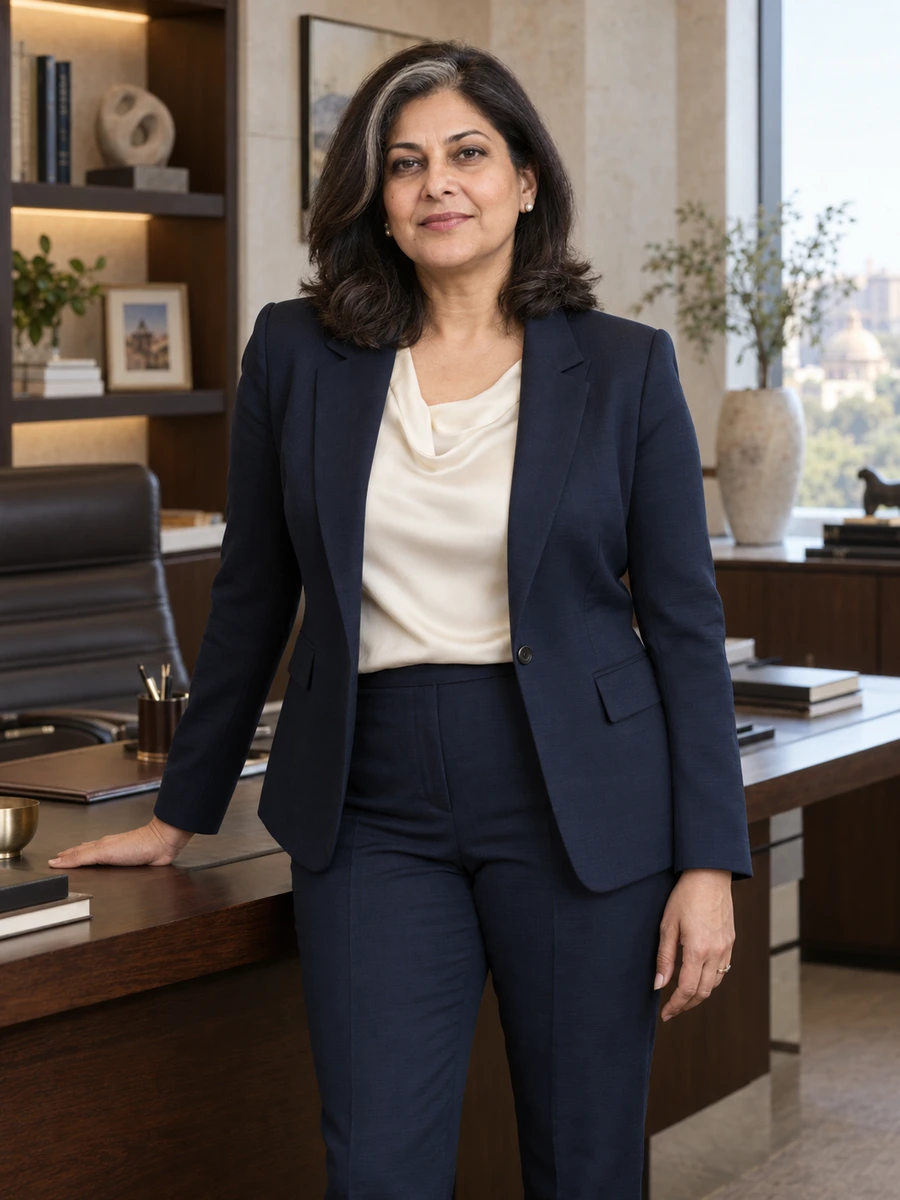
We had two pilot groups and no honest basis for calling them a matched performance comparison. Seven of twenty-four slurry pilot assemblies failed the agreed criterion. A revised dry-application group had two failures among twenty-four. The applications and conditions differed. I supported a narrower dry mineral-handling launch route, while slurry development remained unsuitable for introduction. The decision was useful precisely because it refused an attractive percentage improvement that the evidence could not establish. I wanted our commercial colleagues to know what the programme supported before they built a promise around it.
I grew up in Vadodara and completed ceramic engineering at the fictional Talzheni Materials College in May 1999. In July I joined Belqeri Refractory Products as a materials engineer in a seven-person laboratory group. Laboratory assignments came from the supervisor; I neither managed colleagues nor authorised expenditure. The company then employed 145 people and reported twenty-seven crore rupees revenue for the year ending March 2000. I learned to respect the difference between a result and its interpretation. A measurement could be carefully made while the question attached to it remained too broad. The laboratory supervisor expected us to explain the sample and conditions before discussing what the number might imply.
In October 2005 I moved to Norzhemi Ceramic Components as development lead. Twelve colleagues, two team leads and an annual laboratory expense of ₹1.6 crore gave me a different responsibility. I now had to decide which questions deserved scarce development time. A customer request might be technically interesting without fitting the business's ability to manufacture and support the proposed product. I learned to put the intended application into the development brief early. A part-time postgraduate diploma in materials characterisation at Zervashi Engineering Institute, completed in November 2010, helped deepen that work while I remained employed.
Promotion to head of applications engineering in April 2012 expanded the remit to twenty-nine colleagues through three managers, ₹4.3 crore annual expense and ₹1.8 crore approved development capital. Norzhemi had 390 employees and ₹104 crore revenue for the year ending March 2013. I spent more time understanding the customer's use than selecting an attractive laboratory result. The same product description could conceal differences in material handled, installation and operating conditions. Applications engineering taught me to preserve those distinctions in the commercial account, rather than assume that a familiar name made two uses equivalent.
I joined Kezrali Industrial Ceramics in September 2017 as vice-president of technology. Forty-five colleagues and four managers supported engineering and testing, with ₹6.7 crore annual expense and ₹3.1 crore approved development capital. The business combined working founders, an employee trust and a regional industrial investor. That ownership mix brought different expectations about growth, continuity and the use of technical resources. I learned to explain a stopped programme as a portfolio decision with real consequences for the people involved, rather than a retrospective claim that the work had never been worth attempting.
Since January 2023 I have been CTO, reporting to CEO Farhad Qezvani. Kezrali's engineering office is in Vadodara and manufacturing is near Morbi. The company employs 620 people and recorded ₹196 crore revenue and ₹16.4 crore operating profit for the year ending March 2026. Working founders hold 34%, the employee trust 41% and the regional industrial investor 25%. My sixty-two-person function works through five managers. Quality head Mala Norsheli reports separately to the CEO. I fund development and qualification work, but I do not ask quality to change an acceptance decision to rescue a launch date.
The recent portfolio contains several different kinds of judgement. A slurry pilot led us to narrow an application claim. Missing process-origin evidence led us to segregate and review received material, with seven lots returned. A production-loading programme reduced failures in defined qualification groups without establishing perfect manufacture. We also stopped a decorative ceramic variant after ₹1.7 crore had been spent, declining a proposed ₹2.6 crore next stage and moving fourteen engineers into industrial wear and test-method work. The earlier expenditure remained spent. I did not call an unapproved future proposal a saving.
I hold no statutory directorship. Within this fictional career I registered with the IICA independent directors databank in September 2026 and have not passed its proficiency assessment or claimed an exemption. I am considering a first external board contribution, with twenty annual days provisional and subject to employer consent and the actual calendar. My experience could help directors question the technical assumptions behind a product or investment proposal. It does not make me an expert in every material, product-safety regime or legal requirement. I would want complementary directors and a chair who expects the limits of an engineering claim to remain visible alongside its promise.
Open to Board appointments
Languages / English · Gujarati · Hindi
A leadership conviction
A material result becomes useful when we can say which application it supports and which it does not. Development should preserve that boundary as carefully as it pursues the next improvement.
- Materials and technology career
- 27 years
- First appointment July 1999
- Engineering and testing colleagues
- 62
- Five managers; quality reports separately to the CEO
- Annual engineering/testing expense
- ₹9.2 crore
- Separate ₹4.8 crore approved development capital
Career chapters
January 2023 – Present 01
Chief Technology Officer
Kezrali Industrial Ceramics
Sixty-two colleagues, five managers, ₹9.2 crore annual engineering/testing expense and ₹4.8 crore approved development capital.
September 2017 – December 2022 02
Vice-President of Technology
Kezrali Industrial Ceramics
Forty-five colleagues and four managers across the industrial development portfolio.
April 2012 – August 2017 03
Head of Applications Engineering
Norzhemi Ceramic Components
Twenty-nine colleagues connected development evidence with the customer's intended application.
October 2005 – March 2012 04
Development Lead
Norzhemi Ceramic Components
Twelve colleagues and two leads; part-time materials-characterisation study completed November 2010.
July 1999 – September 2005 05
Materials Engineer
Belqeri Refractory Products
Seven-person laboratory group; no direct reports or delegated budget.
Education & credentials
- BE in Ceramic Engineering
- Talzheni Materials College · 1999
- Postgraduate diploma in Materials Characterisation
- Zervashi Engineering Institute · 2010; part-time
Perspectives from colleagues
Roshni explained the choice between the decorative programme and the industrial work it would displace. She kept the money already spent in the account and gave the fourteen engineers a clear next assignment, rather than call an unapproved proposal a saving.
She funded the qualification work without asking quality to alter its criterion for the launch. The different pilot conditions and remaining failures stayed visible, which made the technical account useful when commercial colleagues needed to explain the product's scope.