Chief Technology Officer Australia
A career spent at the boundaries between organisations
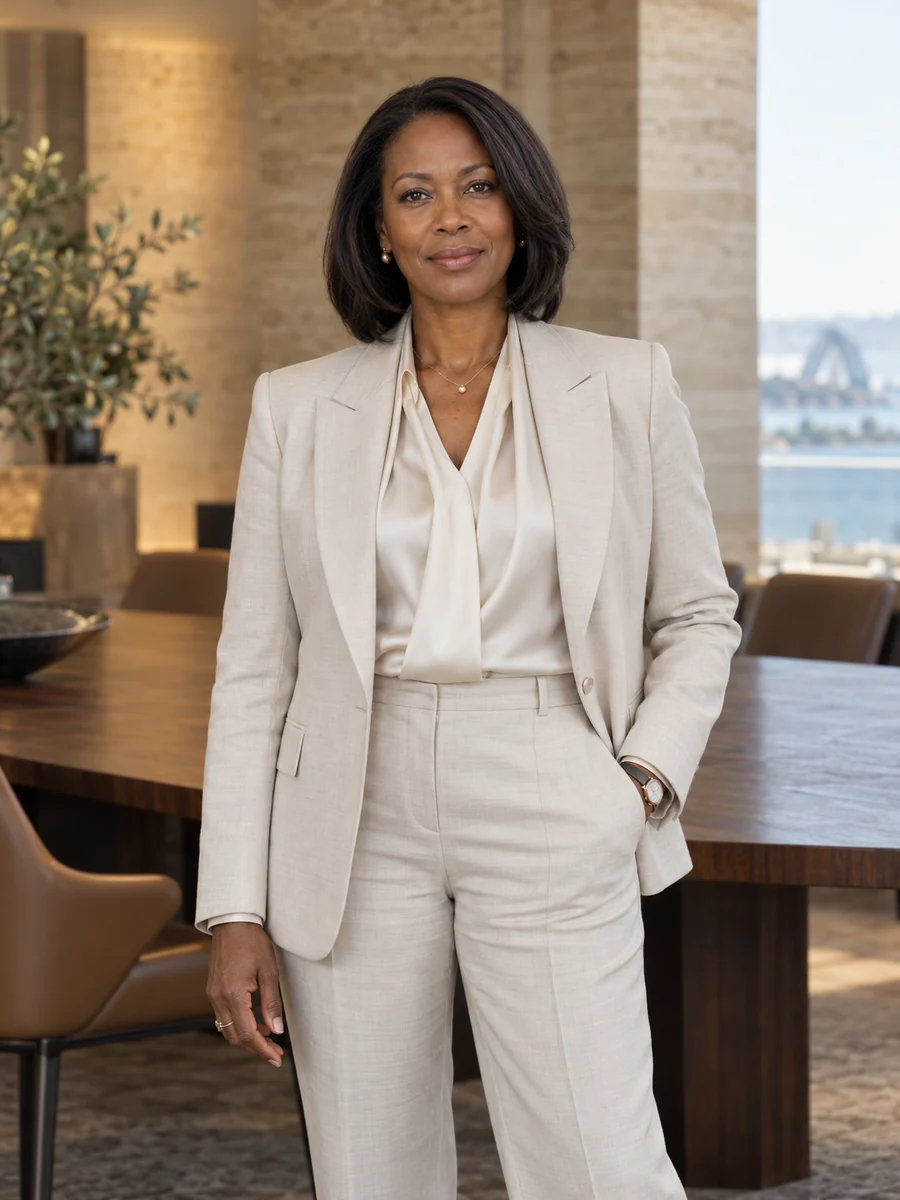
My father maintained railway signals around Bendigo for thirty years, and some of my earliest memories are of waiting in a ute beside a relay hut while he tested a level crossing. He had one rule that I have carried into every role since: a circuit is not proven until you have watched the train make it do what the drawing says. I did not expect that rule to organise a career in freight technology, but it has.
I studied electrical engineering at Strathlyn University of Technology in Melbourne, graduating in November 1996, and joined the Easterbrook Rail Infrastructure Authority, the state-owned manager of Victoria's regional track, as a graduate engineer in February 1997. For seven years I designed and tested signalling interlockings. The work rewarded patience and punished assumption. In 1999, during the commissioning of a new junction, our bench tests had passed and the paperwork was signed, yet a field test showed that one track circuit had been connected to the wrong relay. Nobody was hurt, because the field test existed. I learnt that a test plan is a claim about the world, and that the world is entitled to disagree with it.
In 2004 I moved to Corellan Rail Freight, an interstate operator running trains between Melbourne, Adelaide, Sydney and Brisbane over track that others managed. It was learning that the boundary between train and track was where its data stopped. I built remote condition monitoring for 74 locomotives and later managed train systems and telemetry, including the interfaces through which our trains received authority to move from the track managers' control systems. That work showed me how little each side of a commercial boundary knows about the other's systems, and how much depends on agreeing precisely what a message means.
Tallowmere Container Terminals recruited me in 2011 to run technology at its Brisbane container terminal. I replaced the terminal operating system during a planned nine-hour outage, introduced optical character recognition at the truck gate and connected the terminal to the vehicle booking system that road carriers use to reserve their slots. The gate taught me humility about automation. The cameras read container numbers correctly 97.6 per cent of the time, which sounded excellent until we multiplied the remaining 2.4 per cent by 3,000 trucks a day. We kept clerks on every lane for the exceptions, and truck turnaround still fell from 48 to 31 minutes. I completed a part-time graduate certificate in cyber security in 2015, because by then our cranes, cameras and gates sat on networks that somebody outside the terminal could reach.
From 2017 I was chief information officer of Pelloran Fleet Services, a private-equity-owned business that leased and managed about 48,000 vehicles for corporate and government fleets. I rebuilt its telematics platform and, from 2019, led a service that assessed customers' depots before they bought electric vehicles. That was where I learnt the electricity network's vocabulary: connection applications, demand charges, transformer headroom and the queue for network upgrades. Many customers had chosen their vehicles before anyone asked what the switchboard could carry.
Morrowgate's managing director asked me to join as chief technology officer in March 2021. The company had grown through acquisitions into three divisions running three transport management systems, the oldest written in-house in 1998. It had telematics in its trucks, cameras on its gates and equipment vendors with standing remote access to its terminals, but no single view of what was connected to what. I spent my first two years building that view and replacing the transport platform, migrating customers in cohorts rather than switching everything over on one weekend. That cost more and took longer than our chief financial officer wanted. It also meant that no customer lost its invoices or its integration on a single bad night.
I lead 360 technology colleagues, with an operating budget of A$124 million and capital spending of A$58 million in the year to June 2026, and seven direct reports, among them our chief information security officer. I ask my teams to describe a system by what it does to the person at the other end: the driver at the gate, the dock supervisor waiting for a load, the customer reconciling an invoice, the network engineer reading our connection application. I prefer to bring the board a measured constraint rather than a confident plan, and I put the cost of my preferred option in the first paragraph of every paper I write.
Inside the industry I am probably known for three positions that have cost Morrowgate money in the short run: that fleet electrification should be planned in network capacity before vehicle numbers, that a transport system should be replaced by customer connection rather than by software module, and that customers should receive delivery events rather than a raw feed of our drivers' working day. I hold them because I have measured the alternatives. I am now preparing for a non-executive role alongside my executive one, on a board that needs a director who can read an operational-technology risk as carefully as a balance sheet.
Open to Board appointments · Speaking invitations
Languages / English
A leadership conviction
I would rather tell a board what the substation, the vendor contract and the driver roster will allow than promise what a software brochure says. Freight technology is judged at the gate, the dock and the charger, by people who never see the project plan.
- Revenue, year to June 2026
- A$3.42 bn
- Interstate freight, ports and containers, contract logistics and regional freight
- Technology colleagues led
- 360
- Platforms, data, terminal and fleet systems, and cyber security
- Peak demand at the Melbourne port depot
- 1.38 MVA
- Serving 24 battery-electric prime movers on the connection the site already had
Board & advisory record
Current appointments
Kestwick Driver Training Foundation
Non-executive director of a not-for-profit training new heavy-vehicle drivers
Finance and Risk Committee
2022–present
Education & credentials
- Bachelor of Engineering (Electrical)
- Strathlyn University of Technology · 1996
- Graduate Certificate in Cyber Security, part-time
- Strathlyn University of Technology · 2015
- Company directors' course
- Australasian Board Practice Institute · 2023
Perspectives from colleagues
Eleanor brought the board a recommendation to revise our own electric-truck commitment, with the cost in the first paragraph and the people who disagreed named. It was not the paper we wanted. It was the one that let us keep the programme credible with investors and with our drivers.
When a penetration test reached a terminal network, Eleanor rang me that week rather than presenting a closed finding a quarter later. Her quarterly reports tell the committee what has been tested and what has merely been asserted, which is rarer than it should be.
Eleanor kept a clerk on every gate lane when the cameras arrived, against plenty of advice. The trucks moved faster anyway, and my operators trusted the system because it did not pretend to be perfect.