Chief Operating Officer India
From the press-tool room to the operating chair
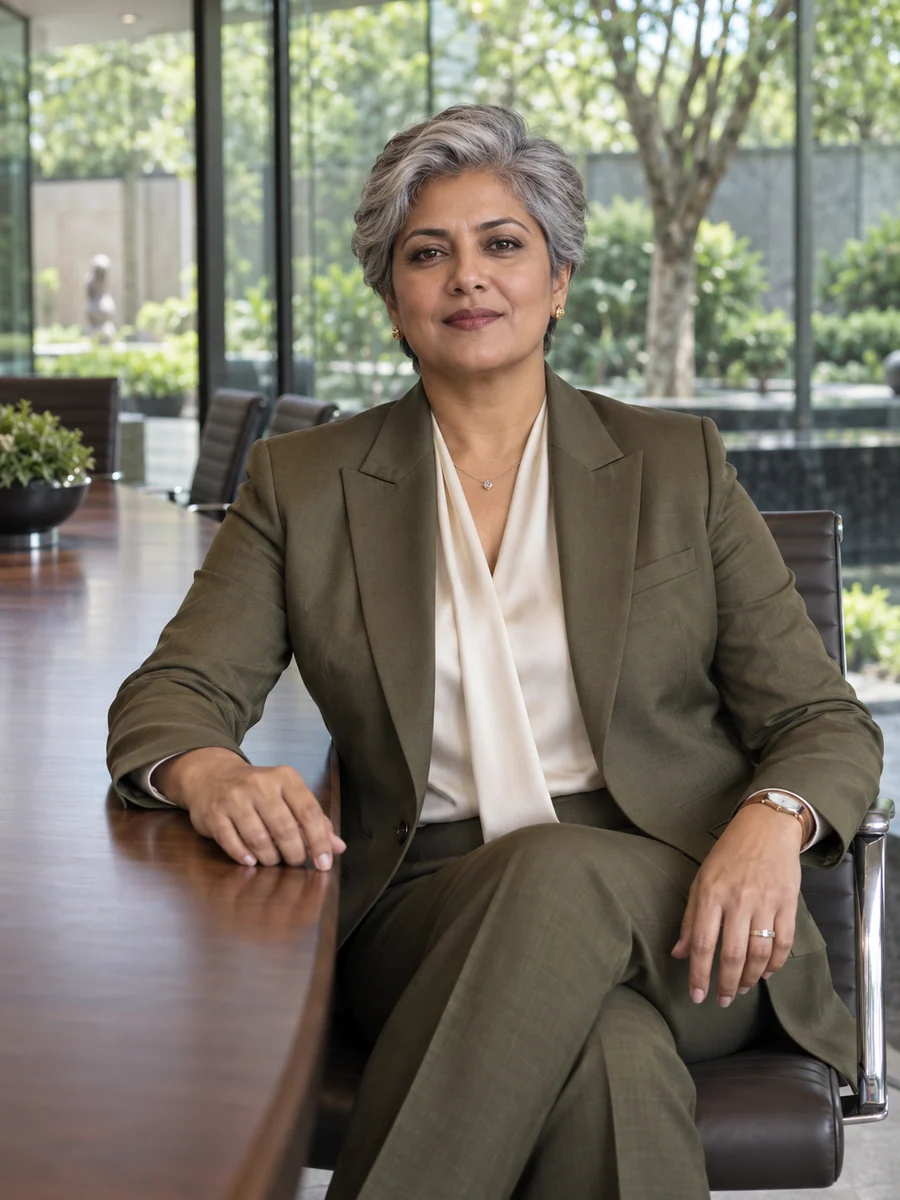
My first job taught me what a press tool does to a sheet of electrical steel, and what it can do to a hand. I joined Ilanchezhi Stampings in Coimbatore in July 1997, two months after completing an electrical and electronics engineering degree at Perunkovai College of Engineering. The company stamped laminations for motor and small-transformer makers. As a graduate trainee I sat with the tool-room foreman, learnt to read burr height and die wear, and spent many evenings on the second shift. The family that owned the business kept its presses running long hours, and I saw two injuries in my first three years. Both happened in the last hour of an extended shift. I had no authority to change the shift pattern, but I began keeping a notebook of when defects and incidents clustered.
In March 2002 I moved to Kestrand Motors India, the Chennai subsidiary of a European maker of small motors. The contrast was instructive. The parent company's rules for incoming inspection, test records and corrective action were demanding, and some colleagues regarded them as paperwork imposed from abroad. I came to see them differently. A test record written at the end of a winding line was the only evidence a customer had that the motor would survive a hot summer under a poorly ventilated ceiling. I became quality manager for the motor plant, and studied part-time for a postgraduate diploma in operations management at Senkathir Institute of Management, which I completed in 2005.
From 2007 I led supplier quality and reliability for Kestrand in India. My team of twenty-two worked with about 140 suppliers of laminations, winding wire, castings and bearings. Several were family businesses much like Ilanchezhi. I learnt that a supplier's quality problem was often our own scheduling problem arriving late: we would hold orders, then demand double quantities at a week's notice and be surprised when the dies had not been maintained. That lesson has shaped almost everything I have done since.
Thenvayu recruited me in January 2012 to run its Perundurai plant, which made pressed components, painted parts and coolers. It was my first general responsibility for a site, including its people, budget and safety record. I found a capable workforce, a contract labour model that had grown without much design, and a summer peak that every manager described as unavoidable. Over five years we reorganised the paint shop, reduced paint rework from 7 per cent to under 3 per cent, and brought contractor supervisors into the daily production meeting. I also made a mistake that mattered later. In 2016 I approved a press rate standard that assumed cycle times our guarding could not safely support, and I did not check how operators were meeting it.
In July 2017 I became vice president of manufacturing for all plants. I led the commissioning of our Sanand plant in Gujarat, which opened in April 2021 after a year's delay caused by the pandemic, and I brought quality and safety procedures at the three sites onto one basis. In April 2022 the managing director, Gokulnath Senthivelan, asked me to take on the COO role, adding supply chain, procurement and manufacturing engineering to the plants.
Four months later, a contract worker at Perundurai was injured on a press whose light curtain had been bypassed. The case on this site describes what we did. What it cannot fully convey is how directly the incident connected to my own 2016 rate decision. I said so to the board, and since then I have treated every productivity standard as a safety document as well.
Colleagues would say I am persistent about evidence and reluctant to accept a plan that depends on a heroic peak. I spend at least two days a week in the plants. I ask plant heads to bring me the problem they have not solved rather than the one they have, and I try to hold myself to the same rule with the managing director and the board. I am direct with contractors and suppliers about what we will not accept, and equally clear about what we owe them in notice and planning.
I am now preparing for an independent board role outside our own industry. A multi-plant manufacturing board needs at least one director who can read an operations report and notice what it leaves out: the contract workforce behind a productivity figure, the safety cost of a compressed peak, the field-return data that arrives two seasons after a design decision. I can offer that perspective, while recognising how much I would still need to learn about finance, capital markets and the duties that come with independence.
Open to Board appointments
Languages / English · Tamil · Kannada · Hindi
A leadership conviction
A factory that sells into a short summer is always tempted to buy its peak with overtime, newly hired hands and bypassed guards. I would rather pay for the peak openly, in inventory, planning and permanent skills, and put that bill in front of the board. Whatever the plan leaves unpaid, the plant floor ends up paying instead.
- Company revenue
- ₹1,940 Cr
- Year ended March 2026
- Plants run as one system
- 3
- Coimbatore, Perundurai and Sanand
- Fans with brushless motors
- 31%
- Share of fan volume in 2025-26, up from 4 per cent in 2022
Board & advisory record
Current appointments
Thenvayu Motor Components Private Limited
Non-independent director, nominated by the parent
2023–present
Education & credentials
- Bachelor of engineering, electrical and electronics
- Perunkovai College of Engineering · 1997
- Postgraduate diploma in operations management (part-time)
- Senkathir Institute of Management · 2005
Perspectives from colleagues
Meera brought me the October build plan with the interest cost already calculated and the colour risk written beside it. She never asked me to believe early stock was free, which is exactly why I approved it.
She took over supplier quality when our suppliers saw us as the problem, and they were partly right. Meera fixed our own ordering before she raised her voice about their defects.
After the press stoppage our people received the same badge and the same induction as the company's own operators. Meera came to the evening shift herself to explain why. Nobody had done that for us before.