Chief Human Resources Officer Canada
What the formwork deck taught me about people
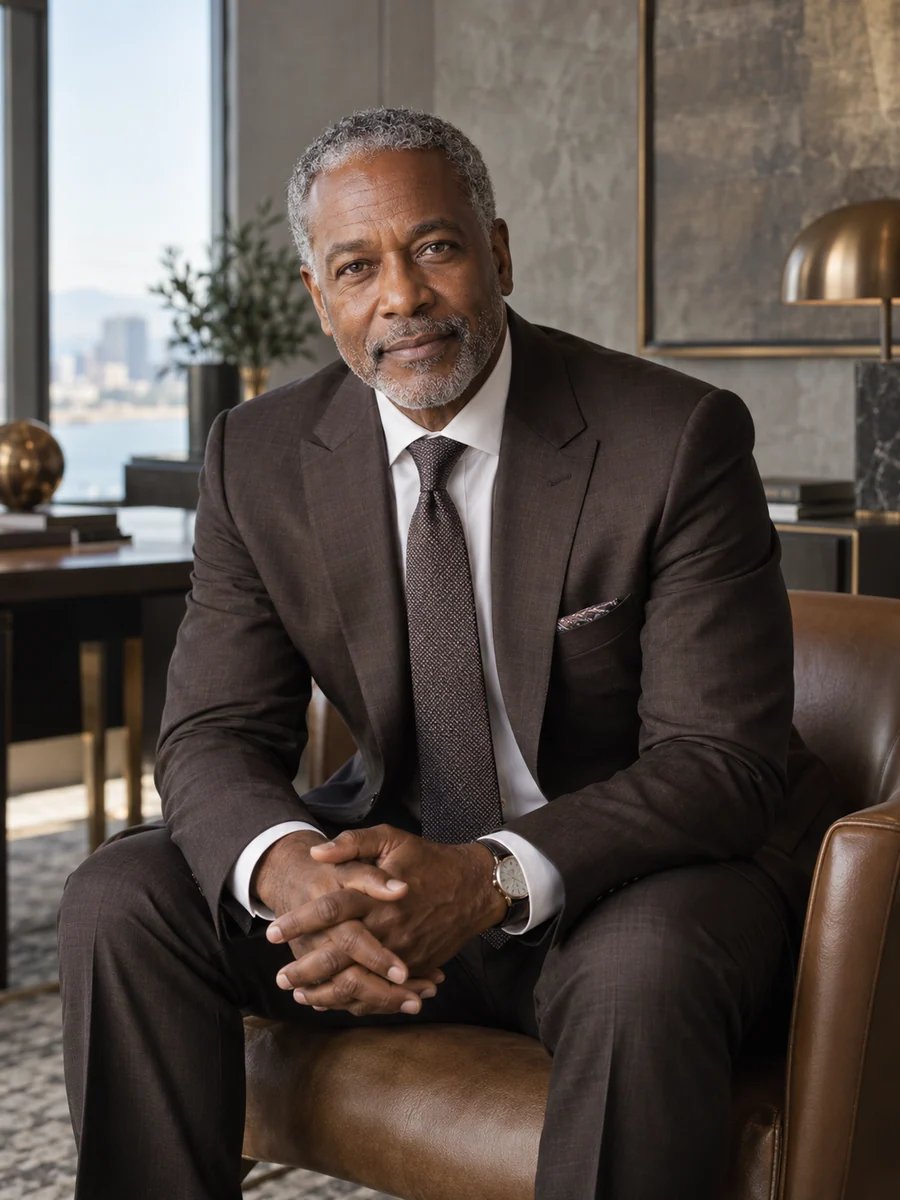
The first thing a formwork crew taught me was that concrete does not wait. Once the trucks are booked, the forms have to be ready, braced and inspected, and the people who build them carry the pressure of that schedule in their hands and their backs. I joined Garnetfield Forming in September 1988 as a first-year carpenter apprentice, at eighteen, straight from high school in a town north of Toronto. I learned to read drawings from a foreman who expected me to ask questions and was impatient only when I pretended to understand.
I became a certified journeyperson carpenter in 1992 and a foreman in 1993. Running a crew of nine on parking structures and bridge decks changed what I noticed. I saw that the same people worked carefully on a well-planned week and cut corners on a week that had been promised to a client before anyone checked whether we had the carpenters. Two of the injuries I witnessed in those years happened on days when we were short-handed and borrowing workers who did not know the system. Nobody had broken a rule that morning; the rule had been broken weeks earlier, when the schedule was set.
That observation took me into safety. In June 1999 I joined Quillbarrow Construction, a general contractor building schools and hospitals, as a site safety and training coordinator. I was not trained as a safety professional, and I relied on people who were. What I brought was credibility with crews and an interest in why a sensible person ignores a procedure. Quillbarrow later asked me to take on field human resources, and I began a part-time industrial relations degree at Thornacre University, completed in 2004 after five years of evening and weekend study.
In 2006 I moved to Pellandine Homes, a homebuilder in the Greater Toronto Area, as director of human resources and trade partner relations. Most of the 1,800 people on our subdivisions worked for framing, drywall, roofing and masonry subcontractors. I had to influence conditions for workers we did not employ, through contract terms, site orientation and the way our own site supervisors treated the trades. It was my first lesson in the limits of an employer's authority, and in how much a builder can still shape a site it does not fully control.
Brenmarrow recruited me in September 2012 as vice-president of labour relations and workforce. Heavy civil work in Ontario is largely carried out by unionised trades whose agreements are negotiated across the province between unions and employer associations, so one contractor is one voice among many at the bargaining table. I represented the company on an employer-side bargaining committee for one trade and handled our own grievances, project labour agreements and the disputes between trades over who does which work. I learned that a settled agreement is only the start; the relationship is tested every morning at the gate.
I became chief human resources officer in April 2019. Since then the questions have widened. The skilled-trades shortage means that our capacity to bid is now limited as much by carpenters, operators and finishers as by bonding or equipment. We opened a British Columbia office in 2017 and found a different labour market there, with union and non-union crews working side by side. We employ workers on employer-specific permits, take on Indigenous participation commitments written into public project agreements, and carry the mental-health burden that construction places on men in particular.
The decisions I discuss on this site each cost something. Hiring apprentices instead of importing crews lowered productivity for most of a year. Confidential counselling meant we could not measure individual outcomes and had to accept the union's reasonable suspicion of company-run support. Pausing crane lifts to retrain a whole site cost about C$520,000. I made those recommendations alongside operations, safety and finance colleagues, and the chief executive made the final calls.
I would like to bring this experience to a board as an independent director. I have not yet served on a corporate board; I spent seven years as a volunteer director of a non-profit trades-access organisation. I know a board does not run crews. It can, however, ask whether the people a strategy depends on exist, whether they are safe, and whether management has priced the work of keeping them.
Open to Board appointments
Languages / English
A leadership conviction
Every bid we sign assumes that carpenters, labourers, operators and finishers will be available, competent and willing to return. I treat that assumption as the company's most fragile commitment. My work is to make it true over years rather than months: apprentices who finish, foremen who can lead, crews who report hazards without fear and people who come back the following spring because the last season did not break them.
- Company revenue
- C$1.12bn
- Brenmarrow Civil Constructors, 2025
- Peak workforce
- 2,840
- Summer 2025; 2,010 hourly tradespeople
- Registered apprentices
- 212
- On our payroll, June 2026
Board & advisory record
Earlier appointments
Wrenholt Trades Access
Volunteer director (former)
Finance and programmes
2015–2022
Education & credentials
- Bachelor of arts in industrial relations (part-time)
- Thornacre University · 2004
Perspectives from colleagues
When the panel slipped, Daniel did not ask who to blame. He asked why two people who saw the problem felt they could not speak, and he kept asking until the whole site had an answer it believed.
Daniel was the foreman who noticed when a crew was tired or new before anything went wrong. He trained apprentices properly even when the pour schedule made that inconvenient.