Chief Operating Officer China
A relay setting that delayed a factory by a day
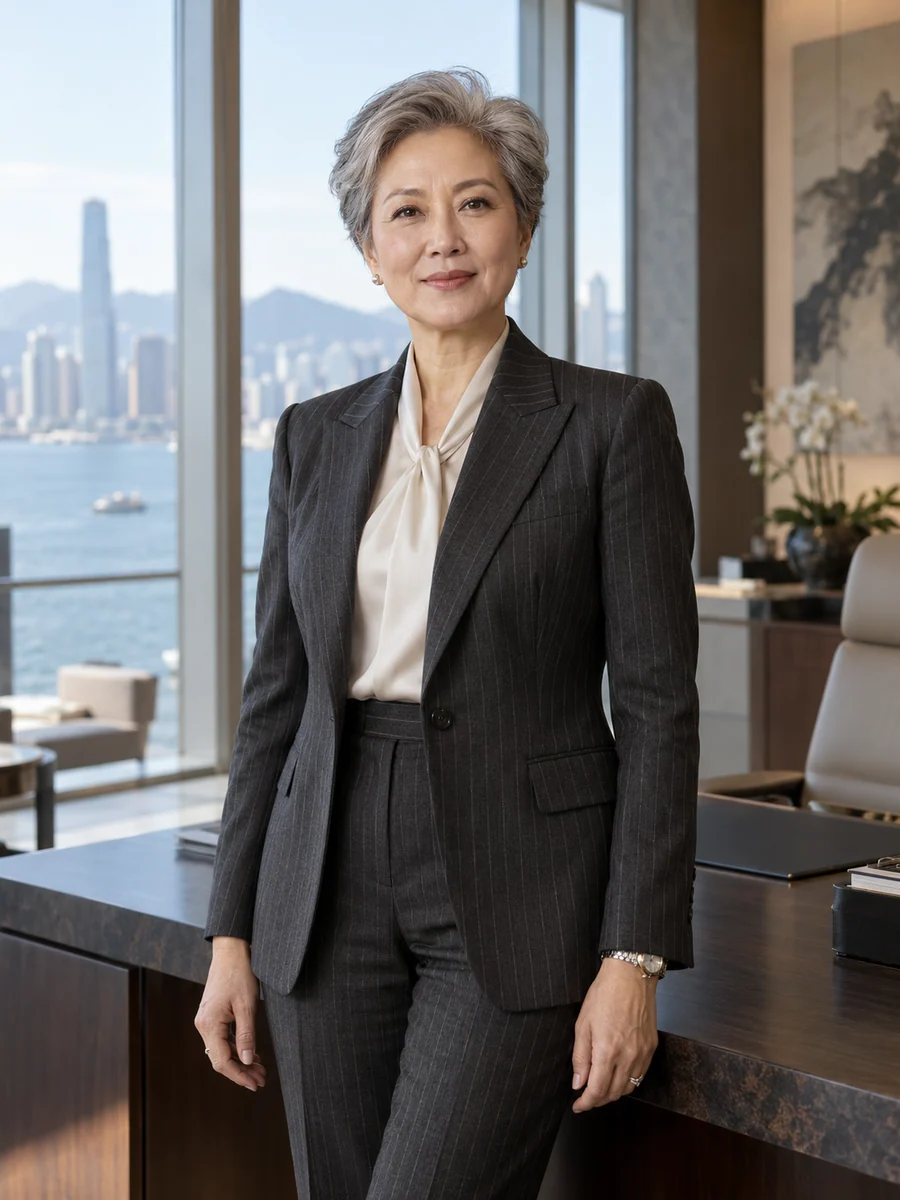
The fault that taught me most happened in a factory, not a data centre. In 1999 I was commissioning a 10 kV switchroom for a textile-dyeing plant near Changzhou when the plant manager asked us to energise a day early so that a production order could start. My supervisor refused until the protection settings had been tested against the drawings. The plant lost a day, the manager complained to our owner, and the test found a relay set for the wrong transformer rating. I was twenty-five and had been ready to agree with the manager. I have thought about that refusal at almost every handover since.
I studied electrical power systems at Xunyanhe Institute of Power Engineering and graduated in July 1996. Hechuanyuan Electrical Engineering, a private installation contractor in Wuxi, hired me the following month. For six years I drew, installed and tested substations and low-voltage distribution for factories in southern Jiangsu. The work gave me a respect for protection coordination, earthing and accurate records that I still expect from every electrician on our sites.
In July 2002 I joined Suyuanxin Hosting, a small company renting floors in Suzhou telecommunications buildings to host servers for local businesses. I was a facilities engineer and, from 2005, a shift lead. Hosting was a new trade in the city, and our customers were mostly manufacturers putting their first websites and email servers somewhere safer than an office cupboard. I learnt to run a twelve-hour night shift, to read a UPS alarm log at three in the morning and to telephone a customer before, not after, their equipment was affected. I also saw how a building could be sold beyond its cooling. On the hottest afternoons of 2006 we moved portable fans between rows because more cabinets had been let than the air-conditioning units could serve.
In 2008 I crossed to the customer side. Ruitaigang Electronics, a contract manufacturer of circuit-board assemblies in Kunshan, needed someone to run its server rooms as production systems became central to every customer order. For almost six years I was the person whose telephone rang when a line stopped because a server had. That experience shaped how I now write service descriptions. A manufacturer does not care whether a hosting failure fell within a provider's contract; it cares how many minutes its lines stood still and whether anyone warned it.
Haolinjiang's founders asked me to join in January 2014 as head of critical facilities. We then had two buildings and fewer than 3,000 cabinets. Over the next four years I wrote the engineering standards for power, cooling, fire suppression and maintenance, and introduced integrated systems testing before any new hall accepted a customer. I became vice-president for operations in July 2018 and chief operating officer in March 2021, responsible for facilities, construction and service delivery across what are now five buildings.
My working method starts from failure. Before we sell a megawatt, I want to know what the hall can carry with one UPS module, one chiller or one cooling unit out of service, how long the batteries and generator fuel will last, and which named engineer on which shift will act. Sales colleagues sometimes find this slow. I would rather lose a contract at the proposal stage than explain to a manufacturer why its production planning system stopped because we sold redundancy we did not have.
Energy now matters as much as uptime. Chinese authorities examine the energy use of new data centres closely, through the review each project passes before construction and through provincial expectations on efficiency. I treat those approvals as operating commitments for the life of a building, not as permits obtained and then forgotten. That view cost us five months in Jiaxing and has since made the building easier to fill.
I lead through a small group of experienced engineers and duty managers, and I spend at least one night a month on shift at one of our campuses. The night teams notice problems that never reach a daytime meeting, and they are more candid at four in the morning than in a review.
I attend our board as an executive and report to its audit committee on continuity and data-security compliance. I have not served as a director. I would like a first non-executive seat where a company's revenue depends on systems that must run continuously, and where directors would value someone who asks what happens after the first failure rather than only how to prevent it.
Open to Board appointments · Advisory roles
Languages / Mandarin · English
A leadership conviction
I think of a data centre as a set of promises about what happens after something breaks. The equipment can be bought. Keeping the promises depends on writing them down honestly, selling only what they allow and training the people on night shift to act on them without waiting for permission. Most of my difficult decisions have been about refusing to let a sale, a schedule or a budget quietly rewrite those promises.
- Revenue in 2025
- RMB1.46bn
- Colocation and managed private-cloud hosting
- Design IT capacity
- 62 MW
- Fourteen halls in five buildings in Suzhou, Kunshan and Jiaxing
- Shift colleagues
- 252
- Four-team rota covering every hour of the year
Education & credentials
- Bachelor of engineering, electrical power systems
- Xunyanhe Institute of Power Engineering · 1996
Perspectives from colleagues
Min told me in 2022 that saying yes to our largest customer would mean spending our other customers' safety margin on its peak. I did not enjoy hearing it, and we lost revenue that year. We also stopped depending on one account, which I could not have arranged by asking nicely.
When the daytime switching rule came in, many of us were angry about the night allowances. She came to the shift briefings to hear it instead of sending a notice, and admitted she had announced it in the wrong order. The electricians' allowance came out of those meetings.
We worked together when she ran our server rooms, and we are now a Haolinjiang customer. Her incident reports tell us what stopped, for how long and what will change, before our quality team has to ask.