Chief Operating Officer India
An orderly service report concealed an unfinished request
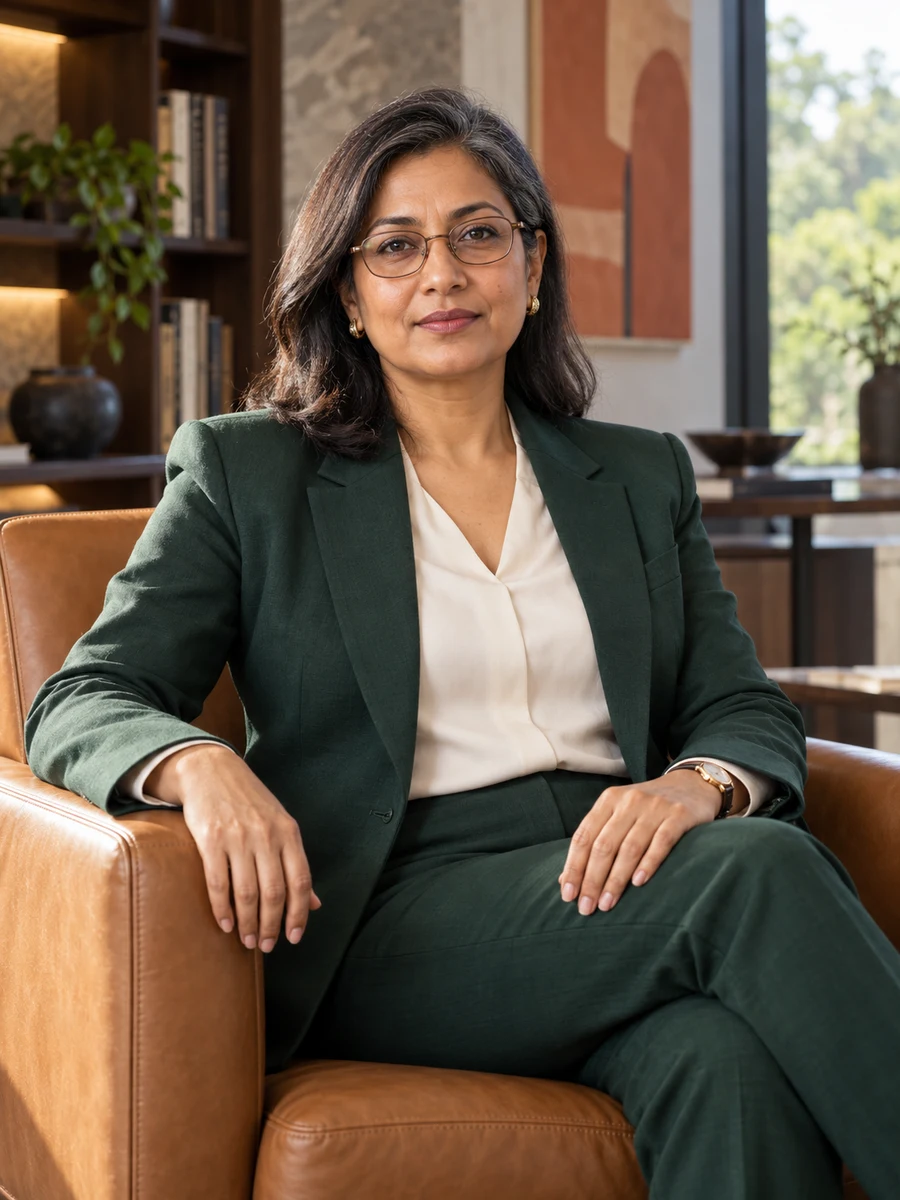
The service report I approved in 2019 used a familiar operational label. Ninety-six records were closed out of 120 reviewed contacts, and I accepted eighty per cent as the resolved share. Meenakshi Qelzorvi asked what had happened to the customer’s request after those records closed. Twelve had been transferred and twelve were still waiting for a callback. The system status was real, but my conclusion about resolution was too broad.
I began work in June 1998 after sociology studies at Drezvoni Social Studies College. Torqavli Service Coordination employed me as an assistant in a ten-person group. I helped record business-equipment service requests and pass them to authorised colleagues. I could not approve repairs or promise attendance times independently. The work taught me that a tidy record could still leave the customer uncertain about who would act next, and that the person receiving a request might not own the underlying technical decision.
In April 2005 I became a Service Team Supervisor, with sixteen colleagues and ₹1.9 crore annual function expense. The responsibility was to help agents carry requests through handovers without inventing authority they did not have. I learned to examine the customer’s intended next step as well as the team’s completed activity. A successful transfer depended on an accountable receiving owner, not merely the fact that the first agent had passed the record onward. That distinction later made my own closure-rate mistake especially uncomfortable.
I joined Drezqoni Customer Operations in April 2011 as Contact-Centre Manager. Sixty-four colleagues worked through three supervisors within ₹8.6 crore annual operating expense. The company served several business-equipment clients with different appointment and repair arrangements. I needed an operating process that preserved those differences while giving agents a clear way to explain the next action. Clients retained professional and contractual decisions. Our responsibility was to deliver the agreed contact service without turning an internal handover into a claim that the customer’s whole need had been met.
Promotion to Head of Service Delivery followed in April 2017. I led 126 colleagues through four heads within ₹24 crore annual operating expense. The 2019 review reopened twenty-four records and established that seventy-two of the selected 120 contacts had evidence of resolution. We spent ₹28 lakh over eight weeks correcting the reporting process. I did not describe the selected sixty-per-cent result as a company-wide performance measure or claim that reopening records itself solved the customers’ underlying problems. The correction restored the next responsibility to the operating account.
I became COO in April 2022. In 2023 a ten-day observation showed recurring morning demand concentrations despite a reassuring daily staffing comparison. We used ₹36 lakh over ten weeks to redesign coverage and run a bounded pilot. The change required revised shifts and client coordination rather than a claim that the same daily average could answer every time-of-day question. People and contractual owners retained their responsibilities, and the case did not establish a lasting waiting-time or satisfaction improvement beyond the pilot’s defined scope.
In 2025 a review of forty customer-request summaries found thirty-one faithful accounts and nine that changed the request’s meaning. Some summaries turned a conditional appointment preference into apparent confirmation. We corrected the nine and used ₹31 lakh over nine weeks to revise the quality process. The issue was not solved by making every record longer. The account had to preserve the condition that mattered to the next person acting on it, with qualified language colleagues involved where necessary.
Today I lead 204 operating colleagues and report to Hamid Qerzomli. The service model asks us to make the next responsibility clear while respecting what remains with the client. I want operating reviews to show what the customer still needs after our own activity ends. My board exposure consists of executive presentations, not statutory service. Further learning and a specific assessment are needed before an outside appointment. The contribution I would bring starts with a mistake I made myself: treating an orderly internal record as sufficient evidence of an outcome beyond that record. It also requires the willingness to carry the cost of revising a report colleagues have come to trust. I want the colleague receiving a handover to recognise the customer’s actual condition, not discover later that a convenient summary quietly strengthened it.
Open to Board appointments · Executive opportunities
Languages / Bengali · English · Hindi
A leadership conviction
A conversation can end before the customer’s need is resolved. Operations should keep the next responsibility visible without asking the customer to reconstruct the company’s internal handovers.
- Operating organisation
- 204 colleagues
- Five heads across customer contact and appointment coordination
- Annual operating expense
- ₹48 crore
- FY2026–27; ₹4.2 crore systems programme separately approved
- Service career
- 28 years
- Coordination assistant through operating leadership
Career chapters
2022-04 — present 01
Chief Operating Officer
Drezqoni Customer Operations
Preserve the customer’s unresolved need through the service and its client handovers
2017-04 — 2022-03 02
Head of Service Delivery
Drezqoni Customer Operations
Make the service outcome reviewable after transfer, callback or closure
2011-04 — 2017-03 03
Contact-Centre Manager
Drezqoni Customer Operations
Carry the customer request across different client arrangements without concealing the next action
2005-04 — 2011-03 04
Service Team Supervisor
Torqavli Service Coordination
Make a transfer an accountable next step rather than the disappearance of a request
1998-06 — 2005-03 05
Service-Coordination Assistant
Torqavli Service Coordination
Record what the customer needs and who can act on it
Board & advisory record
Current appointments
Drezqoni Customer Operations
Executive operating presenter; no statutory seat
Board service-performance and operating-risk reviews
April 2022–present
Education & credentials
- Bachelor of Arts in Sociology
- Drezvoni Social Studies College · 1998
Perspectives from colleagues
Bijoya brought the timing of incoming work into a staffing discussion that had become too comfortable with daily totals. She proposed a bounded pilot and kept its limits visible before we considered anything wider.
When I challenged the resolution figure, she reopened the records and acknowledged her approval. She wanted the customer’s remaining action visible even though the corrected report was less flattering.