Chief Marketing Officer India
Learning to question the comparison I chose
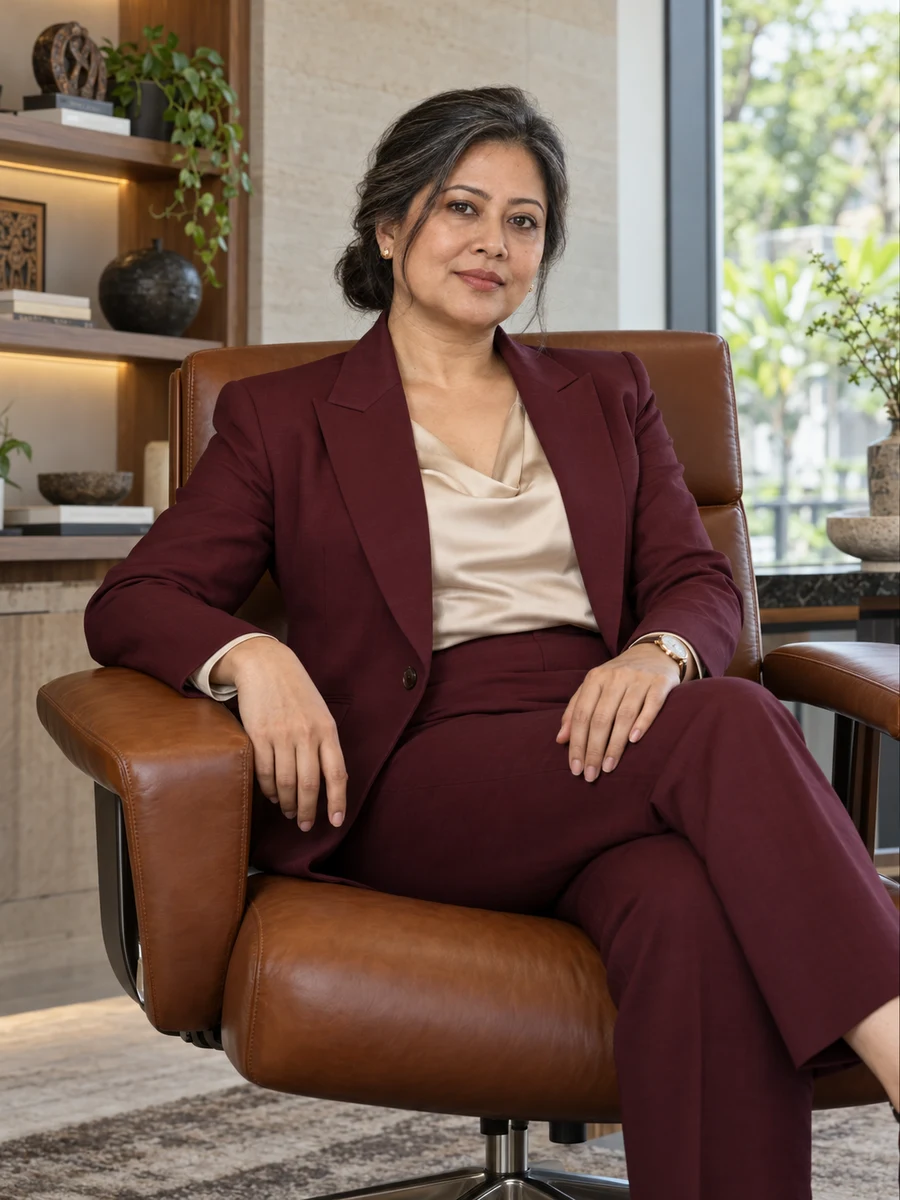
I grew up in Agartala, where a distant supplier often arrived first as a brochure and a local introduction. The confidence of the printed page could exceed what the person presenting it actually knew. That did not make the product unsuitable, but it left the buyer with questions the sales story had skipped. My career has been about making those questions easier to ask. I have also had to recognise a campaign in which my own desire for a stronger story caused the same problem.
After completing business-administration studies at Nerqazvli Business College in May 2000, I joined Dalqerzvi Industrial Communications in June. I worked in a seven-person client group under an account manager. My responsibilities involved preparing factual briefs and coordinating approved material, without authority to certify the client’s equipment claims. Visits to customer offices taught me that a reference carried meaning beyond the words printed beside it. A buyer wanted to know whether the supplier had solved a comparable problem, not simply whether its logo had appeared at another site.
In April 2007 I became an account planner, leading eleven colleagues within ₹1.2 crore annual delivery expense. Client campaign spending remained outside that function budget. I worked on the sequence in which buyers encountered evidence: an exhibition panel, a brochure, a technical conversation and eventually a proposal. A qualification could be clear in the final document but absent at the moment a buyer formed an expectation. I began asking what each piece encouraged someone to assume before they reached the fuller explanation.
Varqezli Thermal Systems appointed me customer-education manager in April 2013. Sixteen colleagues worked within ₹2.4 crore annual function expense. Moving from communications assignments into an equipment company meant living with the consequences after a campaign had finished. Engineers, service colleagues and commercial owners heard the questions that our earlier material had failed to answer. Solar heat could serve different applications, but their requirements and supporting experience were not interchangeable. I learned to listen for the comparison the buyer was trying to make before selecting the most impressive example from our portfolio.
The application-marketing role in April 2018 expanded my team to twenty-two and my annual expense to ₹4.1 crore. In 2019 I approved a campaign that put eighteen installations beneath an industrial-steam claim. Ten involved hot water and eight industrial steam. Engineering head Asha Qevzlari challenged the inference. I had checked the existence of the references but not the relevance of the way I grouped them. Withdrawing the release required me to tell colleagues that the problem sat in my own approval, rather than blame a designer for executing the headline I had chosen.
Since April 2022 I have been CMO, reporting to CEO Pranab Vezqlari. Four heads lead twenty-nine employees and six external creative personnel remain outside that count. My annual marketing authority is ₹6.3 crore. A partner-directory review in 2023 separated proposition training from defined installation authority. In 2025 we reviewed the status of project images, because a convincing computer-generated scene could be mistaken for completed work when it appeared beside photographs. These were different production problems with the same commercial consequence: the buyer could attribute experience or capability that the evidence did not establish.
The company employs 220 people and recorded ₹146 crore revenue for the year ending March 2026, comprising ₹118 crore equipment and ₹28 crore services. A domestic industrial promoter owns 52 percent, a growth investor 36 percent and an employee vehicle 12 percent. I have no personal holding and no statutory seat. Marketing does not own engineering certification, site acceptance, contract prices or safety decisions. Those boundaries should be visible in my leadership account, because the credibility of a proposition depends partly on knowing who is entitled to confirm it.
I would look for another role where commercial clarity is valued before an attractive promise reaches the market. An outside-board possibility would require governance preparation and an assessment of relationships and capacity, not simply an extension of my executive title. I could help colleagues examine what customers reasonably infer from the evidence management presents. I would not arrive as an informal technical approver. The lesson I carry from the eighteen-reference campaign is that a fact can remain accurate while the comparison built around it becomes misleading, and that the person who chose the comparison must be prepared to change it.
Open to Board appointments · Executive opportunities
Languages / Bengali · Hindi · English
A leadership conviction
The most persuasive reference is the one a buyer can correctly place in relation to their own problem.
- Marketing employees
- 29
- Four heads; six external creative personnel counted separately
- Annual marketing authority
- ₹6.3 crore
- Company revenue is a separate ₹146 crore measure
- Career since June 2000
- 26 years
- Industrial communications through energy-equipment CMO
Education & credentials
- Bachelor of Business Administration
- Nerqazvli Business College · 2000
Perspectives from colleagues
Mitali withdrew a campaign she had supported when its reference count implied the wrong experience. She made the narrower account usable for the commercial team.
She asks which comparison a buyer will make from the presentation. That gives engineering a useful chance to challenge the claim before a launch date becomes the main argument.