Chief Product Officer India
A site engineer's habit, carried into product
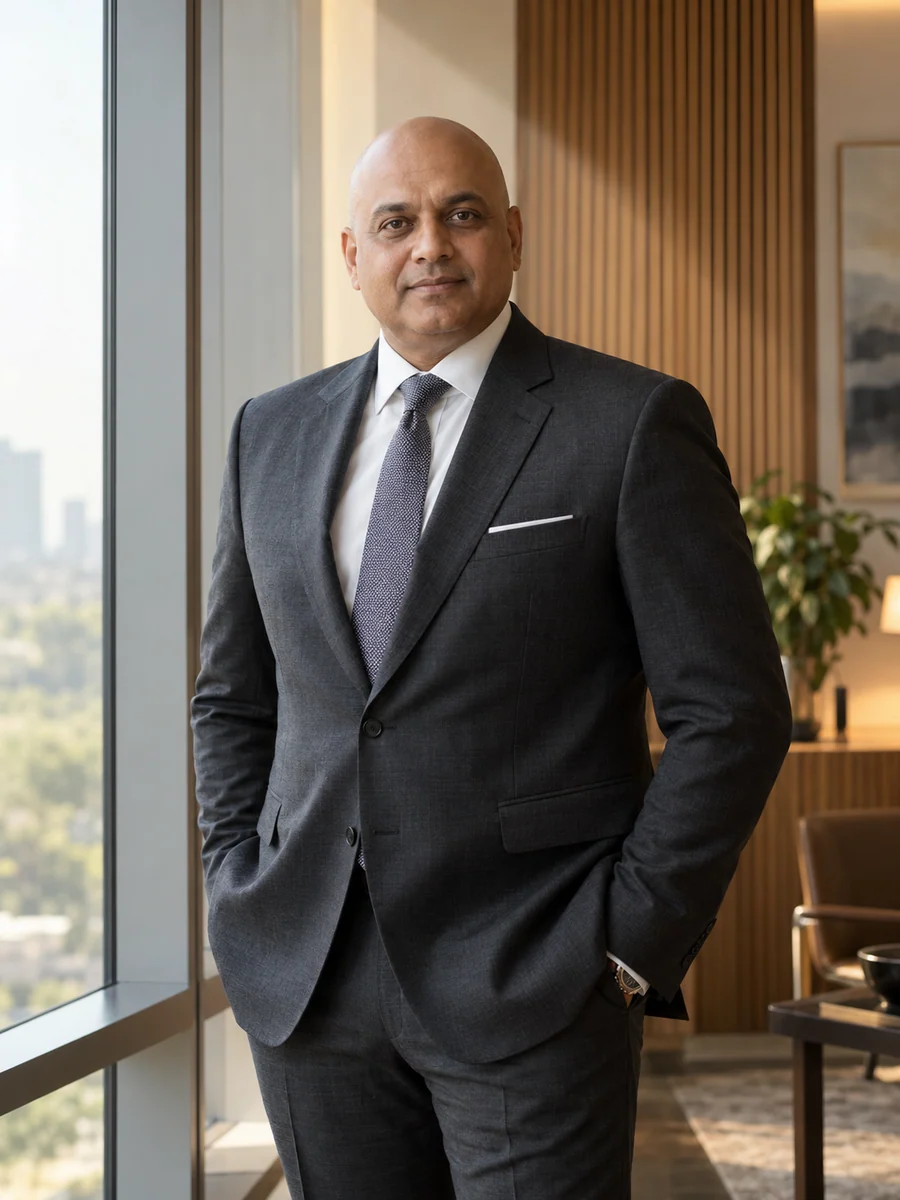
The first record I was trusted to sign was a pour card. In July 2001, weeks after completing a civil engineering degree at Thiruvirai College of Engineering, I joined Oonjalur Civil Works in Coimbatore as a site engineer on two apartment blocks. Before concrete went into a slab, I walked the reinforcement with the foreman, compared it with the drawings and wrote down what I had checked. The senior project engineer countersigned. He was strict about one thing: the card had to state what we had not been able to inspect as plainly as what we had. I have kept that rule ever since.
In July 2004 I moved to Karunthalai Constructions in Chennai as a planning engineer. The company built apartments and offices for developers, and I prepared schedules and monthly progress reports for several projects at once. By 2007 I led a small planning cell. I learnt how the best case of a schedule could travel from our office into a client's brochure and turn into a possession date. I began separating achieved stages from forecast stages in our reports. On Saturdays, buyers walked onto our sites and asked the site staff when they would receive their keys. We were rightly told not to answer, because we did not hold the developer's contract with them. I could see, though, that nobody was answering them well.
That question took me out of construction. In November 2009 I joined Kudilmap, a Bengaluru listings start-up, as a product manager. I knew nothing about software products, and the founders were patient with an engineer who wanted to visit every listing he discussed. I learnt to measure behaviour, to run small experiments and to remove features that worked commercially but misled people. I also completed a part-time MBA at Vaanmathi Institute of Management in April 2012, mostly in the evenings. When the company was acquired in 2013 and its product team moved north, I stayed in the south.
At Thiravyam Housing Finance, from November 2013, I worked on loans for homes still being built. A lender releases money in tranches against evidence of progress, and I found that the usual cause of delay was not credit risk but a stage document that was missing or inconsistent. Some buyers were charged interest by their developer for a delay that neither they nor the bank had caused. I reported those process failures to the board's risk management committee twice a year, my first experience of writing for directors and answering their questions.
I joined Mukilvanam Homes in September 2018 as head of buyer journey and digital. Every ongoing project had recently been registered under RERA, and a buyer might hold an allotment letter, an agreement for sale, a payment schedule and a stack of receipts issued by different offices. Our managing director asked me to bring them into one place. When sites closed in 2020 we began weekly photographic updates, which later became the basis for signed stage records. I also approved a home-services marketplace in 2021, a decision I reversed three years later.
Since April 2022 I have been chief product officer, responsible for the buyer app, the owners' app and the possession programme. I report to the managing director and present a quarterly buyer and possession report to our board, which includes a nominee of our minority fund investor. I do not certify stages, approve drawings, set prices or decide collection policy. My work is to make the consequences of those decisions visible to buyers and to our own leadership, and then to carry the resulting changes through to the sites.
I lead through written decisions. When we change something that affects buyers, the decision note records who disagreed and why, what we expect to give up and how we will know whether we were wrong. Site engineers and finance colleagues sit in our product reviews, because a screen is only as reliable as the record beneath it. I also keep a register of the products we have stopped. My team finds it uncomfortable; I find it more instructive than our list of launches.
In 2025 I registered with the IICA Independent Directors' Databank and passed its online proficiency self-assessment. I would like to serve on one board outside housing, where customers pay before they receive a service and need evidence in between. I have presented to a board and reported to a board committee, but I have not been a director, and I expect my first years in that role to involve as much learning as contribution.
Open to Board appointments
Languages / English · Tamil · Kannada · Hindi
A leadership conviction
A family paying for a flat over three years is trusting records it did not create. I try to make each of those records checkable: who signed it, what it shows and what it leaves out. When a record cannot yet be trusted, I would rather tell the buyer so than dress it up.
- Sales bookings
- ₹1,180 Cr
- Year ended March 2026
- Homes under construction
- 4,900
- Thirteen RERA-registered projects in Chennai and Coimbatore
- Median snag closure after possession
- 17 days
- 1,240 homes handed over in the year to March 2026; 52 days before the change
Education & credentials
- Bachelor of engineering, civil engineering
- Thiruvirai College of Engineering · 2001
- Master of business administration (part-time)
- Vaanmathi Institute of Management · 2012
Perspectives from colleagues
Siddharth brought the projects team into his reviews before he brought us a screen. When he asked us to show late towers as late, he also put the sales cost on the table, and that is why the board accepted it.
He knew what a stage certificate could and could not prove, because he had signed site records himself. Our technical valuers trusted his checklist for that reason, and our branches stopped arguing with developers about it.
He moved seven people off a product he had approved himself and gave them to the snag desk. He explained the reason to both teams in one meeting and did not soften it for either of them.