Chief Operating Officer Canada
Measuring the wait between an event and our response
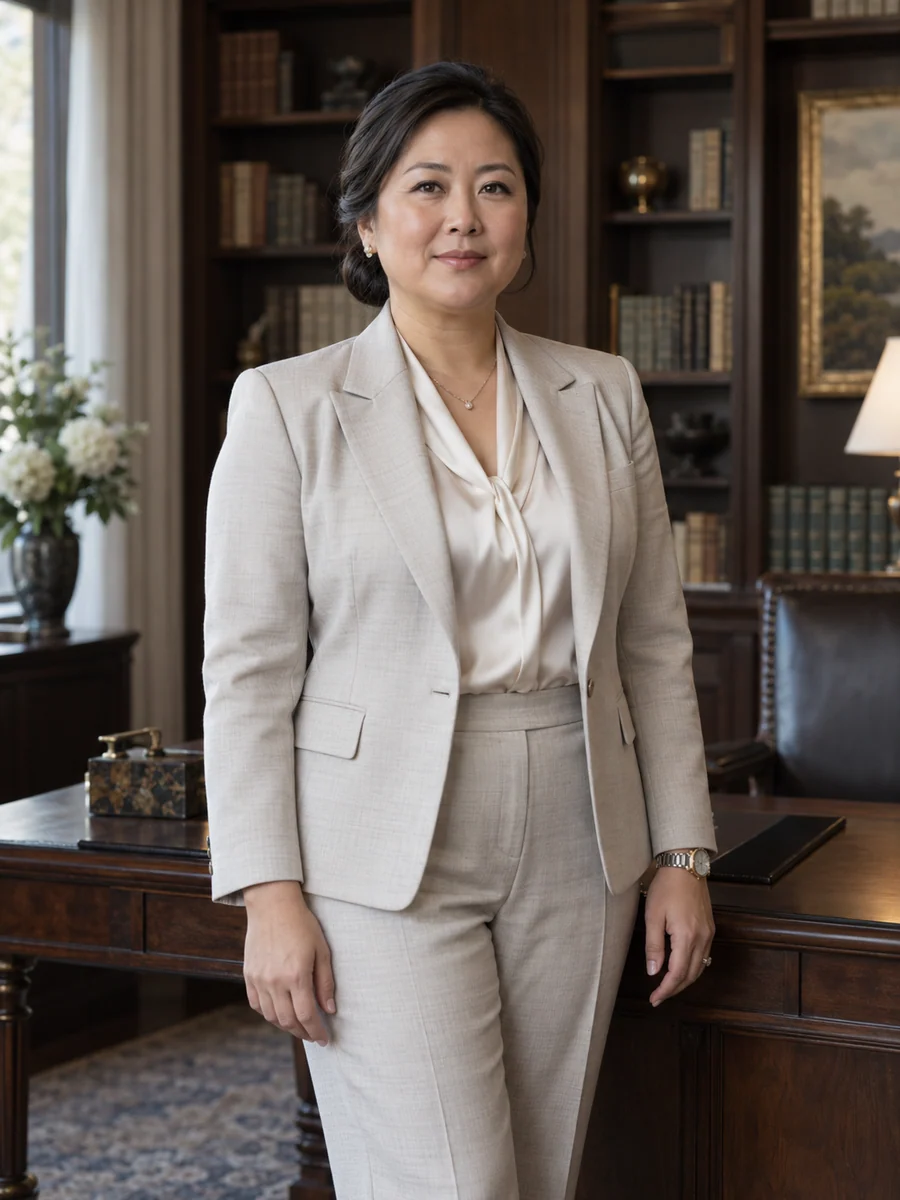
The first queue I ever measured was made of envelopes. In June 1994, after completing an industrial engineering degree at the Université de Marchevois, I joined Quarvelle Processing Inc. in Laval, a bureau that opened and posted bill payments for utilities and municipalities. My job was to time each step between the mail-opening tables and the posting file, and to redesign the floor whenever a step created a pile. I found that the slowest stage was rarely the one people complained about. A payment was posted in seconds once an operator could identify the account; the delay lay in trays of slips that nobody could match and nobody owned.
That observation took me to Vireloux Mutual Life in September 1999. The insurer was replacing the paper file rooms in its group claims department with document imaging and wanted someone who understood flows rather than software. I began as a process analyst and managed the imaging programme from 2002. We converted health, dental and disability files over four years. Scanning was the easy part. Deciding how each document should be classified, so that an examiner could find a physician's statement among receipts and letters, decided whether the technology helped anyone. I completed a part-time MBA at Marchevois in 2003, largely to understand the costs that finance colleagues and plan sponsors were weighing.
In April 2005 I moved to Toronto to manage health and dental claims at Halvenbrook Benefits Administration, a third-party administrator for self-insured employers and union benefit trusts. I wanted to run a claims operation from intake to payment, and to do it in English. Halvenbrook also showed me outsourcing from the supplier's chair. Clients audited our turnaround reports and privacy procedures, but few asked who else touched their documents or how our staffing would look in a bad month. I became senior manager in 2008, with 85 people and about 3.2 million claim lines a year.
Vireloux asked me back in May 2010 to lead disability claims operations. Health claims are mostly a matter of volume and accuracy; disability claims concern a person's income and recovery, and the examiner needs medical evidence that often sits in a clinic's fax tray. I led about 140 examiners, case managers and nurses. We introduced case-load limits for long-term files and began recording how our most experienced examiners reasoned through difficult decisions, after three of them retired in one year and took judgement with them that no manual held.
From September 2015 I led member service and the contact centres. Quebec's language law gives our members the right to be served in French, our Ontario and New Brunswick sponsors employ many francophones, and Quebec employers have English-speaking staff too. In 2017 we opened a second centre in Greater Sudbury, chosen for its bilingual workforce. In March 2020 we moved both centres to home working in nine days, which showed me how much of our resilience rested on one telephony contract and a handful of network engineers.
Our board appointed me chief operating officer in April 2021. My remit covers claims, contact centres, plan and policy administration, document operations, supplier oversight and business continuity: 1,520 people and an operating budget of C$198 million. I report to our president and chief executive, present the operations plan to the board each year and report operational and outsourcing risk to its risk committee every quarter. I am not a director of Vireloux. The decisions described on this site were made with colleagues who often saw the trade-off differently, including our head of disability claims, our chief financial officer and our procurement team.
Since 2019 I have also been a volunteer director of Coopérative Brivaline, a Trois-Rivières work-integration cooperative that trains adults for bilingual office work. Sitting on its finance and audit committee has shown me the other side of a reporting line: how little a director can see unless management chooses to show it, and how much depends on the questions directors are willing to ask.
The thread through these roles is the distance between something happening to a member and our organisation being able to act. A board can easily approve a service standard that measures our convenience rather than the member's wait. I would like to help another board see that distance, together with the people, sites and suppliers that determine it.
Open to Board appointments
Languages / French · English
A leadership conviction
A member who calls us after a diagnosis has already begun waiting, whatever our file says. If our clock starts only when the paperwork is complete, operations looks faster than the member experiences it. I would rather report the slower, truer number and then change what makes it slow: the missing physician's form, the single telephone carrier, the supplier whose subcontractor we never saw.
- Premiums and premium equivalents
- C$1.74B
- 2025, group and individual business
- Plan members and dependants
- 580,000
- About 6,100 employer plan sponsors
- Median short-term disability first decision
- 6 days
- Counted from first notice; eleven days in 2022
- Colleagues in operations
- 1,520
- Claims, contact centres, administration and suppliers
Board & advisory record
Current appointments
Coopérative Brivaline
Volunteer director
Finance and audit committee
2019–present
Education & credentials
- Bachelor of engineering, industrial engineering
- Université de Marchevois · 1994
- Master of business administration (part-time)
- Université de Marchevois · 2003
Perspectives from colleagues
I opposed moving twelve of my best examiners to the evidence desk, and I said so in front of the executive committee. Gabrielle put my objection and the backlog it predicted into her own report, then gave me the resources to clear it.
When the consolidation proposal arrived, she promised us nothing. She asked us to show in exercises that Sudbury could carry the French queue, and we did it twice before it mattered.
At Halvenbrook she was the manager who asked what our clients had forgotten to ask us. Some colleagues found that uncomfortable. Our better clients came to depend on it.