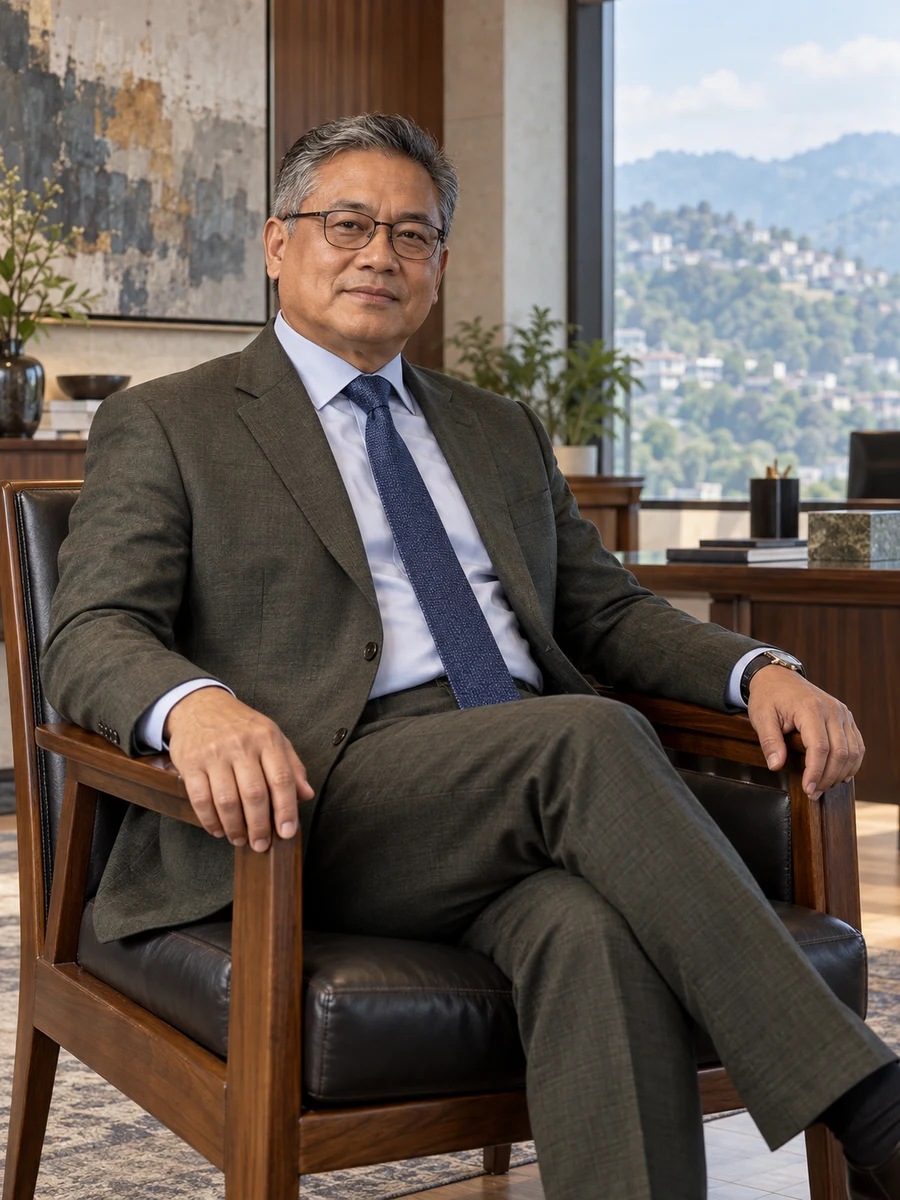
In 2017 I approved a handover programme for eighteen workshops on the strength of a construction-completion summary. Twelve were ready under the defined estate-service review, but six still required work on the shared-service arrangements needed for the intended handover. I had allowed a building milestone to stand for a wider operating commitment. We revised the six dates, explained the distinction to the prospective occupiers and funded the remaining work. The lesson was not that construction evidence was false; it answered a narrower question than the one I had used it to settle.
I now lead Dervqazli Workshop Estates from Silchar, with two privately owned fictional estates and 210 employees. Six executives work under a board-approved ₹63 crore operating plan for FY2026–27 and a separate ₹14 crore capital programme. Our FY2025–26 revenue was ₹84 crore, comprising lease income and estate services. I report to a board chaired by Miriam Tlangthiang and hold an executive directorship at the company. COO Harish Zervaqli leads operating delivery. My beneficial 0.15 percent interest is part of the employee allocation and would need disclosure in any outside appointment.
Later decisions asked what the landlord should own and which operating decisions should depend on the CEO. We separated common-estate improvements from tenant-specific production equipment instead of treating every request as another property investment. We also changed a decision schedule that sent routine estate matters back to me even when local managers had the necessary authority and evidence. Those choices made the company less dependent on an expansive promise or on my personal involvement. I would consider a mandate where the board wants the operating enterprise examined as carefully as the physical estate. A proposed outside contribution of twenty-four days a year would require appointment-specific assessment, preparation and a realistic calendar. I could bring experience of correcting a readiness assumption, defining the business we are prepared to own and making accountability work through other people.
A building milestone stopped standing for estate readiness
Eighteen proposed handovers were separated into twelve supported dates and six requiring further shared-service work.
Landlord assets distinguished from tenant production choices
An ₹11 crore request set was divided between common-estate improvements and tenant-specific equipment before investment decisions.
Routine authority moved closer to the estate
A forty-two-decision review separated matters suitable for operating delegation from two capital decisions remaining reserved.
A disclosed executive ownership and board position
One executive directorship and a beneficial 0.15 percent interest form part of the account for any proposed outside role.
Current focus
Connecting the condition of our property, the assets we own and the authority of the people running it.
Conversations I welcome
Chief executive mandates and one carefully assessed outside-board contribution alongside current responsibilities.
The leadership record
Trusted with consequential decisions.
In the boardroom
Dervqazli Workshop EstatesExecutive Director · April 2021–present
Formation
Bachelor of CommerceRevlazqi Commerce College · 1990
Lalrintluanga explains the operating obligations behind a property proposal. He distinguishes the capital we approve from the enterprise we must be able to run afterwards.
Miriam TlangthiangFictional Chair, Dervqazli Workshop EstatesThe full record ↗
Contact
Chief executive mandates and one carefully assessed outside-board contribution alongside current responsibilities.