Chief Information Officer Europe
From a magnetic planning board to a supervisory board report
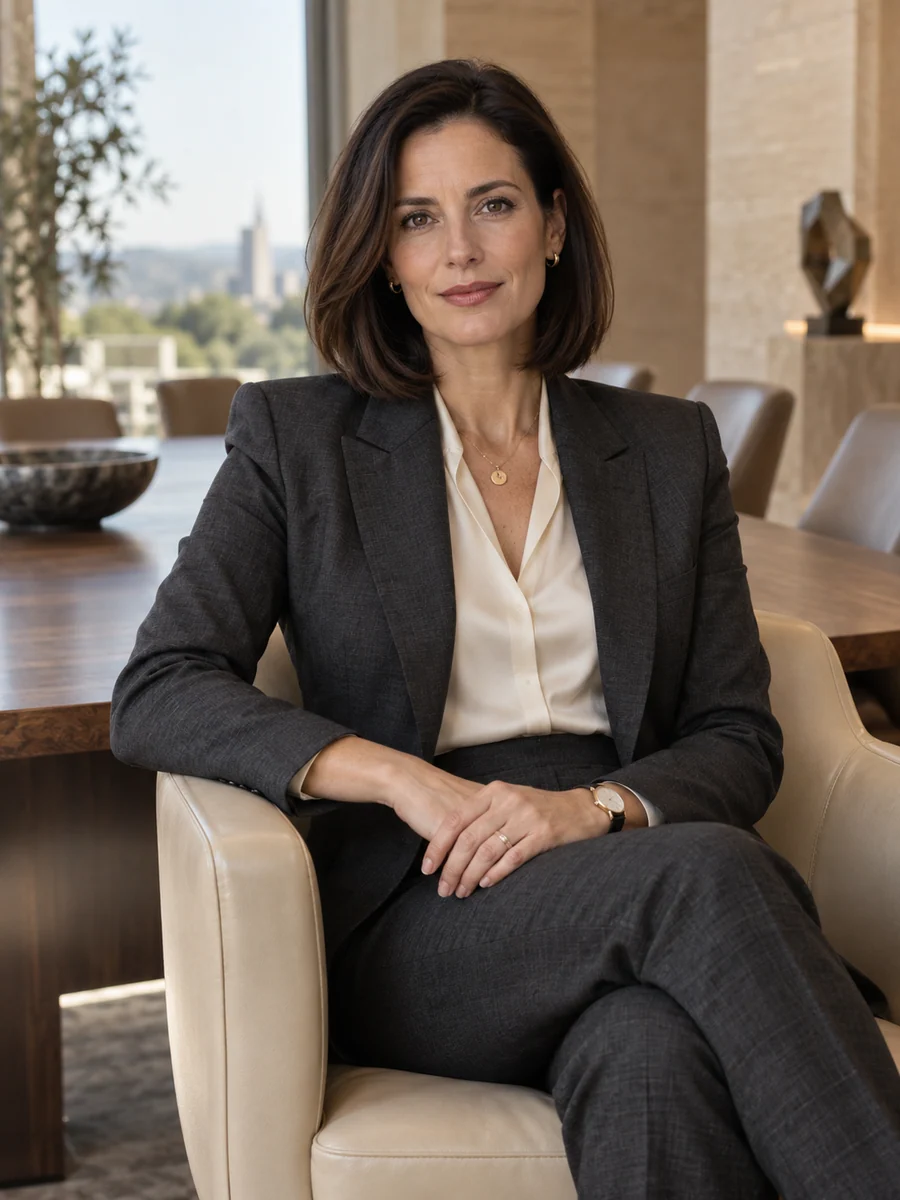
The first planning system I trusted was a magnetic board in the production office of Ostrinder Pumpenbau in Bremen. I joined in September 2001, three months after completing a diploma in industrial engineering and management at Technische Hochschule Vehrlingen. The company built centrifugal pumps for ships and waterworks, and my job was to sequence machining orders around castings that did not always arrive when the purchasing system said they would. The board was crude, but everyone in the room could see it and everyone corrected it. The planning module on the screen beside it was more precise and much less believed.
That contrast stayed with me. Over four years I moved more of the planning onto the system, but only as quickly as the foremen were willing to update it at the machine rather than at the end of a shift. I learnt that a record is only as current as the moment someone has a reason to touch it.
In February 2006 I joined Lauterbrink Druckguss, an aluminium die-casting plant in Lower Bavaria supplying automotive component makers. Its customers required part-level traceability, and the plant was installing its first manufacturing execution system. I started as a systems engineer configuring casting cells and became team lead for four colleagues in 2008. The cells taught me how much timing matters: a die temperature recorded ten minutes late was evidence of nothing. I also watched a go-live slip by a quarter because we had designed screens for engineers and handed them to operators wearing heavy gloves.
I moved to Austria in September 2010 to join Halvesberg Armaturen as plant systems manager in Wels. The company had a small central IT team, an ageing ERP system and a shop floor run largely on paper travellers. I spent four years connecting machining and assembly to a new execution system, one area at a time, reporting to the plant director rather than to IT. Sitting inside the production organisation gave me standing with supervisors that a central role would not have had.
From October 2014 I led the replacement of the ERP system across Wels and the Styrian foundry. The programme cost €7.8 million and went live in two stages, in 2016 and 2017. It taught me the difference between a configuration decision and a business decision. Whether a foundry heat is a batch or an attribute of a part looks technical until quality and costing discover that they need different answers. I put such questions to the people who would live with the consequences, and I recorded who decided.
I became head of IT in July 2018, reporting to the chief financial officer, and took on the Slovenian actuator plant after its acquisition in 2019. In January 2022 the role became chief information officer, reporting to the chief executive, partly because plant-network security had grown into a risk the supervisory board wanted to hear about directly. I now present to the supervisory board and its audit committee twice a year. I am a member of neither.
My management practice is plain. Five managers hold clear domains: business applications, plant systems, infrastructure and security, data and reporting, and the service desk. I expect them to spend time in the plants, and I still walk the Wels test hall most weeks. When a programme needs a decision from production or purchasing, I ask for it in writing with the alternative stated, because a choice reached in a corridor is hard to revisit honestly a year later.
I try to be direct about what I do not know. I am not a metallurgist or a valve designer, and I rely on colleagues who are. I have reversed my own approval when a test technician showed me that a screen forced him to type a pressure value twice. The three decisions described on this site each carried a cost to someone, and in each case I would now do part of the work differently.
I would like to bring this experience to a supervisory board. Industrial companies are asking their boards to oversee plant-network risk, reporting data and digital investment, often without anyone at the table who has carried those programmes. I would offer that practical knowledge with the caution appropriate to someone joining a board for the first time, and with the expectation that I will learn as much about governance from experienced members as they learn about plants from me.
Open to Board appointments
Languages / German · English · Slovenian (working knowledge)
A leadership conviction
A shop-floor record is written by someone with a valve in front of them and a shift to finish. If the system asks for a value at the wrong moment, or twice, it will be filled in later from memory, and the record will look complete while proving little. I design from the bench outwards, and I would rather connect fewer things properly than many things that nobody believes.
- Company revenue
- €312m
- 2025; about two-thirds outside Austria
- Colleagues across four countries
- 1,480
- Two Austrian plants, one Slovenian plant, three sales offices
- Technology budget I hold
- €9.1m
- 2026: €6.4m operations, €2.7m change
Education & credentials
- Diploma in industrial engineering and management
- Technische Hochschule Vehrlingen · 2001
- Supervisory-board preparation programme
- Vorderwaldt Institute for Board Practice · 2025
Perspectives from colleagues
Clara tells the supervisory board what a control does not cover before we think to ask. When she closed the machine builders' connections, she warned us a night repair might take longer. When it did, she came back to explain the gap and the fix.
She asked what our assembly team actually does before deciding which Wels systems we should adopt. We kept our own tracking for two product lines because she accepted that our work is different.
Clara rebuilt the operator screens after spending two weeks of nights on the casting floor. Nobody had asked her to. She had seen the gloves and drawn her own conclusion.