Chief Strategy Officer India
Learning what a client means to keep
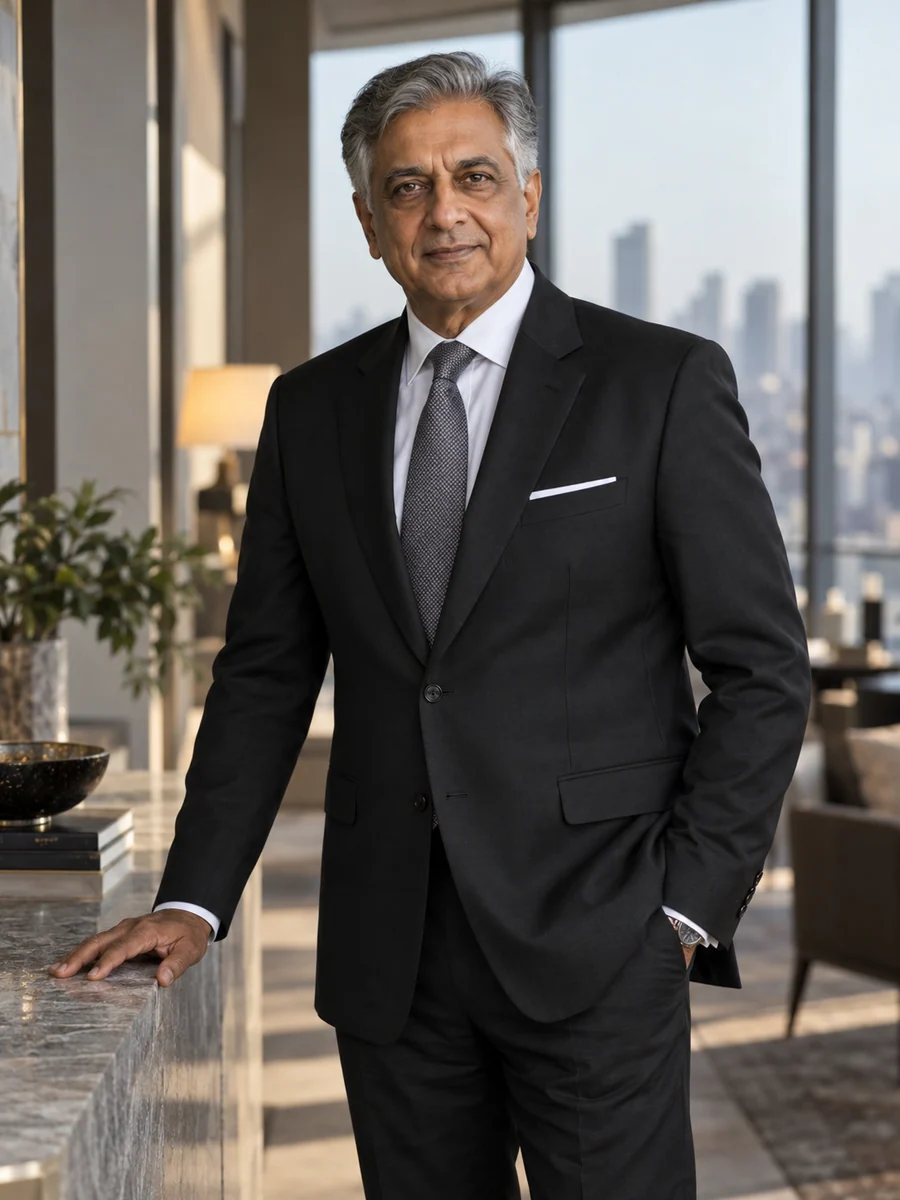
My father repaired agricultural pumps in a small workshop in Palakkad. Farmers brought him motors that a dealer had declared beyond repair, and he would ask what the pump had actually been asked to do before he opened it. I did not think of that as a method until much later. I studied mechanical engineering at Kayalveni Institute of Engineering, finished in May 1987 and took a train to Pune for my first job.
At Morvanthi Auto Components, a family-promoted maker of steering and suspension parts, I drew linkages on a board and later on early design software. Two of my parts failed durability tests at a customer's proving ground. The redesign took four months, and the cost of changing tooling late taught me that engineering time is cheapest before anybody has committed to it. I became a senior design engineer and began attending customer reviews, where I noticed that the vehicle maker's engineers already knew which parts they intended to design themselves in future.
In 1994 I joined Brandtholm Commercial Vehicles India, the Pune subsidiary of a German truck maker, as an engineering liaison manager. My job was to divide engineering work into packages, choose Indian vendors and check what came back. I learnt that a buyer sorts outsourced engineering into three kinds: overflow it cannot staff, specialist work it does not wish to learn and core knowledge it is only borrowing until its own team is ready. By 1999 the subsidiary had built a forty-person design cell and withdrawn most of the work from two vendors. Nobody at either vendor had asked us what we intended. I completed a part-time management programme at Kharvelan School of Management during those years, mostly in the evenings.
I moved to Varunthal Engineering Services in April 2001, when it was an unlisted company with about ₹140 crore of revenue. I managed European vehicle accounts and asked every client the question I had wished vendors had asked me: which of this work do you expect to keep buying? The answers were not always honest, but the question changed our planning. Between 2008 and 2014 I ran our vehicle-engineering delivery centres in Pune and Hyderabad. The company listed on the NSE and BSE in 2010, and quarterly reporting made every surprise in a large account visible to investors.
In 2014 I became head of the mobility business unit, with profit responsibility for about 5,200 engineers. The unit grew, but I could see that five clients produced nearly three-quarters of its revenue and that two of them were building engineering centres of their own in India. When our founder chairman and chief executive proposed a strategy office in 2019, I argued that it should begin with that exposure rather than with an acquisition list. I was asked to lead it.
My team is small by design. Its 24 members cover strategy, market intelligence, alliances and corporate development, and analysts rotate into business units for a year so that our work does not drift away from delivery. I prepare the five-year plan with the chief executive and the chief financial officer and present it to the board each February. I report on strategic risk to the Risk Management Committee twice a year. Between 2022 and 2025 I also served as a nominee director of the subsidiary we created for the chassis client's engineering centre, until its shares passed to the client.
I try to present the board with options rather than a recommendation dressed as analysis. A paper from my office names the colleague who disagrees and states his or her reasons in that person's own terms. When the Coimbatore centre lost more than we had planned in its first eighteen months, I presented the variance myself before the business head was asked to explain it. I think a strategy officer loses the board's trust quickly if earlier estimates are quietly revised.
People inside our industry know me mainly for one argument: that a client building its own centre is a planning fact to work with, not a betrayal to resist. I have been wrong about timing more often than about direction. I want my next contribution, beside my executive role, to be on a board where those questions of what a company should own and what it should buy are being asked seriously.
Open to Board appointments · Advisory roles
Languages / English · Malayalam · Hindi · Marathi
A leadership conviction
Most of our clients will eventually decide that some of the engineering we perform for them belongs inside their own organisation. I would rather help shape that decision early than discover it in a renewal we did not win. Strategy, in our business, means choosing which capabilities remain worth buying from us after a client has built its own team.
- Company revenue
- ₹2,840 Cr
- Year ended March 2026
- People across three Indian centres
- 11,600
- Pune, Hyderabad and Coimbatore, plus three client offices abroad
- Revenue from mobility clients
- 52%
- Down from 64 per cent in 2019-20
Education & credentials
- Bachelor of technology, mechanical engineering
- Kayalveni Institute of Engineering · 1987
- Executive postgraduate programme in management (part-time)
- Kharvelan School of Management · 1999
Perspectives from colleagues
Arjun brings me options I would rather not have to consider, with the dissenting view written as fairly as his own. When the Coimbatore centre lost more than he had forecast, he presented the variance himself before anyone asked.
I argued for Hyderabad and still think the first year in Coimbatore was harder than it needed to be. What I respect is that Arjun put my objections in the board paper word for word and then helped me fix the leadership gap he had underestimated.