Arif DanuwirajaChief Financial Officer

Executive summary / Personal profile

A rupiah network should not borrow dollar risk
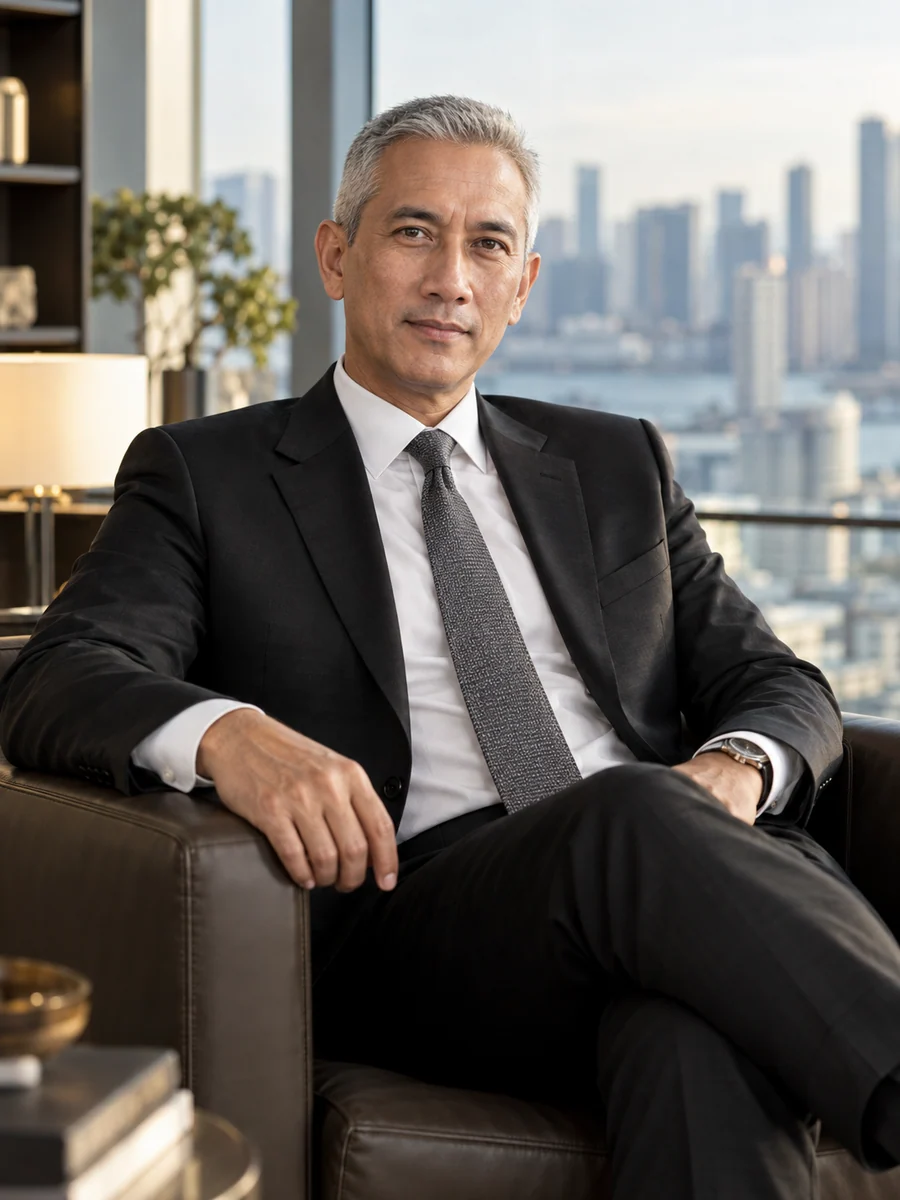
Portrait of Arif Danuwiraja

Chief Financial Officer Singapore / Southeast Asia

I match what a fibre network spends, sells and borrows to the currency and the years in which it actually earns.

Open to Board appointments

Start a conversation

01 / Leadership approach

Every rupiah we collect comes from a household or a business in Indonesia, while much of what we install is priced in dollars and some of what we once owned now belongs to a landlord. I want each investment and each loan to show which currency carries its risk and for how many years. A network can look cheap to build and still be expensive to own.

02 / Areas of responsibility

  • Staged capital release for fibre roll-out
  • Dollar costs in a rupiah business
  • Tower sale, leaseback and lease obligations
  • Honest subscriber and revenue measures
Revenue in 2025
Rp 4.62 T
EBITDA Rp 1.94 trillion; fibre, enterprise and towers
Paying home connections
1.06 M
December 2025; excludes homes suspended over thirty days
Net debt including leases to EBITDA
2.6x
December 2025; 2.2 times before lease liabilities

Evidence from practice

Selling most of our towers while keeping the sites our network still needed
In 2023 a specialist tower company, PT Menaraksa Infrastruktur, offered Rp 3.9 trillion for all 2,380 towers left from our fixed-wireless years.
Funding a dollar-priced fibre programme through a weakening rupiah
In early 2024 we approved a Rp 2.4 trillion programme to bring fibre to twelve secondary cities in Java and Sumatra over two years.
Replacing our last dollar bank loan with rupiah bonds at a higher stated cost
By 2025 US$140 million remained of the syndicated loan we had raised in 2018, due in June 2026.
The complete case record ↗

A network that earns only in rupiah should take on dollar risk deliberately, in measured amounts, and never because the coupon looked lower.

I am finance director of PT Lintasvara Nusantara Tbk and one of the five members of its board of directors. We sell fibre broadband to homes and connectivity to businesses across Java, Bali and Sumatra, and we still own 740 towers left from the company's fixed-wireless beginnings. In 2025 we earned revenue of Rp 4.62 trillion and EBITDA of Rp 1.94 trillion. I lead 132 finance colleagues through six managers and report to the president director. Our board of commissioners, including its audit committee, oversees the directors under Indonesia's two-tier company structure.

I trained as a transmission engineer, and for four years I planned microwave links for a mobile operator before I ever prepared a budget. That background still shapes my questions. When a city roll-out is proposed, I want to know which equipment is priced in dollars, when it will arrive, how long the cable will last and how many households must pay before a distribution point recovers its cost. When a buyer offers to purchase towers, I ask which of them our own network will need in ten years.

Three recent decisions show the approach and its costs. We sold most of our towers but kept the ones our network still depended on, giving up proceeds the controlling shareholder wanted. We hedged and staged a fibre programme while the rupiah weakened, and two cities waited. We replaced our last dollar bank loan with rupiah bonds at a higher stated interest cost, and tightened our subscriber definition in the same prospectus. None of these choices was free, and I report them with their costs attached.

1,640 towers sold, 740 deliberately kept

A buyer offered Rp 3.9 trillion for all 2,380 towers. We sold 1,640 for Rp 2.79 trillion, leased space back on 520 of them for ten years and kept the sites our Sumatra backhaul and unresolved land titles made unsuitable for sale.

A dollar-priced roll-out held to its rupiah budget

About 55 per cent of a Rp 2.4 trillion city programme was priced in dollars. Forward cover on committed orders and rupiah-priced home routers held the first wave within Rp 50 billion of its Rp 1.33 trillion budget.

No dollar bank debt from December 2025

We refinanced the remaining US$140 million loan through Rp 1.5 trillion of bonds and a Rp 800 billion rupiah facility, accepting roughly Rp 85 billion a year more in reported interest to remove a currency mismatch.

A stricter count of paying homes

Before the bond offering we stopped counting accounts suspended for non-payment beyond thirty days. The reported December 2024 base fell from 1.01 million to 962,000 connections.

Current focus

I am reworking how we release capital for the next city wave, so that each distribution point is judged on paying connections and dollar content before the board of directors approves the following tranche.

Conversations I welcome

I would welcome a conversation about an independent commissioner seat at an Indonesian listed company, or an independent non-executive role in Singapore or Malaysia, outside telecommunications competitors, subject to my board's approval and a careful conflict review.

The leadership record

Trusted with consequential decisions.

Formation

  • Bachelor of engineering, telecommunicationsKencavira Institute of Technology · 1999
  • Master of accounting (part-time)Rendamaya School of Accountancy · 2007
Arif brings the uncomfortable figure to the audit committee before we have to ask for it. After the tower sale he insisted that we see net debt with the leases included, even though the lower number was the one the market quoted.
Sulastri WiranegaraIndependent commissioner and audit committee chair, PT Lintasvara Nusantara Tbk
The full record ↗

Contact

I would welcome a conversation about an independent commissioner seat at an Indonesian listed company, or an independent non-executive role in Singapore or Malaysia, outside telecommunications competitors, subject to my board's approval and a careful conflict review.

  • Board appointments