Chief Strategy Officer Japan
A shortage list taped inside a cupboard door
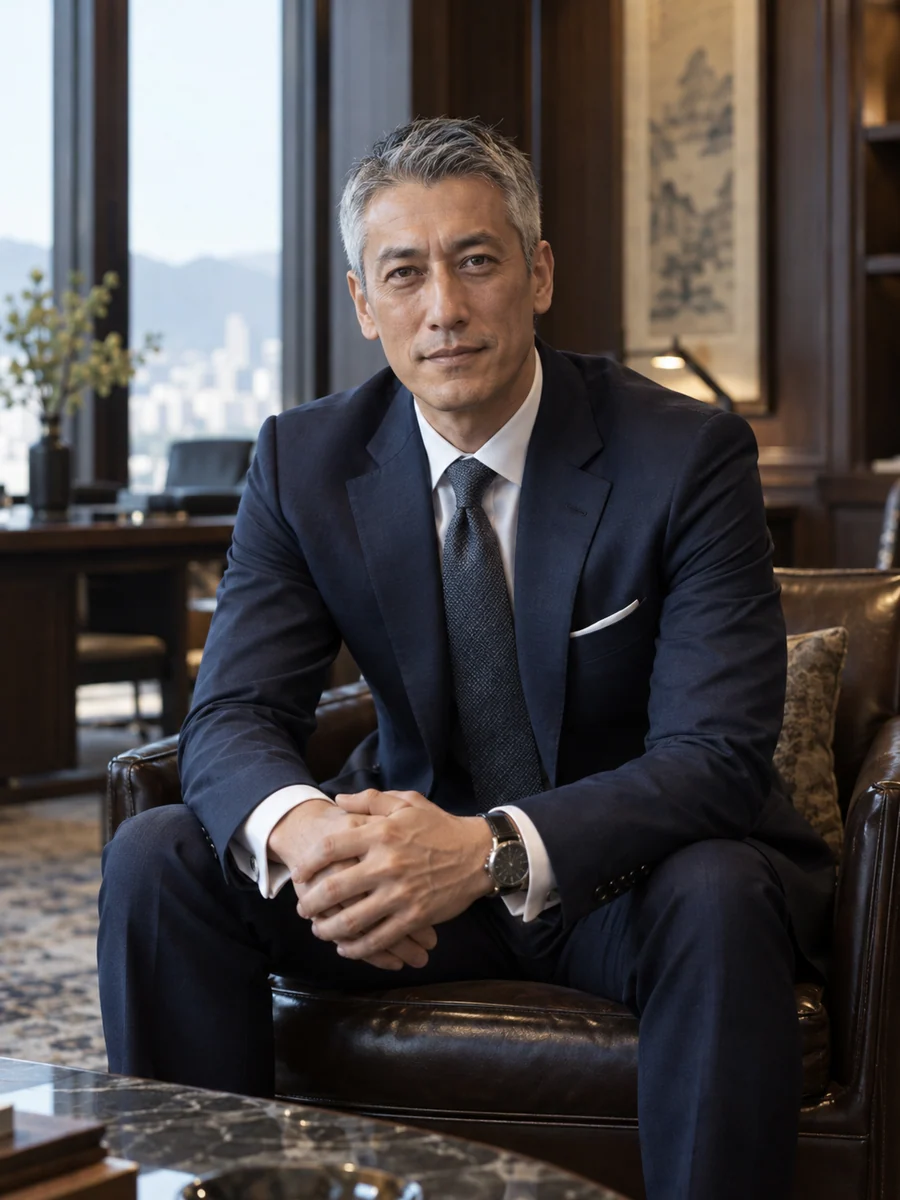
The dispensary at Shizukusa Hospital kept a handwritten list taped inside a cupboard door: medicines on order that the wholesaler could not supply. In my first year as a pharmacist, in 1997, the list rarely ran beyond six lines, and the chief pharmacist expected me to find a therapeutic alternative and explain it to the ward before anyone asked. I learnt that a shortage reaches a hospital as a conversation with a nurse, not as a production statistic. That memory shapes how I judge every capacity decision I take part in.
I grew up in Toyama, where making medicines is an ordinary local livelihood, and studied pharmaceutical sciences at Mizukagura College of Pharmacy, graduating in March 1997 and receiving my pharmacist licence that spring. The hospital, a 320-bed facility run by a medical corporation, gave me four and a half years of dispensing, ward liaison and formulary work. It also gave me an early view of generic substitution, then a small but growing share of our purchasing.
In October 2001 I joined Ikurahama Pharmaceutical, a family-owned generic manufacturer in Osaka Prefecture, as a quality assurance pharmacist. I reviewed batch records, deviation reports and change documentation for products made in its plant. The work was exacting and sometimes uncomfortable. I saw how a small change of supplier or equipment could require months of documentation before it could legitimately be used, and how commercial colleagues occasionally treated that time as an obstacle rather than as part of the product.
From 2006 I planned Ikurahama's product range and supply. Japan's generic market was expanding and the company added products quickly. My job was to decide, with sales and manufacturing, which launches the plant could support and which older products no longer justified their batch changes. I recommended product withdrawals there for the first time, and learnt that withdrawing a medicine is a supply decision with obligations to the hospitals and pharmacies still relying on it, not a line deleted from a catalogue.
In April 2011 I moved to Nagisaoka Trading, a privately held trading company in Kobe, as manager in its healthcare materials unit. We imported active ingredients from India and China for Japanese manufacturers and held minority stakes in two smaller generic companies. I evaluated those investments and the sourcing contracts beneath them. The role taught me how investors read a pharmaceutical business: margin, concentration and the durability of contracts. It also showed me how far a manufacturer's resilience depends on suppliers several steps away from its own plant.
I returned to Toyama in July 2016 to lead business development at Tateyukari, partly because my parents were growing older and partly because contract manufacturing drew on everything I had learnt. My team negotiated manufacturing agreements, managed technology transfers and looked after the customer portfolio. I spent much of those five years in customers' plants and in our own validation meetings, learning what our equipment and people could reliably take on.
I became chief strategy officer in April 2021. Prefectural suspensions at several generic manufacturers had just produced the most serious shortage of generic medicines I had seen, and customers asked us for capacity we did not have. The three cases on this site follow from that period. In each, I recommended a narrower commitment than colleagues wanted, and in each, the company gave up revenue it could plausibly have earned. I have tried to be honest about what those choices cost and which parts I would now handle differently.
I work through evidence assembled with others. Our head of quality assurance decides whether a product can be released and whether our systems can absorb new work; I do not override that judgement and would not want the authority to. Finance tests my price and volume assumptions, and plant managers tell me what a schedule can bear. My contribution is to bring those views into one proposal that the president and board can examine, including the revenue it declines.
I would now like to serve as an outside director of a company whose strategy depends on Japan's ageing population, such as an eldercare operator or a care-supply distributor. I would bring a manufacturer's understanding of supply commitments and a pharmacist's memory of what happens when they fail. I would also need to learn that company's regulation, its labour market and its customers before offering firm views.
Open to Board appointments
Languages / Japanese · English
A leadership conviction
Our customers place their medicines in our plants because they cannot make them at the volume or cost they need. That trust is the asset I handle most carefully. When demand rises suddenly, I want Tateyukari to know which commitments its equipment, people and quality systems can honour for the full term of an agreement, and to say no plainly where they cannot. A smaller promise kept for a decade serves a patient, a customer and a shareholder better than a larger one renegotiated in its second year.
- Annual revenue
- ¥38.6bn
- Year ended March 2026; contract manufacturing for 58 pharmaceutical companies
- Products manufactured
- 420
- Tablets, capsules, topicals and oral liquids across two plants
- Employees
- 1,240
- Plants in Toyama and Ishikawa prefectures and head office
Education & credentials
- Bachelor of Pharmaceutical Sciences
- Mizukagura College of Pharmacy · 1997
Perspectives from colleagues
Takumi brought me the Kurenaigawa proposal with the case against it written as carefully as the case for it. I disagreed with him at first. The second board discussion changed my mind, and the five-year agreement has held.
In 2021 he asked my team how many transfers we could absorb before he told customers anything. Then he defended our number in front of sales and the board, when a larger figure would have been easier for him.
We did not get the agreement we asked for. We got one with a price review I can explain to our own board, and a packaging line that has run since January 2025.