Chief Strategy Officer India
The batch that was worth less than its acid
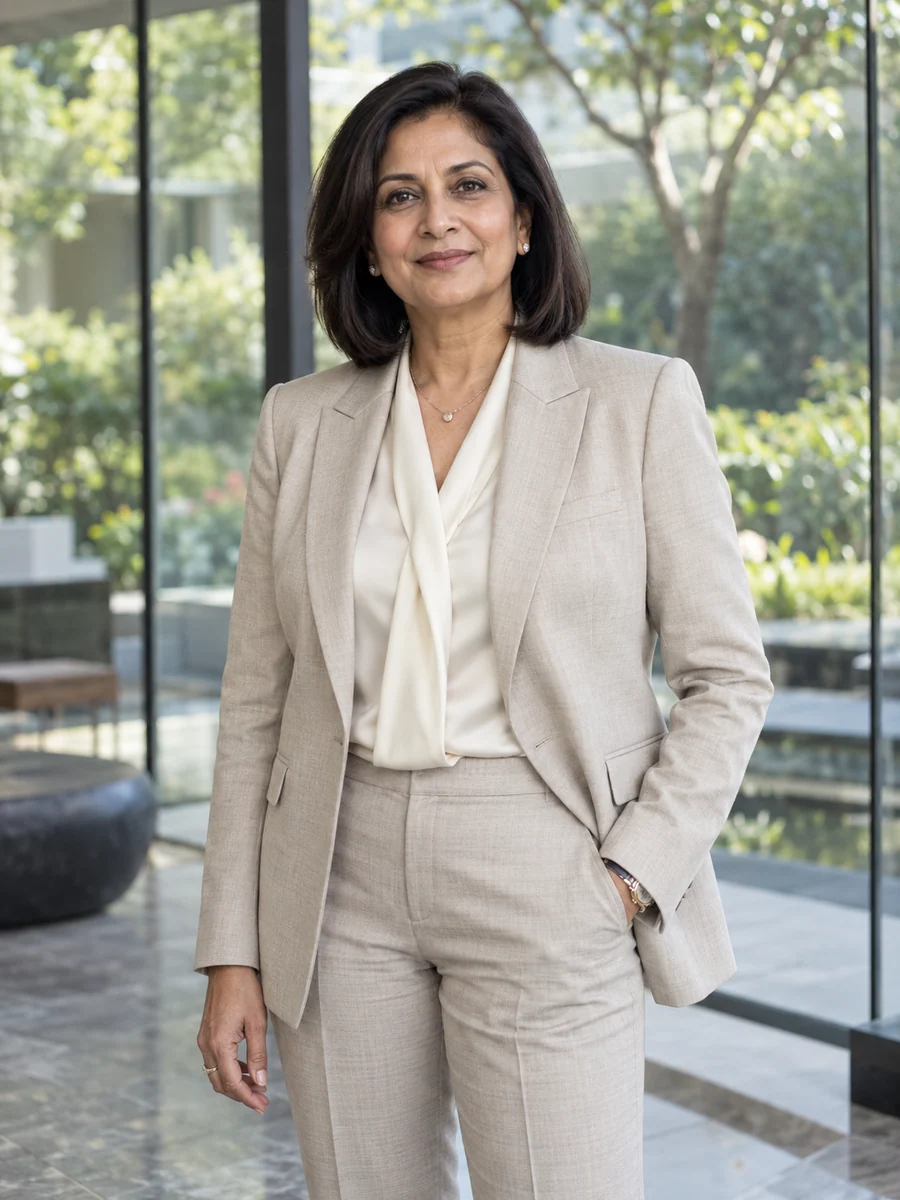
In the winter of 2001 I was a production engineer at Narmavati Organics in Ankleshwar when our plant manager stopped a half-finished campaign of a reactive-dye intermediate. A Surat buyer had telephoned to say that Chinese material was now available for less than our cost of raw materials. Nobody on that shift had done anything wrong. The reactor was running well, the yield was on plan, and the product was suddenly worth less than the acid we had charged into it. I was twenty-four, and it was the first time I understood that a plant could be efficient and still be in the wrong business.
I grew up in Ludhiana, where my father ran a small hosiery-dyeing unit, and studied chemical engineering at Pashmira Engineering College, graduating in 1999. Campus placement took me to Gujarat's chemical belt. At Narmavati I worked rotating shifts on nitration and sulphonation batches and later ran a production section. I learnt how a batch sheet, an effluent limit and a late tanker of raw material could together decide a month's output. I also learnt to respect the shift chemists, who usually knew why a yield had fallen before the laboratory did.
In 2004 I moved to Mumbai to join Ebersfelde Chemicals India, the subsidiary of a German specialty producer, as a market development manager for agrochemical intermediates. The job moved my vantage point from the reactor to the customer's qualification file. A formulator could not change suppliers quickly, because a new source meant fresh impurity data and, for some customers, regulatory paperwork that took months. Price mattered, but qualification time mattered more. I completed a part-time executive MBA at Konkanvel School of Management in 2008 while travelling to customers in Hyderabad, Ahmedabad and Basel.
From 2009 I spent five years at Arthveda Strategy Partners, a Mumbai advisory firm, working mostly for Indian chemicals and engineering companies, and became an associate partner in 2012. Consulting taught me to build a market model quickly and to present it to a sceptical promoter. It also showed me the limits of the adviser's position. Several clients agreed with our recommendations and then did something else, for reasons we had never been told: a family commitment, a banker's comfort, an old customer's loyalty. I wanted to work where those reasons were on the table.
Saranvik had been a client in 2012, when we studied whether it should offer custom synthesis to European crop-protection companies. In April 2014 the managing director, Kunal Sodhavaria, asked me to build that business myself. Over four years we went from two qualified molecules to eleven, and from ₹38 crore to ₹172 crore of custom-synthesis revenue. Much of the growth came from one customer, Brakenholm Agro. I was proud of that relationship and slow to see its risk.
In 2018 I took charge of portfolio and business development across the company, and in October 2021 I became chief strategy officer. The title arrived as China-plus-one enquiries were peaking. Every week brought another request for quotation, and many colleagues reasonably read the flow as a permanent shift. My job was to separate the enquiry from the commitment. A quotation costs a customer nothing; a reactor costs us capital for a decade and blocks every other campaign while it runs.
I lead a nine-person office covering market intelligence, portfolio economics, transactions and the capital-allocation process. I do not run plants or own customer relationships, and I try not to behave as though I do. My influence comes from the papers I write, the assumptions I insist on stating and a willingness to be shown wrong at the board. Since 2023 I have also been a non-executive director of our solvent-recovery subsidiary, which has shown me how different a recommendation looks from the other side of the table.
Colleagues would probably say I am direct about losses. When we sold the dye business our founder built, I wrote the paper that recommended it and did not pretend that the buyer's price compensated for what the family was giving up. When our capacity plan meant passing on a valuable contract, I named the contract and its value. A strategy function earns trust by recording what it was prepared to lose, not only what it hoped to gain.
I now want to bring that practice to another company's board as an independent director, in a manufacturing business facing questions I recognise: export demand that may or may not last, a dominant customer, and a founder deciding what the next generation should keep.
Open to Board appointments
Languages / English · Hindi · Punjabi · Gujarati
A leadership conviction
A multipurpose reactor at Sarigam can make many molecules, but only one at a time, and every campaign we accept closes the slot for another. Strategy in a chemicals company is mostly the discipline of deciding which campaigns, customers and inherited lines deserve that slot. I try to make each refusal as explicit as each commitment.
- Company revenue
- ₹1,180 Cr
- Saranvik Chemicals, year ended March 2026
- Share of revenue exported
- 64%
- Europe, the United States and Japan
- Largest customer's share of revenue
- 31% → 21%
- 2022–23 to 2025–26; about half from new customers
- Sarigam block approved
- ₹236 Cr
- In place of a ₹610 crore greenfield plan
Board & advisory record
Current appointments
Saranvik Solvent Recovery Private Limited
Non-executive nominee director
Wholly owned subsidiary; not an independent appointment
2023–present
Education & credentials
- Executive MBA (part-time)
- Konkanvel School of Management · 2008
- Bachelor of technology, chemical engineering
- Pashmira Engineering College · 1999
Perspectives from colleagues
Ishani's papers tell the board what management is choosing not to do, which is rarer than it should be. During the sale of the dye business she made sure the chairman's objections reached us in his own terms, and that made our review of the buyer more careful.
I argued against moving chemists off our largest account, and I still think the timing hurt us with that customer. But Ishani put the cost in writing, told the customer herself and never claimed the falling share was all her own doing.
As a young consultant she was the one who asked clients what they had not told us in the first meeting. It made her studies slower to finish and much harder for a promoter to set aside.