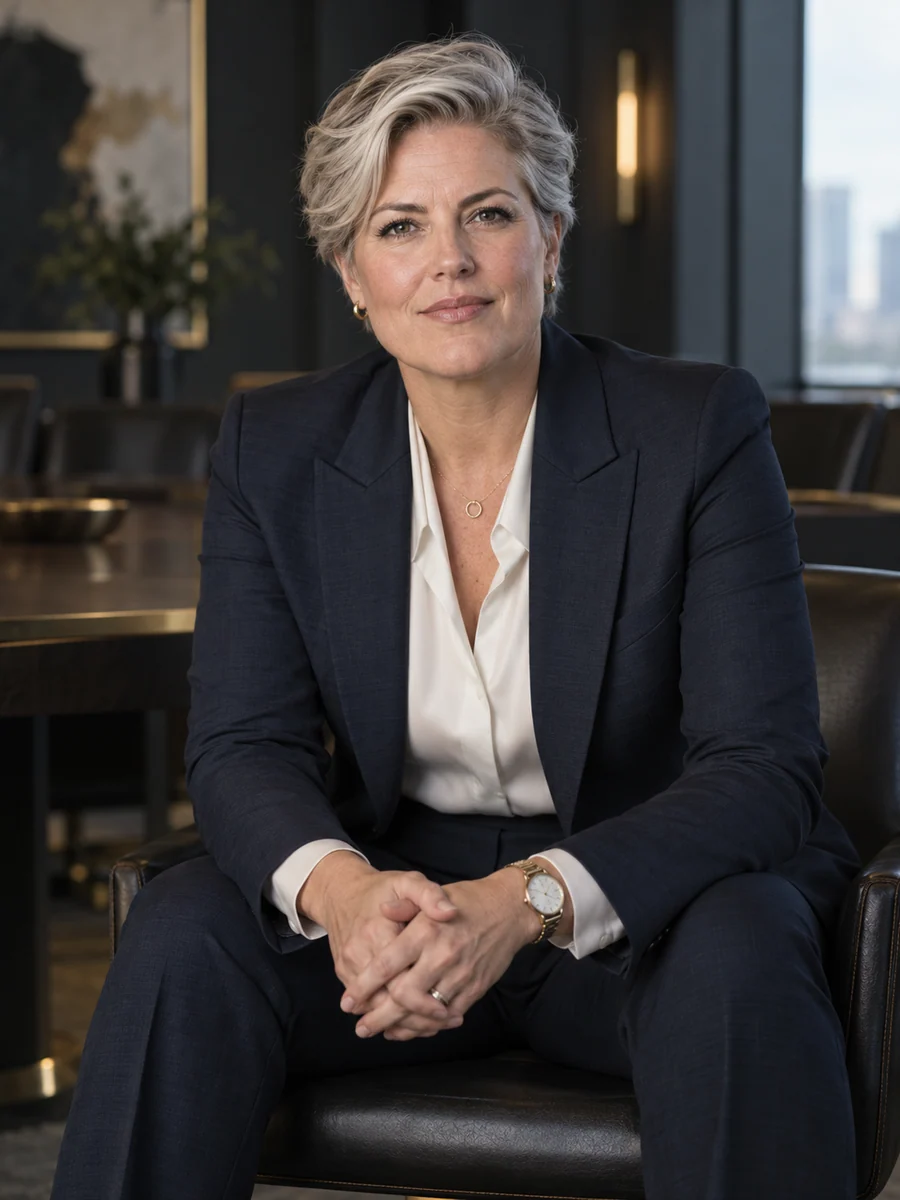
I build software for trucking firms of one to twenty-five trucks, where the owner may also be the driver, the dispatcher and the person paying every fee.
A small carrier's owner reads our screens in a truck stop at two in the morning, or between a fuel receipt and a broker's call. Whatever we put in front of that person must be true at a glance: what a fee costs in dollars, whether the hours exist to reach an appointment, and who can see the truck's position. If the software is only clear to someone with time to study it, it is not clear enough for the people paying for it.
Selected leadership work / 01
Making the broker's payment date the default and pricing each advance in dollars
In 2022, the screen a carrier saw after submitting an invoice had a large preselected button for same-day payment.
I design small-carrier software so that every fee is stated in dollars before the tap, every hours warning shows its source, and every location share has an end.
I am chief product officer at Ostervane Carrier Software in Kansas City, Missouri. Our app and web workspace serve trucking companies with one to twenty-five trucks: about 12,400 paying carrier accounts operating some 43,000 trucks. Carriers use it to receive load offers from brokers they already work with, assign drivers, photograph bills of lading, send invoices and, if they choose, take an advance against an approved invoice funded through our partner bank. Revenue in 2025 was US$88.4 million. I lead 61 people in product management, design, research and product analytics; engineering reports to our chief technology officer.
My first job, in June 2001, was dispatching flatbed loads for a family carrier in Springfield, Missouri. I learnt there that a driver calling from a shoulder with one bar of signal will not read a paragraph, and that an owner often discovers what a convenience cost only when the bank statement arrives. Twenty-five years later, through implementation, fuel-card payments and electronic logging products, those two lessons still decide most of what I approve or send back.
The work on this site concerns three defaults I chose to change. We stopped preselecting a same-day advance, flagged load offers that a driver's remaining legal hours could not reach, and ended location sharing at delivery even when a large broker asked for more. Each decision cost revenue or volume that colleagues had good reasons to protect. I describe what we gave up as plainly as what improved, because a carrier owner judging our product would expect the same.
The free payment date became the default
Small carriers had advanced 58 per cent of invoices when a same-day option was preselected. After we made the broker's own terms the default and priced each advance in dollars, that share fell to 37 per cent, and fee revenue ran US$5.9 million below plan.
Load offers now show an hours shortfall
Where a fleet connects its logging device, an offer that the assigned driver's remaining hours cannot reach carries a visible shortfall. Accepted offers with a shortfall fell from 8.6 to 3.1 per cent within six months.
Location sharing stops thirty minutes after delivery
We declined a broker partner's request for continuous phone location between loads. Its tenders through our app fell 46 per cent for two quarters before partially returning under the shorter window.
Current focus
I am rebuilding our document capture so that a driver can photograph and sign paperwork with no signal and see exactly which pages are still waiting to upload, rather than assuming a spinning icon meant the invoice was sent.
Conversations I welcome
I am seeking a first independent board seat at a company that sells to small businesses or operates in freight, with about twenty-two days a year available, subject to my chief executive's consent and a review of Ostervane's broker, banking and technology relationships.
The leadership record
Trusted with consequential decisions.
Formation
Bachelor of science in geographyCalverdun State University · 2001
Morgan argued against me on the broker's location request and was right. She brought the revenue at risk to the board herself, in the first paragraph, which is why we trusted the rest of her recommendation.
Ruth LomenzoChief executive officer, Ostervane Carrier SoftwareThe full record ↗
Contact
I am seeking a first independent board seat at a company that sells to small businesses or operates in freight, with about twenty-two days a year available, subject to my chief executive's consent and a review of Ostervane's broker, banking and technology relationships.