Chief Executive Officer India
Learning to fund the response to a barrier
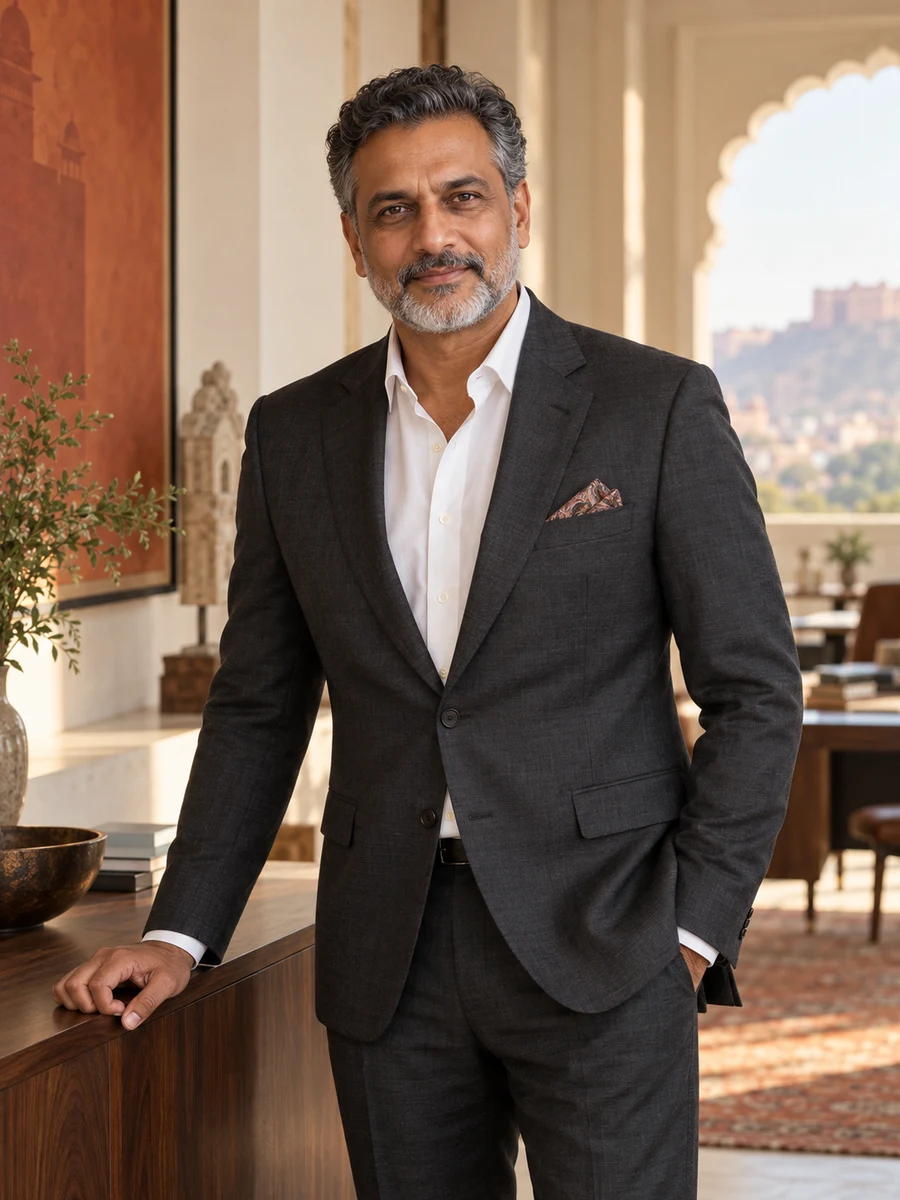
I joined Praveli Usability Research in Jaipur in June 1997 after completing a computer engineering degree. The firm studied how people used workplace applications. My first assignment was to observe tasks, record where participants became stuck and prepare findings for senior researchers. I initially wanted to explain every difficulty as an interface defect. Experienced colleagues taught me to consider the surrounding task, the person's tools and the instructions they had received. That widened my understanding of software quality. A feature could work exactly as specified and still prevent somebody from completing the work that mattered to them.
In April 2003 I moved to Tervaqi Accessibility Systems as a product analyst. The company was developing tools for document creation and workplace communication. I worked with engineers and researchers to turn observed barriers into product decisions. This was different from delivering a research report to another organisation. We had to choose what to build, explain what remained unsupported and live with the result after release. I learnt to distinguish a helpful demonstration from a dependable workflow. The most useful questions often arose when a participant used a combination of tools that our demonstration had never considered.
I became product manager in April 2009. Fourteen colleagues worked across the products in my remit, and I reported to the product director. I managed an annual ₹2.2 crore delivery budget as the company then operated. The appointment required more explicit prioritisation. A request from a large customer might compete with an improvement that helped users across several smaller organisations. I began asking for the task affected, the severity of the barrier and the ongoing cost of the proposed response. Those questions did not remove judgement from the roadmap. They made the basis of that judgement more visible to colleagues who otherwise saw only which request had won.
In April 2014 I became commercial operations director, a functional title without a board appointment. The move was deliberate. I wanted to understand how licensing, implementation and support shaped what the company could responsibly promise. I led thirty-one colleagues and managed ₹5.6 crore of operating expenditure at that stage. Sales colleagues showed me why buyers wanted simpler terms; support colleagues showed me where simplicity in a contract could conceal years of unpredictable work. I worked with finance and legal advisers to make commercial offers easier to understand without leaving product obligations unclear. This experience later proved important when I became responsible for the whole company.
The board appointed me CEO in April 2019. I inherited a business with useful products and strong technical commitment, but uneven connections between research, product planning and commercial language. I did not begin by replacing those functions with a central approval system. I asked their leaders to examine a small number of customer promises together and show what evidence and expenditure sat behind each one. I joined the board as an executive director in April 2021, alongside the CEO role. That added formal director responsibilities; it did not make my existing management reports an independent assessment of the business.
Today I lead six functional heads in a company of 170 people. Our FY2025–26 revenue of ₹54 crore and operating profit of ₹6.8 crore provide context for the scale of decisions on this site. A ₹63 lakh product rebuild was significant for us. So was turning down a proposed ₹4.2 crore agreement whose future support demand had no practical limit. In both cases, a commercially appealing short-term answer would have transferred an unresolved obligation into later years. I had to explain the immediate cost to directors and colleagues, while asking them to judge the longer-term obligation without pretending that every future outcome was certain.
The research programme described here also changed how I think about leadership. Paying participants and providing the support they needed did not purchase endorsement of our software. It created better conditions for people to tell us what did not work. I want that distinction preserved as the company grows. My contribution is to make space and funding for evidence that may disappoint us, then take responsibility for the commercial response. I remain interested in the detail of a user's task, but my work now is to build an organisation in which that detail can influence consequential decisions without depending on the chief executive being present in every research session.
Open to Board appointments · Executive opportunities
Languages / English · Hindi
A leadership conviction
A product promise must survive the way a person actually works. I want our commercial choices to pay for that responsibility, including research, maintenance and correction. Accessibility is diminished when it becomes a decorative claim or a reason to speak for users we have not listened to.
- Company colleagues
- 170
- Six functional heads report to the CEO
- Annual revenue
- ₹54 crore
- FY2025–26; ₹6.8 crore operating profit
- Organisational customers
- 96
- Accessible document and workplace software in India
Board & advisory record
Current appointments
Tervaqi Accessibility Systems
Executive Director
Board of directors
2021–present
Education & credentials
- Bachelor of Engineering in Computer Engineering
- Asterquni Institute of Engineering · 1997
Perspectives from colleagues
Kavish brought the cost of the export correction and the delayed revenue to the same decision. The board could see what it was approving and what remained uncertain.
He funded the conditions for people to participate and accepted findings that changed our roadmap. Payment for research never became an expectation of endorsement.