Chief Strategy Officer Japan
What the last village shop taught me
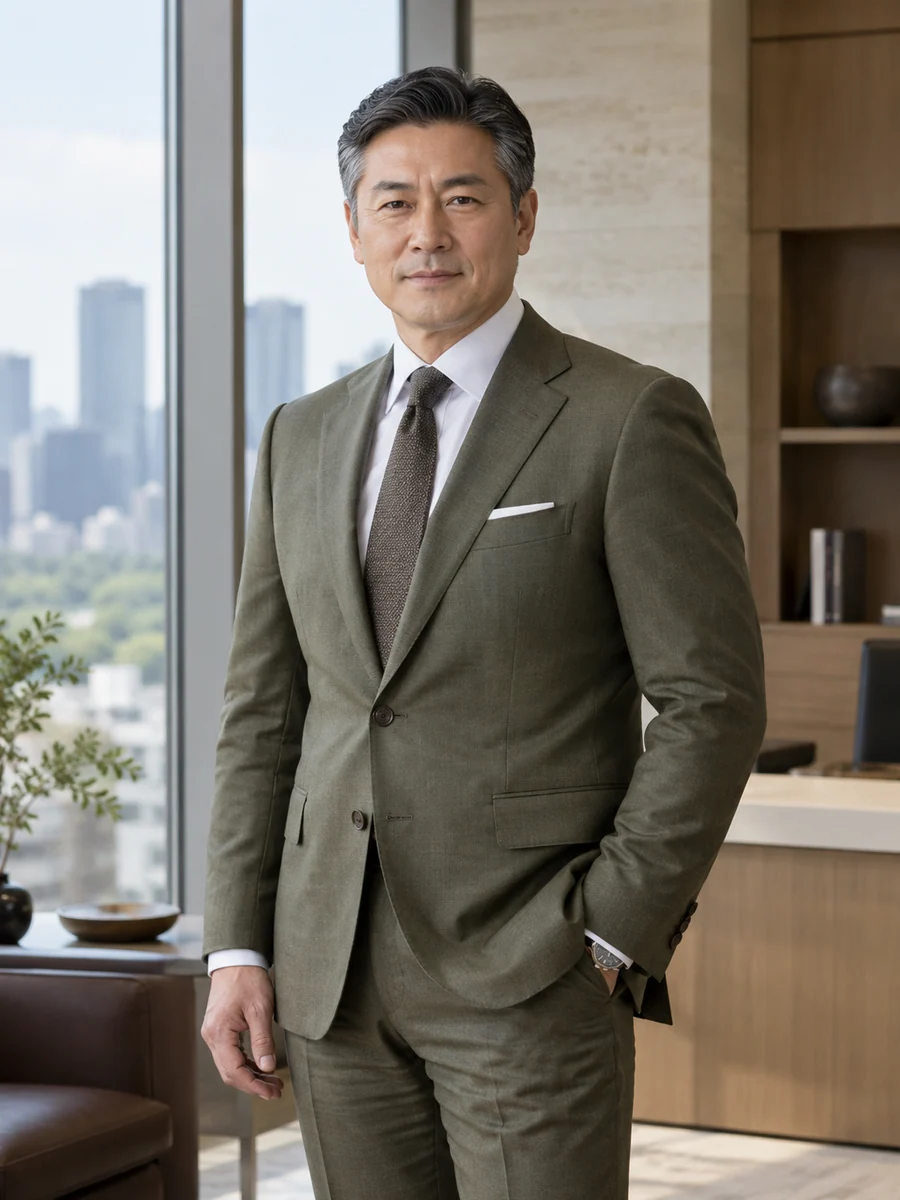
In the spring of 1996 I drove a delivery van of soy sauce, dried noodles and canned fish to a grocer in a mountain village west of Morioka. The owner, a woman in her seventies, told me she would close at the end of the year because she could no longer lift the crates. She was one of eleven customers on my route who stopped trading in my six years with the wholesaler. Nobody had decided that those villages should lose their shop. It simply happened, one retirement at a time, and the residents found out when the shutters stayed down.
I had graduated in commerce from Shiwanoki College of Commerce in March 1993 and joined Kanetsugi Foods, a Morioka food wholesaler, the following month. My territory covered about 140 independent grocers and small village shops. I learnt the arithmetic of a small grocer's week, how much credit a shop could carry, and how quickly a business could become unviable once its owner was the only person behind the counter.
In October 1999 I joined Sawanagi Stores as an assistant store manager. The chain had 58 supermarkets then and was opening larger stores beside the new bypass roads. I became manager of a suburban store in 2001 and of a larger one in 2003. Store management taught me what an hour of labour buys and what it cannot buy. It also taught me that older customers came at the same hours each week, by bus or with a neighbour, and that a timetable change could matter more to them than a price change.
From 2005 I worked in merchandising, first as grocery category manager and then as manager of our own label. I enjoyed the negotiation and learnt to respect the local makers of miso, tofu and pickles whose products carried a loyalty no own-label item could match. I also learnt that our label was too small to command the prices a growing private-brand range needed. That lesson returned twelve years later, when I recommended giving most of it up.
In July 2011 I was appointed district manager for thirteen stores in southern and coastal Iwate, four months after the earthquake and tsunami. One of our coastal stores had been destroyed, and we were trading from a prefabricated building on higher ground. For the next five years my work was rebuilding, rehiring and deciding with colleagues where permanent stores should stand when the towns themselves were being redrawn. It was the period that made me a planner. A store location chosen in 2013 would have to serve a population in 2035, and the people of 2035 would be fewer and older.
I moved to corporate planning in April 2016 and became executive officer responsible for strategy in June 2021. I lead eleven colleagues covering the store-network plan, investment proposals, alliance work and our mobile sales programme. Since 2023 I have also served as a company-nominated director of Mitsurane Procurement, the joint purchasing company we own with two neighbouring chains.
I work by putting the uncomfortable options on the table early, usually in writing and before anyone has asked for them. A paper that sets renewal, reduction, conversion and closure side by side, with honest figures for each, changes the conversation; an unexamined default is much harder to defend once its alternatives are written down beside it. Our store-operations colleagues know their towns better than my office does, and I rely on them to tell me what a closure would actually mean for the people who shop there. Our finance director tests whether my proposals pay. I have been wrong in both directions: too optimistic about how quickly older customers would adopt new checkouts, and too cautious about how much they would accept the van routes.
The three decisions on this site concern store closure, the shared label and checkout design. They are typical of the work of strategy in a regional grocer, where the question is less often how to grow and more often how to serve the same communities with fewer people and less money than before. I would like to bring that experience to a board outside my own company, as an outside director who has had to make such choices rather than only review them. I would also bring the awareness that my company's answers were shaped by its towns, its founding family and its alliance partners, and that another board's circumstances would need answers of their own.
Open to Board appointments
Languages / Japanese · English
A leadership conviction
Most of the towns we serve will have fewer residents in ten years than they have today, and more of those residents will no longer drive. I do not treat that as a reason to wait for each store to fail on its own timetable. A store, a van route and a pick-up counter are different ways of keeping food within reach, and each has an honest cost. My work is to choose among them while the company still has the money and the goodwill to choose well.
- Net sales
- ¥142.6bn
- Year ended February 2026; listed regional supermarket chain
- Supermarkets
- 71
- Across Iwate, Akita and Aomori prefectures
- Mobile sales vans
- 24
- Serving towns and districts without a nearby store
Board & advisory record
Current appointments
Mitsurane Procurement
Company-nominated non-executive director
Joint purchasing and private-brand company owned by three regional chains
2023–present
Education & credentials
- Bachelor of commerce
- Shiwanoki College of Commerce · 1993
Perspectives from colleagues
Hiroshi brings the board options before the losses arrive. When he proposed closing two stores, he also brought a plan for the people who shopped in them, and he has reported the cost of that plan every year since without being asked.
In the alliance negotiations he argued for his own company firmly, but he wrote down what each of us would keep as carefully as what we would share. That is why three family-run chains could sign the agreement.
He rode the van routes before deciding how many we needed, and he listened to the drivers about which stops worked. When a route did not work, he changed it instead of defending the plan.