Chief Technology Officer India
One convincing assembly did not prove the alternatives
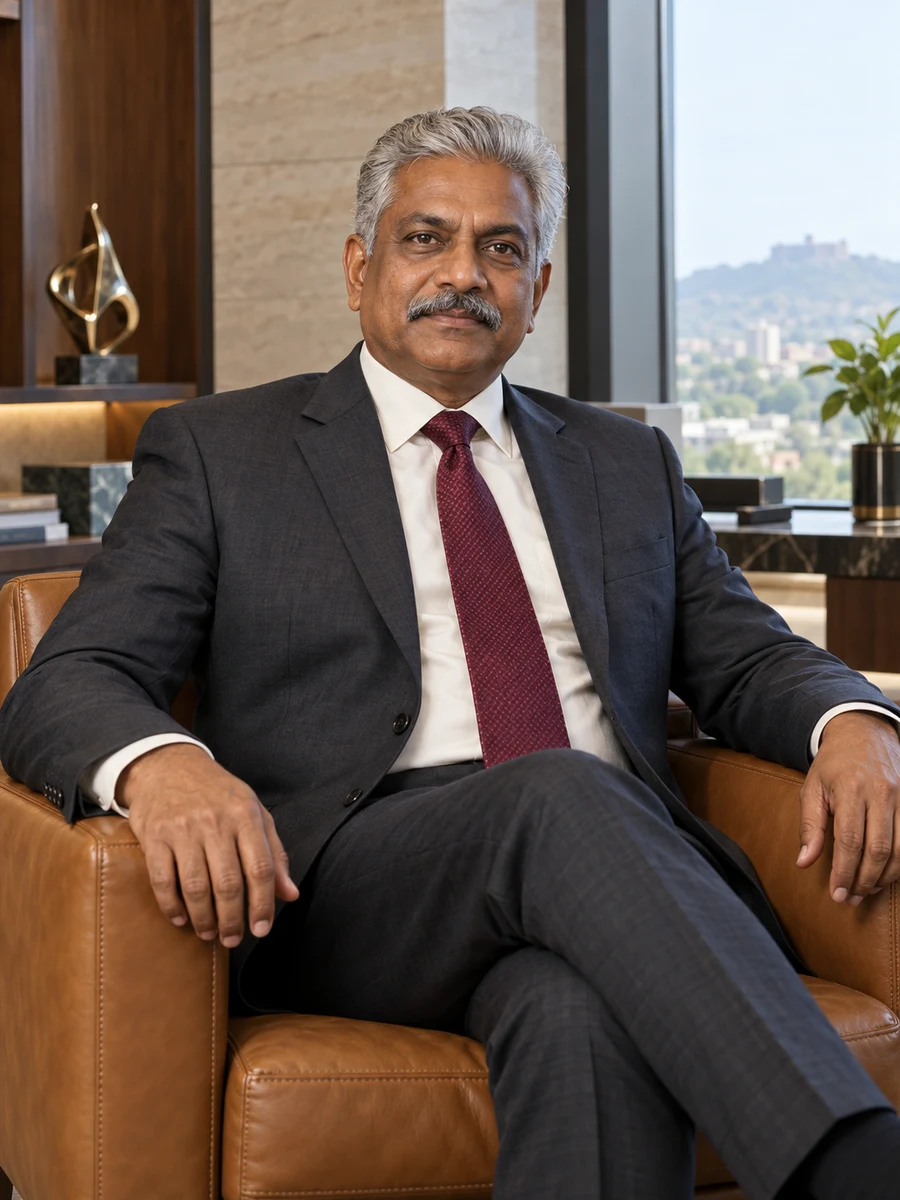
The first assembly can be a persuasive witness. It shows the parts meeting cleanly and makes repetition feel like a matter of production rather than another technical question. I learned to be more sceptical after approving a connector concept whose mirrored arrangement did not preserve the fit demonstrated in the original orientation. The visual idea travelled farther than the evidence, and I was responsible for letting it do so.
I completed mechanical engineering at Tevqazni Engineering College in May 1991 and joined Qavzelni Fabrication Services the following month. Seven people formed the supervised engineering group. I prepared drawings, supported checks and learned how a small difference at an interface could change the whole assembly. I did not have independent authority to approve client designs. The workshop taught me to distinguish a part that matched its drawing from an assembly that fulfilled its intended function.
In April 1999 I moved into design coordination, with twelve colleagues and ₹1.8 crore annual function expense. The work involved bringing component definitions and fabrication constraints into the same account before production committed to repetition. I learned to ask which version of a drawing belonged to the item being examined and which assumptions a familiar part number might conceal. A consistent naming scheme was helpful, but it could not establish compatibility between different physical details.
I joined Drezqalni Interior Systems in April 2007. Twenty-two engineering colleagues worked within ₹3.7 crore annual expense. Demountable office interiors made the interface question more consequential because the commercial proposition included rearrangement, replacement and later access. It was not enough for a system to look convincing at first installation. I worked with practice colleagues to examine the conditions under which those later activities could be supported. Project-specific design and installation permissions remained with their qualified owners rather than becoming general consequences of our product description.
Promotion to Head of Technical Methods followed in April 2015, with thirty-two colleagues and ₹5.9 crore annual function expense. In 2017 I accepted the mirrored-connector assumption too readily. Twelve of twenty agreed bench mock-ups met the fit criterion and eight did not. We spent ₹62 lakh and ten weeks revising the interface and examining the defined configurations. Sixteen then met the criterion, while four stayed held. These were development mock-ups, not a report of installed-building failures. The exercise changed my acceptance question from whether the concept worked once to which configurations the evidence actually supported.
I became CTO in April 2021. A replacement review in 2023 examined forty-five requests. Twenty-eight had supported matching routes, while seventeen concerned different product generations whose interfaces could not be treated as interchangeable. A ₹58 lakh, twelve-week programme established nine further approved routes and left eight held. The final account therefore contained thirty-seven supported requests and eight unresolved ones. It did not turn every older product into a current one or imply that a shared appearance justified a replacement without qualified review.
In 2025 we examined twenty-four agreed maintenance scenarios. Eighteen allowed the defined task to be performed through the intended access route, while six required unplanned disturbance of adjacent panels. A ₹67 lakh, fourteen-week development programme produced twenty-two supported scenarios and left two outside release. That result concerned the selected service-access criterion. It was not evidence of universal field reliability or a broader safety certification. The review made the later maintenance task part of technical acceptance rather than an inconvenience to discover after installation.
In development reviews I now ask the presenter to show the nearest unsupported alternative alongside the successful example. That changes the discussion from whether the demonstration is persuasive to where its conclusion stops, and which commercial decision depends on crossing that boundary.
Today forty-three technical colleagues work through four heads within ₹8.4 crore annual expense and a separate ₹3.1 crore approved development programme. I report to Renu Zeqvalthi and work with Joseph Qavzerli across the technical practice. My small beneficial holding sits inside the employee allocation; I have no statutory director seat. For a future outside role, I still need governance learning and a specific appointment assessment. I want to contribute where a leader can narrow a technical promise without treating that correction as a failure of ambition. The useful question is which interfaces and later tasks have actually been established, and what the organisation must still learn before repeating the same promise more widely.
Open to Board appointments · Executive opportunities
Languages / Marathi · Hindi · English
A leadership conviction
Repeating a component is not the same as proving the assembly. I want the interface, the replacement and the later service task examined before a repeatable design becomes a repeatable problem.
- Technology and methods colleagues
- 43
- Four heads; company headcount 342
- Annual technical function expense
- ₹8.4 crore
- Separate approved development programme ₹3.1 crore
- Fabrication, methods and technology
- 35 years
- Continuous progression from June 1991
Career chapters
2021-04 — present 01
Chief Technology Officer
Drezqalni Interior Systems
Make repeatable technical promises depend on the interfaces and later tasks actually supported
2015-04 — 2021-03 02
Head of Technical Methods
Drezqalni Interior Systems
Define which assembly configurations the technical evidence permits us to support
2007-04 — 2015-03 03
Engineering Development Manager
Drezqalni Interior Systems
Connect component definitions with rearrangement, replacement and later access
1999-04 — 2007-03 04
Design Coordination Lead
Qavzelni Fabrication Services
Keep component versions and fabrication constraints connected before repetition
1991-06 — 1999-03 05
Engineering Trainee, later Development Engineer
Qavzelni Fabrication Services
Preserve the connection between an individual part and the assembly it must serve
Education & credentials
- Bachelor of Engineering in Mechanical Engineering
- Tevqazni Engineering College · 1991
Perspectives from colleagues
Nandkishor narrowed a connector claim he had supported when the alternative configurations did not fit. He made the remaining boundary part of the commercial decision.
He keeps the generation and the service task beside the technical result. That stops a useful test from becoming a wider promise than the evidence supports.