Chief Marketing Officer India
Let the person recognise the experience before departure
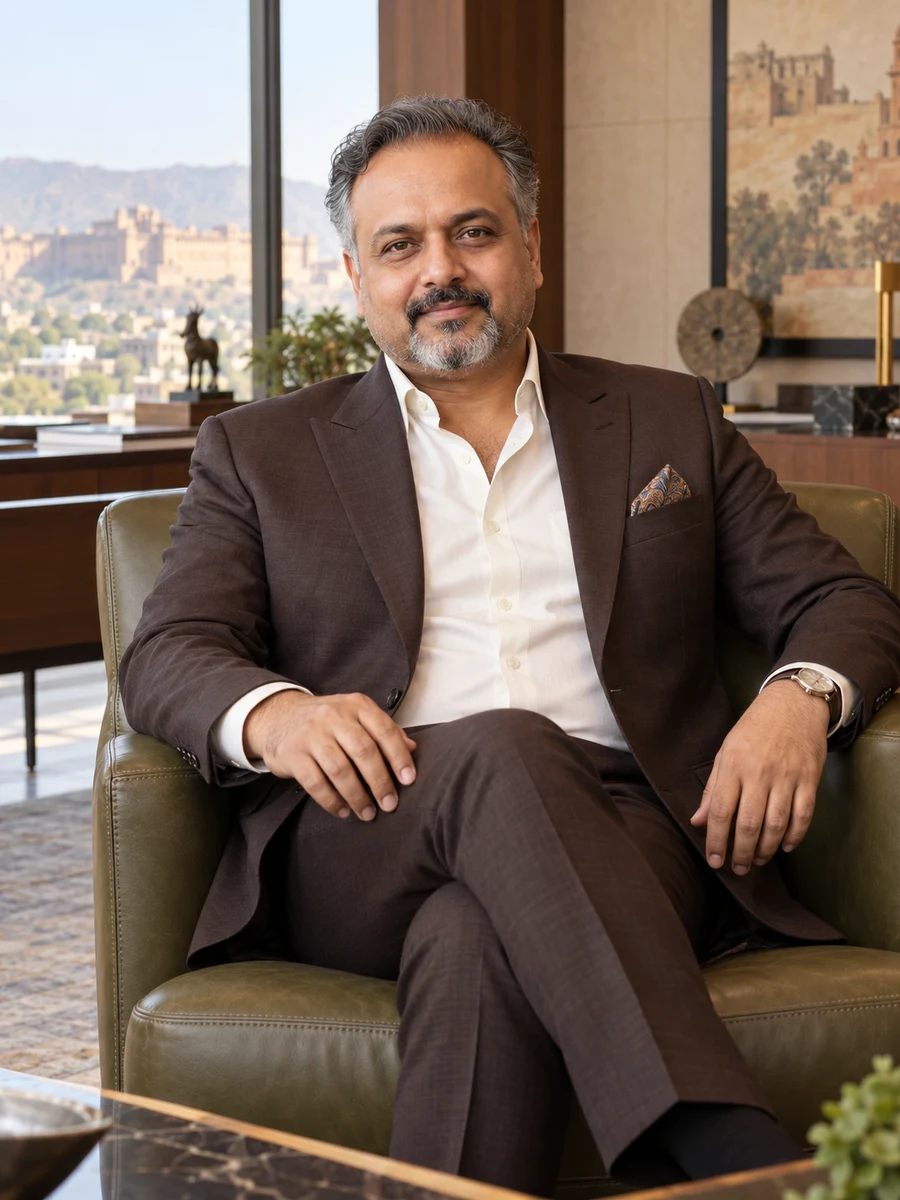
The resident did not want to be photographed as a tourist in his own city. That was one of the questions raised in our 2023 exploratory conversations, and it stayed with me because our campaign images had made a visitor’s first encounter the default story. Twelve of the twenty people interviewed were residents and eight were visitors. The conversations did not establish a market forecast, but they gave us a reason to test an invitation that began with familiarity rather than arrival.
I grew up in Jaipur and completed a Bachelor of Arts in History at the fictional Nervathi Arts College in May 1997. I joined Darselvi Visitor Services in June in a nine-person support group. We helped explain experiences and passed questions to the people responsible for delivering them. I learned that a visitor’s question often concerned something the description had omitted: the pace, the meeting arrangement or what the experience expected them to do.
In April 2004 I became a partnerships coordinator with twelve colleagues and ₹1.3 crore annual practice expense. Partners wanted an offer they could explain quickly, but brevity could remove a condition important to the customer. I learned to keep the operating owner in the conversation before a convenient description became established across a channel. We could make the invitation easier to understand without claiming authority over route suitability or the judgement of the people who led an experience.
I joined Melravi Cycle Journeys in April 2011 as marketing manager, leading sixteen colleagues within ₹2.8 crore annual expense. The move put me inside an enterprise that had to deliver the expectation our communication created. I worked with guides and Iqbal’s operating colleagues to understand the difference between a pleasing image and a useful description. A cycling experience involved a participant’s own choices and circumstances as well as the route and equipment we supplied.
I became head of marketing in April 2017, with twenty-one colleagues and ₹4.1 crore annual expense. Two years later I approved a blanket description of six selected routes as gentle. Two were predominantly flat, and four included mixed gradients. The phrase had removed a distinction that should have remained available to the person deciding whether to join. We spent ₹38 lakh over eight weeks replacing it with specific accounts of surfaces, duration and gradients. We did not claim that revised copy could certify individual fitness, accessibility or safety.
I became CMO in April 2022. Twenty-five colleagues now work through three leads within ₹5.3 crore annual expense, including ₹2.1 crore paid campaign spending. Meera Telsarkar is chief executive and Iqbal Vernashi leads operations. The resident research the following year led to a ₹59 lakh, twelve-week pilot across two neighbourhoods. We changed the invitation and departure arrangements to test the idea while keeping the evidence bounded. Twelve resident interviewees were not proof that most residents wanted the same experience.
In 2025 a proposed sixty-person launch exposed another gap between the campaign concept and delivery. The creative arrangement assumed four groups of fifteen. The operating plan permitted ten per group, so the event required six groups with a revised timetable and resources. We committed ₹44 lakh over nine weeks to the revised launch preparation. I changed the offer rather than ask Iqbal to make the original visual arrangement determine the operating decision.
I hold neither a personal ownership interest nor a statutory appointment. Further governance preparation remains necessary before a first outside role. I would bring an audience perspective that asks whether the person can recognise the experience being offered and whether the delivery owner can support the promise. Marketing should create a reason to choose, but it should also preserve the conditions that make that choice informed. A booking gained through an expectation the guides must correct is not the kind of growth I want my function to celebrate. I also want the guide’s account to influence the next campaign review. A question asked repeatedly at departure may reveal something our invitation failed to explain. That is commercial evidence worth examining before the team celebrates another increase in enquiries. It can change the offer itself, rather than simply the words used to promote it.
Open to Board appointments · Advisory roles · Executive opportunities
Languages / English · Hindi
A leadership conviction
An invitation is useful when the person can recognise the experience they are choosing. I would rather lose a booking before the ride than win it through a description our guides must explain away at departure.
- Marketing function
- 25 colleagues
- Three leads across audience, partnership and campaign work
- Annual function expense
- ₹5.3 crore
- Includes ₹2.1 crore paid campaign spending
- Visitor and audience career
- 29 years
- Services support through cycling-experience marketing leadership
Career chapters
2022-04 — present 01
Chief Marketing Officer
Melravi Cycle Journeys
Build audience propositions whose promise the operating plan can support
2017-04 — 2022-03 02
Head of Marketing
Melravi Cycle Journeys
Make the experience understandable across campaign and partner channels
2011-04 — 2017-03 03
Marketing Manager
Melravi Cycle Journeys
Connect campaign expectations with the experience delivered by guides
2004-04 — 2011-03 04
Partnerships Coordinator
Darselvi Visitor Services
Help partners explain an offer without dropping the conditions behind it
1997-06 — 2004-03 05
Visitor-Services Assistant
Darselvi Visitor Services
Understand the practical question behind a visitor’s interest
Board & advisory record
Current appointments
Melravi Cycle Journeys
Executive audience and campaign presenter; no statutory seat
Board audience-development and customer-promise discussions
April 2022–present
Education & credentials
- Bachelor of Arts in History
- Nervathi Arts College · 1997
Perspectives from colleagues
Ritvik made the resident programme a question we could test rather than a market forecast inferred from a small set of conversations.
He changed the launch concept when the group arrangement did not fit the operating plan, before the guides had to explain the difference to guests.