Chief Executive Officer Singapore / Southeast Asia
Learning to own the consequences after commissioning
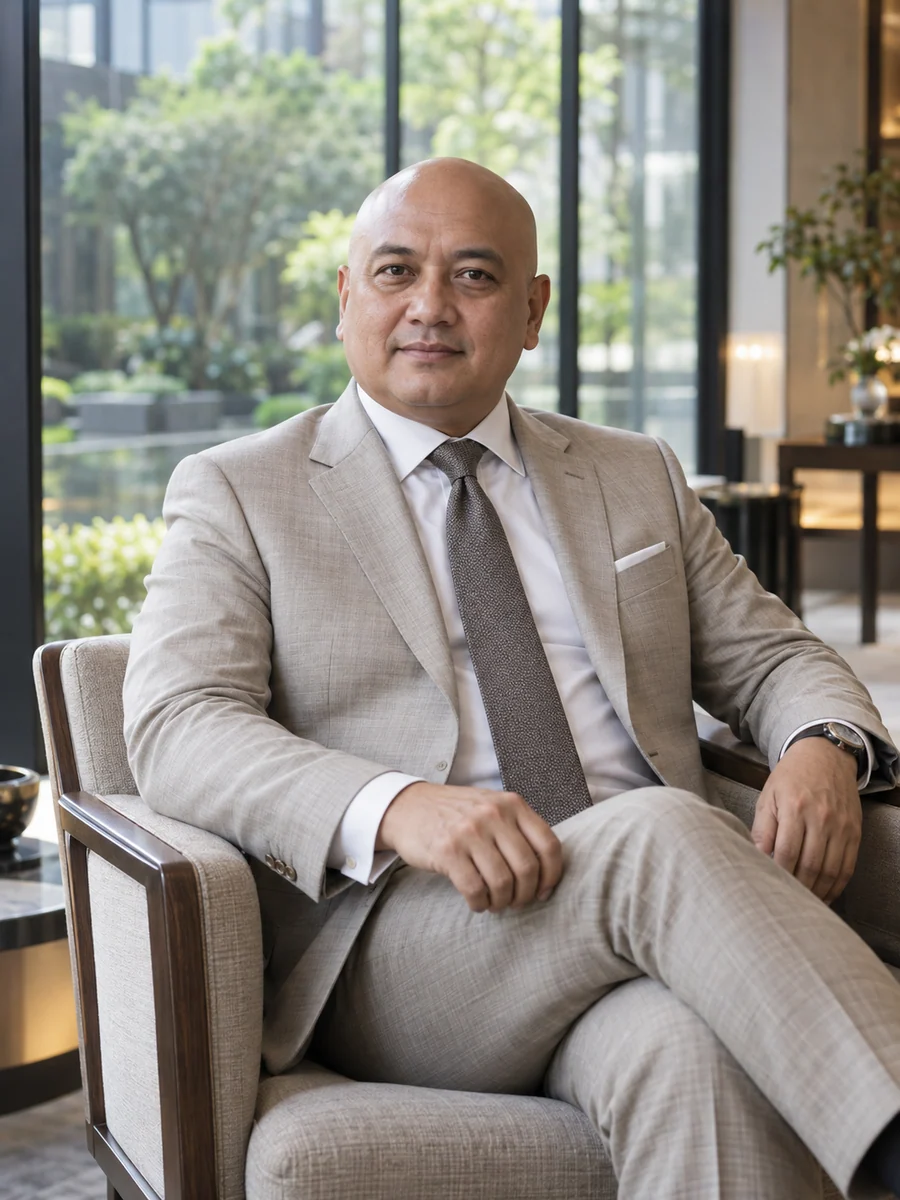
I trained as an electrical engineer because I liked work in which a drawing eventually had to become something that another person could use. After graduating from Kertavelle Institute in June 1998, I joined Tavunara Power Services in August. The employee-owned engineering business worked on electrical installations for industrial customers. My early tasks were supervised and specific: preparing drawings, checking equipment schedules and helping the project team preserve changes made during construction. I did not approve an entire installation merely because I had worked on part of it. That distinction between contribution and authority stayed with me.
In January 2004 I moved into project planning. The change brought me closer to customers’ production calendars and to the consequences of a late answer. A technically reasonable sequence could become impractical when access depended on a factory shutdown that had already been allocated to another contractor. I learnt to ask who controlled the next condition and whether our schedule reflected their actual commitment. Planning was less about making a neat chart than about keeping dependencies visible until the people responsible had agreed them.
The commercial-manager appointment in January 2010 was uncomfortable in a useful way. I had to explain cost and responsibility to customers rather than assume that the technical scope spoke for itself. Our engineers wanted enough allowance for uncertainty; customers wanted a price they could approve. I worked on proposals that separated an agreed base scope from work that depended on later surveys or production decisions. Some opportunities became smaller once those distinctions were visible. Others became more durable because both sides could understand how a change would be handled.
Suryavellan recruited me as project director in January 2015. Rooftop solar brought together much of that earlier experience, but with a longer relationship after installation. We would own equipment on buildings belonging to other people, and the conditions that supported the original proposal could change over many years. I spent time with operating colleagues and host-site managers, not only the development team. Roof condition, safe access, planned refurbishment and the practical arrangements for maintenance all deserved attention before the investment decision. They were not minor details to be left for the last contract meeting.
I became CEO in January 2020 as the founding shareholders brought in growth capital. The board wanted a larger portfolio and a more consistent way of deciding which opportunities to commit. I joined the board as an executive director, working with a separate non-executive chair. The new role required me to connect commercial ambition with the balance sheet, operating capability and the host relationships that would carry the assets. I could no longer regard an awkward site condition as someone else’s project problem. It belonged in the company’s decision about what to own.
The twenty-two-roof programme tested that approach. We could have described every roof as part of the next expansion and treated unresolved access or refurbishment questions as implementation work. Instead, we separated fourteen sites that were ready from five requiring further preparation and three we declined. The smaller programme disappointed colleagues who had worked hard to assemble the opportunity. I understood that frustration. My responsibility was to make the distinction early enough that they were not asked to deliver a commitment the underlying arrangements could not support.
Monitoring created a different lesson. A missing signal could be mistaken for lost production, while a restored connection could look like an operating recovery. Our review separated communication interruptions from confirmed equipment problems and kept unresolved alerts visible. It was less satisfying than a single improvement percentage, but more useful for deciding what the operating team should do next. I learnt to ask what a measure could establish before allowing it to become evidence of value.
I still enjoy visiting a project when the drawings have become a working installation. As CEO, however, I judge our work over a longer period: whether the assumptions remain credible, whether the host relationship can accommodate change and whether the team can maintain what we have committed to own. An external board could use that perspective in another asset or technical-service setting. I would bring a practical interest in the obligations behind growth, together with a willingness to hear when a promising proposal needs to become smaller.
Open to Board appointments
Languages / English · Indonesian
A leadership conviction
The roof is part of someone else’s working business. Our asset plan has to respect that fact over its whole life, not just during installation. I want the access arrangement, production assumption and maintenance responsibility discussed while the project can still change. A smaller committed programme can be more credible than a larger one whose difficult conditions have been postponed.
- Owned solar capacity
- 148 MWp
- 315 roofs at June 2026; capacity is not energy delivered
- Company revenue
- US$31m
- 2025 electricity, installation and service income
- Colleagues
- 280
- Company-wide at June 2026
Career chapters
2020–present 01
Chief Executive Officer
Suryavellan Energy
Leads the company’s capital choices and the continuing obligations of its rooftop portfolio.
2015–2019 02
Project Director
Suryavellan Energy
Connected site preparation, project delivery and operating handover before moving into the CEO role.
2010–2014 03
Commercial Manager
Tavunara Power Services
Made scope, dependencies and customer changes explicit in engineering proposals.
2004–2009 04
Project Planning Manager
Tavunara Power Services
Coordinated engineering and procurement around customer-controlled access windows.
1998–2003 05
Electrical Project Engineer
Tavunara Power Services
Prepared design records and tracked approved changes under senior engineering supervision.
Board & advisory record
Current appointments
Suryavellan Energy
Executive director
Company board; capital and operating decisions
2020–present
Education & credentials
- Bachelor of Electrical Engineering
- Kertavelle Institute · 1998
Perspectives from colleagues
Reza separated the roofs we could commit from the opportunities we still needed to prepare. That made the capital discussion smaller, but much more useful.
He learnt to ask whose agreement a schedule depended on. That changed how the planning team discussed a late answer with customers and project managers.