Chief Executive Officer India
The service commitment continued after the equipment visit
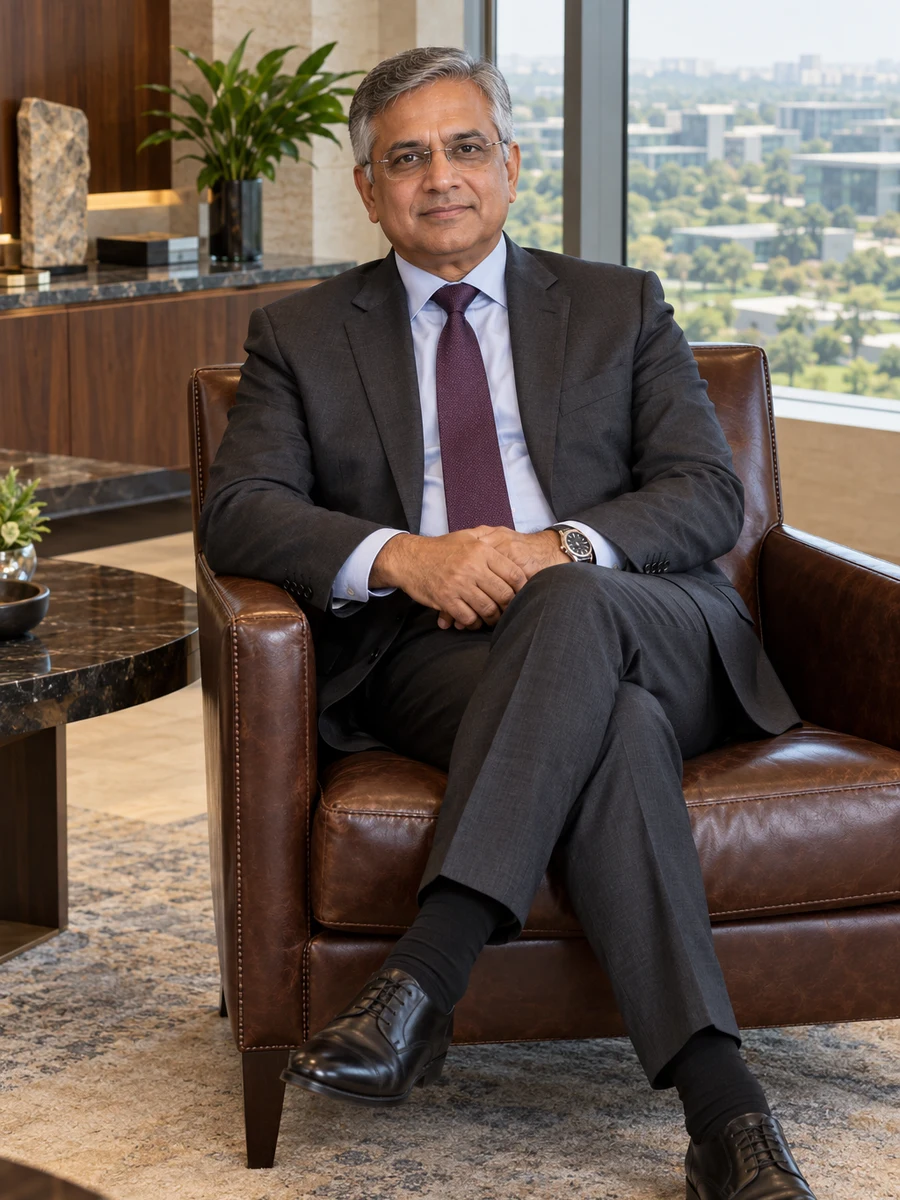
I began my career around cooling equipment, where a service visit often had a clear immediate objective. Restore the machine, record what was done and return it to the responsible operator. Company leadership later required a broader account. A machine could perform better while the plant used more electricity, and a large storage figure could leave the intended service duration unsupported. The transition was not simply from engineering to finance. It was learning to ask which part of the promise a familiar technical measure left outside the frame.
After completing mechanical-engineering studies at Vaqzerthi Engineering College in May 1990, I joined Navqerzhi Cooling Works in June. I worked in a seven-person service group under qualified supervision. I did not independently authorise electrical work or customer operations. The role taught me to respect the boundaries between equipment service, system operation and the customer’s own responsibilities. It also introduced the practical importance of recording conditions rather than assuming that a successful visit established performance under every later operating pattern.
In April 1997 I became service manager, leading twenty-one colleagues within ₹3.2 crore annual service-delivery expense. Customer capital programmes remained outside my authority. I coordinated the work of people who saw different parts of the same installation. A complaint described as a chiller problem might involve pumps, controls or a building-side condition. I learned to bring those observations together without treating the service organisation as authorised to change every connected system. I wanted to understand how a plant owner made the continuing commitment after the individual service task ended.
Delzqerthi Thermal Services appointed me plant manager in April 2005. Fifty-eight employees worked within an ₹18 crore annual operating envelope. I was responsible for the site’s management account, with engineering, electrical and safety decisions held by the qualified owners. The work made the boundaries of a cooling service tangible: what was measured, where delivery was defined and which dependencies the commercial promise assumed. A well-performing component did not settle the plant’s operating cost or the customer interface. The complete account needed those relationships to remain visible.
I became COO in April 2013, eventually overseeing 240 employees within a ₹126 crore annual operating envelope. In 2017 I supported a change on the strength of lower chiller electricity. The combined plant comparison showed that additional auxiliary demand more than offset that reduction. I withdrew the proposed rollout and funded a review of the system evidence. I had allowed a component result to become a company claim. The correction shaped my approach to later investments: the boundary of the measure had to match the boundary of the promise.
Since April 2020 I have been CEO and an executive director, reporting to the board through its separate chair, Lata Qevzrali. Seven heads report to me, including operations head Sameer Vezqrani. A thermal-storage proposal required us to distinguish its rate of discharge from the usable energy available over the promised period. A later continuity review examined electrical dependencies shared by apparently separate equipment. In both cases I asked for the practical conditions to enter the commercial and investment account before we described the capability to customers.
The company now owns three plants with 30,000 refrigeration tons of installed capacity and employs 312 people. FY 2025–26 cooling delivery was 76 million refrigeration ton-hours, with revenue of ₹246 crore. The annual operating envelope is ₹164 crore and the separate capital programme ₹72 crore, both board-approved. Founders own 47 percent, an infrastructure investor 43 percent and an employee vehicle 10 percent. My 0.3 percent beneficial interest sits within that vehicle. These figures describe the business and approvals; they do not give me unilateral authority over every expenditure or professional decision.
My current executive directorship is the only statutory seat I hold. An additional outside role would require relationship, eligibility and capacity assessment, including employment and ownership interests. I would want a board that values a complete operating argument without expecting a director to act as an informal engineer. The contribution I seek is practical: help an organisation see whether the resources, duration and dependencies behind its promise have actually been examined. That may change the preferred investment, the timing or the language of the commitment. It should also change the leader’s own account when the evidence no longer supports the claim they first wanted to make.
Open to Board appointments · Executive opportunities
Languages / Hindi · English · Telugu
A leadership conviction
A service promise belongs to the whole system that must deliver it, not the component whose performance is easiest to present.
- Company employees
- 312
- Seven functional heads report to the CEO
- Installed cooling capacity
- 30,000 TR
- Three plants; capacity is distinct from delivered energy
- FY 2025–26 cooling delivered
- 76 million TRh
- ₹246 crore company revenue in the same financial year
Education & credentials
- Bachelor of Engineering in Mechanical Engineering
- Vaqzerthi Engineering College · 1990
Perspectives from colleagues
Rohit withdrew his rollout recommendation when the full plant account contradicted the chiller-only saving. The board received the correction with its investment consequence.
He required the continuity promise to state the dependency still unresolved. Approval of the redesign was not allowed to stand in for completed acceptance.