The person behind the perspective
Learning to see the work inside the service promise
I grew up in Patiala in a household where a change of language could change who joined a conversation. That experience did not make me a professional interpreter. It made me interested in the practical work around communication: who receives the brief, which version is being discussed and whether the people expected to understand have been considered before the meeting begins. I completed a full-time English degree at the fictional Revqathi College of Languages in May 1992 and began work that July at Zeqvarli Communications Practice. My first responsibilities were programme coordination under a producer, with no delegated budget or direct reports.
Zeqvarli employed twenty-eight people and recorded ₹4 crore FY1993 revenue. I prepared schedules, gathered approved materials and learned why a small change late in a programme could affect several people. The early record is intentionally modest. I was not setting enterprise strategy or deciding professional language standards. I was learning to make a brief usable for the colleagues who had to deliver it. That work gave me a practical respect for preparation, but it also left an assumption I would later need to correct: I could make a service look orderly by getting the overall schedule into a well-presented account.
In June 1998 I became a client programme manager. The company then had fifty-seven employees and ₹11 crore FY1999 revenue. I led five colleagues with ₹54 lakh annual function expense under the client-services director. The work required me to connect customer requests with actual delivery plans, rather than carry messages between the two. I learned to ask what had been agreed and what remained an enquiry. A busy account did not give us unlimited discretion to allocate specialist time. More than six years in that role prepared me for a move into a narrower language-services setting, where those distinctions became central to the business.
I joined Qeravli in October 2004 as language operations lead. It was an eighty-one-person regional enterprise with ₹18 crore FY2006 revenue. Thirteen colleagues and ₹2.3 crore annual function expense sat within my remit, reporting to the operations director. Qualified language practitioners retained responsibility for their professional work. My job was to connect preparation, staffing and delivery conditions, including the dependencies that a client might not see. I began to understand a service as a collection of commitments made by different people at particular times. The enterprise could not fulfil them simply by possessing a broad list of language capabilities.
From March 2011 I served as service and commercial director. By FY2016 Qeravli employed 126 people and earned ₹32 crore revenue. My later operating remit covered seventy-four colleagues through six leads and a ₹25 crore FY2019 envelope. I was now responsible for helping commercial and delivery colleagues reach a common account. In 2019 I approved a programme on the strength of total hours. Fourteen streams coincided at a point where only ten qualified teams were available. Joseph's timetable exposed the gap. We secured four additional teams at ₹18 lakh and spent another ₹30 lakh revising programme preparation. The mistake was mine; the capacity graph I had accepted answered a different question from the event schedule.
The board appointed me to lead Qeravli in July 2020, adding an executive directorship to the enterprise mandate. Today five executives report to me within the board-approved operating and capital programmes. Meera chairs a separate board. The ownership mix is a founder trust, an employee vehicle and a patient-capital fund; my small beneficial interest sits within the employee holding. I state that position because it matters to a possible outside appointment. I do not describe myself as independent of the company I run, and a lack of a large personal shareholding would not erase the relationships created by that work.
Recent decisions have made the service account more explicit. We separated the recorded version from the live assignment, examined what a provisional booking consumes, declined an acquisition with an incomplete transition proposition and revised an accessibility claim that confused different communication needs. These are not accounts of a flawless company or proof that every revised process has delivered a measured improvement. They describe decisions, expenditure and limits that I can explain. I registered in the IICA databank in March 2026 in this fictional preparation record; proficiency-assessment preparation remains incomplete and I claim no exemption. A future board contribution would need to be assessed on that actual position, including the demands of my current executive role.
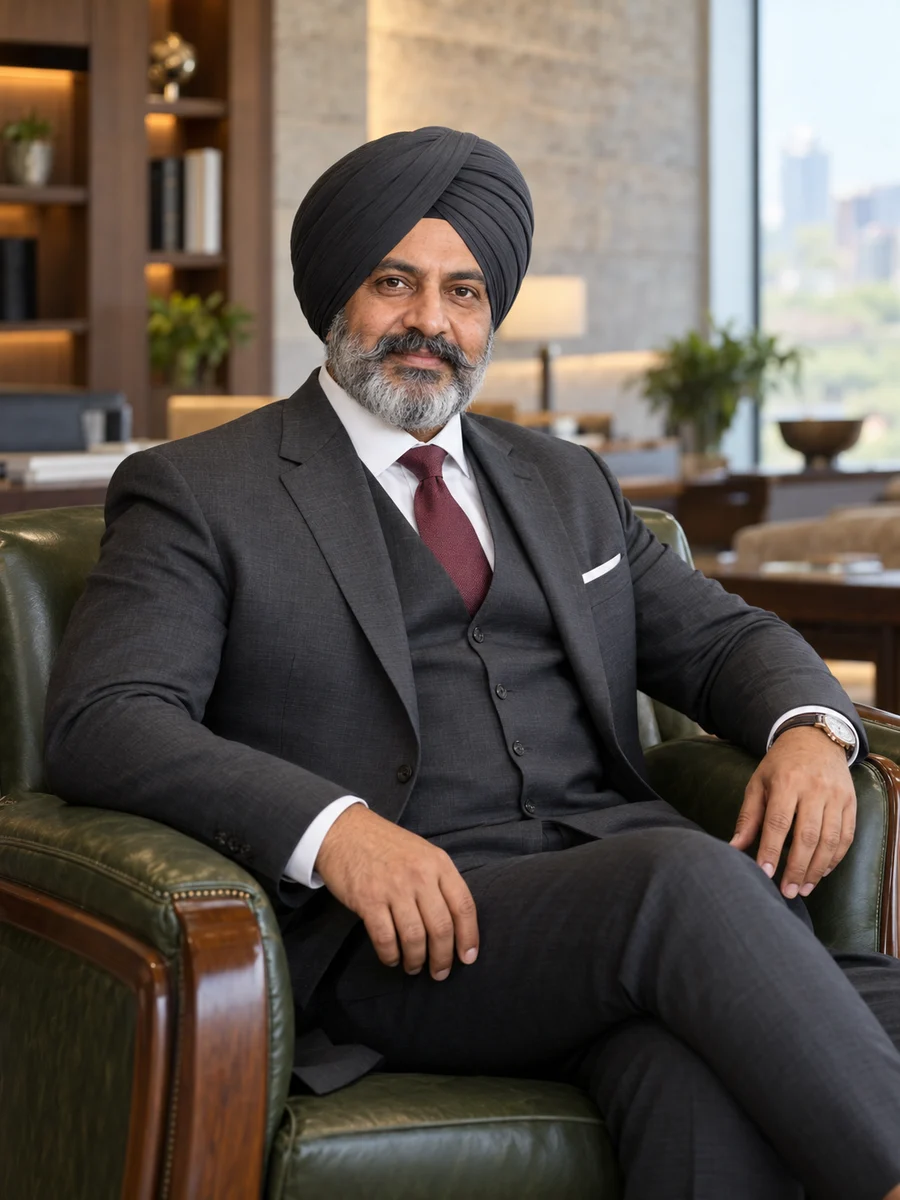
In my own words
A service has to be available at the moment it is needed, not merely somewhere in the annual capacity plan. I want our commercial promises to show who will do the work, which form of communication is being offered and what changes when the programme changes. The people carrying those promises should be present in the decision before their time is sold.
Arjan Vekhroli
Education
Formation
- Bachelor of Arts in EnglishRevqathi College of Languages1992
Working languagesEnglish · Hindi · Punjabi