Arjan Vekhroli

Chief Executive Officer / India

ArjanVekhroli

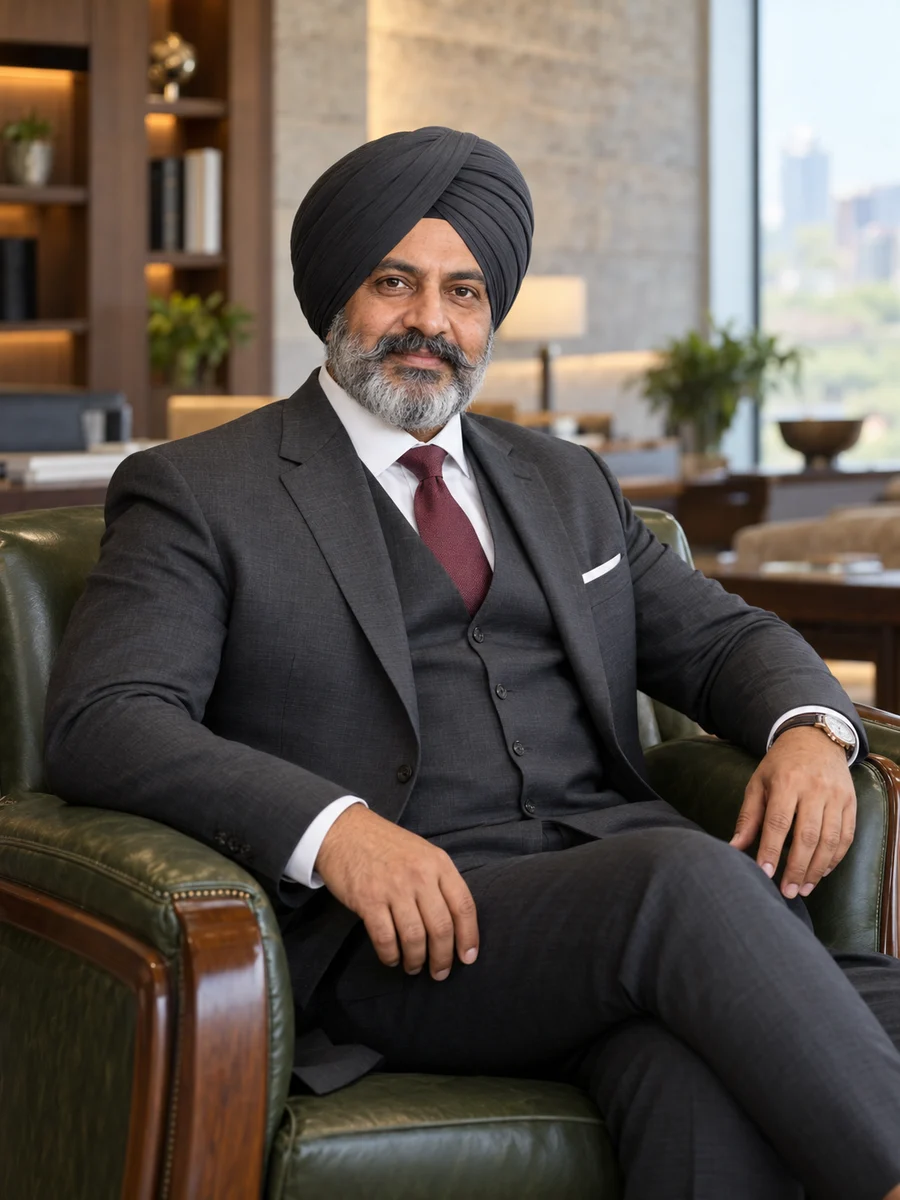
Portrait of Arjan Vekhroli

Make the service available when understanding matters

I grew up in Patiala in a household where a change of language could change who joined a conversation.

Open to
  • Board appointments
  • Advisory roles
  • Speaking invitations

The promise must fit the hour it is needed

I once approved a programme because its total language-service hours fitted our capacity account. Joseph then placed the sessions on a timetable. Fourteen streams would run together, while we had ten qualified teams available for that peak. An apparently manageable volume concealed four simultaneous commitments we had not staffed. The correction cost ₹48 lakh across additional assignments and a revised planning process. I had approved the wrong picture of the work, and the correction belonged in my account before anyone praised the scale of the programme.

I am Arjan Vekhroli, the fictional CEO of Qeravli Language Networks in Raipur. Our 184-person enterprise provides live-language services and caption production for invented events and communication programmes. FY2026 revenue is ₹47 crore, with independent specialist assignments recorded separately from employees. I lead five executives, including Joseph in language operations, and report to the board through Meera. I also hold one executive directorship. These facts describe a regional service business; they do not turn me into an authority on every language, access need or technical delivery method.

My later choices concern the work required when a live session becomes a recording, the capacity consumed by a provisional booking, the personal relationships hidden inside a proposed acquisition and the difference between translation and a complete accessibility claim. Each involves a plausible commercial attraction. Each also requires someone to explain what the enterprise can actually provide. I want a leader's website to preserve that conversation, including my initial error and the spending needed to put the promise on a more dependable footing.

A recording created another production commitment

Of ninety reviewed sessions, sixty-one required a recorded version and twenty-nine remained live-only. We funded a separate post-event workflow rather than assume that a live delivery automatically settled the recorded deliverable.

Provisional reservations occupied real time

A forty-six-booking review distinguished thirty-one firm commitments from fifteen softer holds. The new commercial process made the reservation and its capacity consequence explicit without rewriting existing agreements.

Buying a business did not automatically transfer its relationships

A proposed ₹4.6 crore acquisition depended on nine customer accounts whose continuity needed examination. We retained the ₹40 lakh diligence expense and declined the purchase when the transition account remained insufficient.

Current focus

I am working on the connection between language-service scope, specialist availability and an honest commercial description. The access-review programme includes paid participation and qualified advice; it does not claim that one feature makes every communication accessible.

Conversations I welcome

I would consider an outside board conversation about professional-service commitments and operating capacity, subject to preparation, relationships and the time required. Eighteen days is a provisional annual estimate, not an unconditional availability promise.
01

Time-specific service capacity

Explore the decision record

02

Recorded-deliverable scope

Explore the decision record

03

Specialist reservation economics

Explore the decision record

04

Customer continuity in acquisitions

Explore the decision record

34 years

Career experience

Programme coordination to enterprise leadership

₹47 crore

FY2026 revenue

₹31 crore live-language services;₹16 crore caption production

184 people

Enterprise scale

Independent specialist assignments accounted for separately

5 executives

Direct reports

Separately chaired board; one executive directorship

I believe

A service has to be available at the moment it is needed, not merely somewhere in the annual capacity plan. I want our commercial promises to show who will do the work, which form of communication is being offered and what changes when the programme changes. The people carrying those promises should be present in the decision before their time is sold.

— Arjan Vekhroli

The work

Decisions that moved the needle.

  1. 01

    The total hours concealed four commitments at the same time

    In 2019 I approved the language-service plan for a fictional multi-room programme. The total assignment hours fitted the capacity account presented to me, and I accepted that as enough evidence to support the offer. Joseph Melqavri subsequently placed every session on the actual timetable. At the busiest point fourteen streams would operate together, while ten appropriately qualified teams were available. We did not have a shortage in the abstract annual total. We had four simultaneous commitments without a settled staffing arrangement. I had authorised a plan whose most reassuring number did not describe its difficult hour. The commercial sponsor wanted to ask the organiser to move several sessions, preserving the original cost. Joseph considered that option worth discussing but warned that the programme had other dependencies. Speakers, rooms and attendees could not be rearranged simply to repair our account. I accepted responsibility for funding a supported response. Four additional qualified teams were secured for ₹18 lakh, and we spent another ₹30 lakh revising preparation and programme-capacity planning. The combined ₹48 lakh was an incurred correction cost, not an investment we could automatically describe as recovered through later efficiency. Qualified operating owners checked the assignments and their conditions. The account does not claim that any available person could cover any language, or that a remote connection removed the need for preparation. The added assignments resolved the specific planned gap before delivery. We did not report a universal service-quality score or imply that there had been fourteen failed sessions. The defect was in the commitment I had approved, and it needed to be corrected before it became a problem for participants. I changed the approval conversation to include the peak timetable and its named resource assumptions. The extra cost remained visible in the programme result. My lesson was not that planners need a more attractive chart. It was that the chief executive's prospective judgement must examine the same shape of work the operating team will face. A total can be arithmetically sound and still be the wrong basis for saying yes. I would now ask which hour is hardest to staff before accepting the comfort of the aggregate.

  2. 02

    The live assignment did not settle the recorded version

    In 2022 we examined ninety session briefs within a selected fictional programme portfolio. Sixty-one required recordings for later use, while twenty-nine remained live-only. Commercial colleagues had often discussed the recording as a natural continuation of the event. Production colleagues needed a more specific account of review, versions, permissions and delivery. A live service is provided under particular conditions; a recording can be encountered later by someone who was not present and cannot ask the speaker to clarify. That change deserved an explicit production decision rather than an incidental line in the closing email. The account lead worried that separating the deliverables would make an established service feel complicated. Customers wanted one supplier and a clear date, not another internal workflow to manage. I agreed with that customer expectation but supported Joseph's proposal for a funded post-event route. We authorised ₹42 lakh to establish the briefing, review and delivery work, with language practitioners, technical colleagues and appropriate rights advisers retaining their decisions. The customer could receive a coordinated offer while our own plan recognised the different work inside it. The sixty-one recording requests were placed into that workflow, with their intended versions and responsibilities recorded. They were not described as sixty-one defective live deliveries or as material whose rights were automatically available for any later purpose. The twenty-nine live-only assignments remained distinct. We did not retrospectively impose a new commercial obligation without the proper agreement, nor claim that the workflow had already produced a measured reduction in errors. The evidence is a funded production route and a clearer deliverable account for the selected population. The decision added work after the event had disappeared from the live calendar. That was precisely the cost I wanted the enterprise to recognise. A service should not look complete in one team's report while another team inherits an unspecified promise. I would now ask about the intended afterlife of the communication at the first briefing. It can affect the people, permissions, review time and commercial scope required, even when the customer sees a single programme. The CEO must make the internal distinction useful without passing the burden of our organisation back to the customer.

  3. 03

    Giving the provisional booking a defined place in the business

    A 2023 review found forty-six reservations in a selected period, comprising thirty-one firm commitments and fifteen provisional holds. The diary looked busy, but the two categories did not make the same claim on customer payment or specialist availability. Some colleagues kept a softer hold open because they wanted to protect a promising relationship. Meanwhile, an experienced practitioner might decline another assignment on the assumption that we would need the time. The enterprise was allowing different people to interpret the same booking state in different ways. Sales preferred leaving the process informal, arguing that event plans change and a rigid approach could drive customers elsewhere. Joseph wanted a clearer account of when specialist capacity was genuinely committed. I supported ₹27 lakh of commercial-workflow revision and an ₹18 lakh annual provision for a defined specialist reserve arrangement. Finance and legal colleagues shaped the actual prospective terms, while operating owners established which assignments the reserve could support. Those figures are spending commitments in this fictional account, not an implied standard fee or recommended cancellation charge. The revised process distinguished enquiries, time-limited holds and confirmed bookings, with the relevant responsibilities explained before a new commitment. Existing agreements retained their own terms and were handled through the authorised process. The fifteen provisional holds did not become fifteen sales merely because we had improved the labels. Nor did the reserve make every late request feasible. The particular language, preparation and timing still mattered. We kept those constraints visible so that a clearer commercial process would not become another source of overstatement. Some customers preferred an open-ended hold and did not welcome the narrower decision point. We accepted that the new account could make an easy conversation more demanding. The advantage was that colleagues and specialists could understand what we were asking them to reserve, and on what basis. I would introduce that discussion earlier in the relationship rather than treat it as an administrative obstacle at the end. A service business sells scarce time as well as delivered minutes. The commercial model should acknowledge both, without confusing a protected possibility with earned revenue.

  4. 04

    Declining a purchase whose customer continuity was still personal

    In 2024 a proposed acquisition carried a ₹4.6 crore purchase price. The smaller fictional practice had a useful regional presence, and its nine principal customer accounts appeared to complement our own. The sponsor saw a faster route to growth than building those relationships individually. During diligence, four accounts depended heavily on the selling founder's continuing personal role; the transition arrangements for the other five were not yet settled. The customer list described relationships that existed, but did not establish the service business we would possess after the proposed transaction. Meera asked management to present the operating transition alongside the purchase case. We incurred ₹40 lakh in diligence covering commercial continuity, people and the appropriate specialist review. The acquisition sponsor proposed proceeding with additional assurances from the seller, arguing that waiting for complete certainty would make any purchase impossible. That was a fair challenge. I did not require certainty; I required an account of who would carry the service commitments and what the buyer was assuming about the founder's departure. The proposed evidence did not yet support that account. I recommended that we end the negotiations at that point, and the board agreed. The ₹40 lakh remained an incurred cost. The uncommitted ₹4.6 crore was not reported as a realised saving, and the nine accounts were not described as lost customers of Qeravli. They belonged to another business whose future relationship with us had never been established. We made no assertion that the practice was worthless or that a different buyer could not structure an appropriate transition. The decision concerned the proposal and evidence in front of our board. The consequence was slower planned regional expansion and a disappointed internal sponsor. I asked the team to retain what diligence had taught us about the capabilities we would need to build. We did not substitute an unsupported organic-growth forecast to make the decision look immediately successful. I would now bring customer continuity and the founder's operating contribution into the earliest acquisition discussion. A service business can have valuable relationships and still require a transition that has not been funded, staffed or agreed. The purchase price alone does not tell the board what survives the change of ownership.

  5. 05

    Replacing a language-count claim with a communication-needs account

    Our 2025 brochure proposal used a broad accessibility description beside the number of languages we could arrange. I questioned whether the phrase described the actual service. A selected review of twenty-four client briefs included fifteen requests for same-language captions and nine for translation alone. Those categories addressed different communication needs; neither count established that every participant could use the full event or recording. The commercial draft had compressed a varied service proposition into a phrase whose apparent simplicity exceeded what the business had assessed. The sales team wanted a short headline and worried that a more qualified description would be difficult to explain. Joseph supported involving people with relevant lived experience alongside qualified access and language specialists. We approved ₹43 lakh for paid participation, specialist review and revision of the service materials. The work examined what each proposed component did, the conditions on which it depended and which needs required another arrangement. It did not ask a small group to certify an entire population or treat a translated subtitle as interchangeable with every other form of access. We replaced the broad claim with descriptions of the components actually offered and a briefing process for additional requirements. The twenty-four briefs remained a selected planning sample, not a representative survey of all users. We did not publish a universal accessibility score or claim compliance for an actual customer's platform, venue or content. Specialist advice and participation informed the proposition, while the responsibilities for a real programme still needed to be agreed. The ₹43 lakh was the cost of doing that work, not proof of a subsequent commercial return. The revised material was less compact. It required account colleagues to ask questions before suggesting a package, and sometimes to acknowledge that another professional capability was needed. I accepted that consequence because the original phrase had made an unsupported connection between breadth of language and completeness of access. Next time I would start the proposition with the communication needs we intend to meet, rather than attach an access claim to a service already designed. A CEO should make that inquiry part of the commercial brief and fund the people whose experience can challenge it.

Others say

Word from the boardroom.

In this fictional acquisition discussion, Arjan kept the customer-transition questions beside the purchase case and retained the incurred diligence expense after recommending that we stop. He did not replace the declined proposal with an unsupported claim that another growth route was already successful.
Meera TazhevariFictional chair, Qeravli Language Networks
This invented programme account retains Arjan's approval mistake. Once the simultaneous staffing gap was visible, he funded the additional assignments and preparation work rather than ask the operating team to preserve a cost picture that no longer described the commitment.
Joseph MelqavriFictional language operations lead, Qeravli Language Networks

An invitation

Contact

I would consider an outside board conversation about professional-service commitments and operating capacity, subject to preparation, relationships and the time required. Eighteen days is a provisional annual estimate, not an unconditional availability promise.

Open to
  • Board appointments
  • Advisory roles
  • Speaking invitations

office@arjanvekhroli.example