Harjit Zevthari

A leadership monograph

Harjit Zevthari

Make each record mean what the operation needs

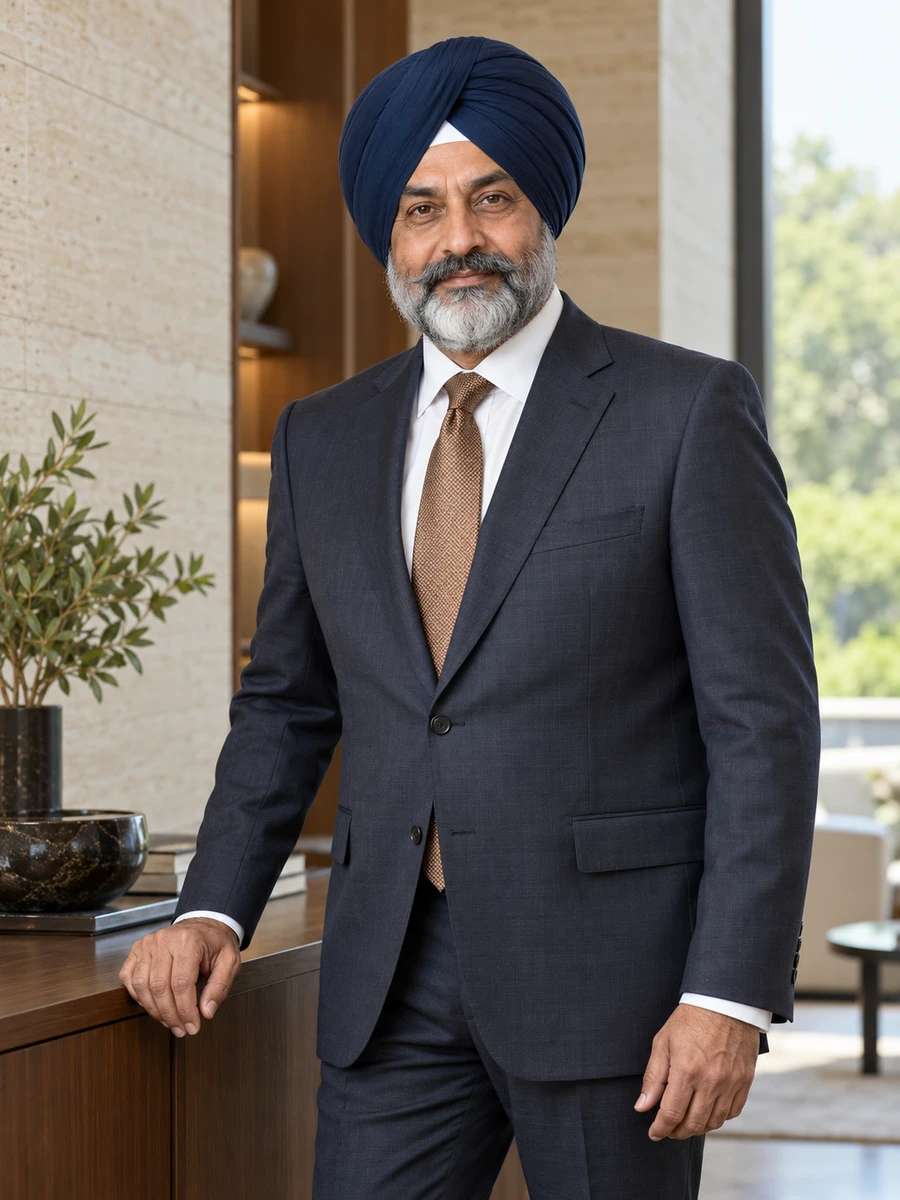
Portrait of Harjit Zevthari

Chief Information Officer · India · Volume I · 2026

The record must say what happened, not merely what was captured

At Veqnari Hospital Linen Services in Jalandhar, I lead 26 IT colleagues through four heads. Our ₹7.6 crore annual operating expense is separate from ₹1.8 crore approved capital. The company runs six processing plants for 48 hospital customers and employs 680 people. FY ending March 2026 revenue was ₹112 crore and operating profit ₹9.4 crore. My responsibility is our information environment supporting that service; process assurance and the hospitals retain decisions about hygienic suitability and their respective professional obligations.

I began as a software developer in 1990 and moved into this service business in 2005. The physical work taught me to question assumptions that seemed harmless inside a database. A leading zero can distinguish two customer identifiers. Wet and dried weights describe different conditions. A reader can observe one tag more than once without another process occurring. Connecting systems requires those meanings to survive, even when removing them would make the data easier to combine.

The cases include a migration I approved with the wrong identifier treatment, an unsupported shortage calculation, repeated tag observations, timestamps interpreted in different zones and an availability view that included stock still in transit or under inspection. They do not end with a claim that software made the service clinically safe. They show how I corrected particular information assumptions, what the correction cost and which decisions still belonged with operating or professional colleagues.

Removing leading zeros collapsed distinct identities

A 2019 migration rehearsal reduced 1,240 text identifiers to 1,192 unique numeric keys. Forty-eight pairs, affecting 96 identifiers, collided. We stopped before production cutover, retained the original identifiers and spent ₹36 lakh on rework, delaying the programme by six weeks.

A weight difference did not establish missing linen

A reviewed cohort weighed 10,000 kg on wet collection and 8,400 kg after cleaning and drying. The 12,000-piece count reconciled. We withdrew a proposed ₹2.88 lakh shortage charge derived from the 1,600 kg difference at ₹180 per kg; the comparison did not establish a loss.

A reader observed more events than distinct articles

A doorway sample contained 3,600 read events for 2,400 distinct tags, including 1,200 repeat observations. We stopped treating each read as another wash cycle. A ₹18 lakh replacement proposal was withdrawn pending a valid usage basis, while ₹29 lakh of integration redesign was spent separately.

Current focus

I am making the handoff between machine observations and business records more explicit. An identity, a process event, a time reference and an availability state need different rules. The aim is to give colleagues evidence they can interpret, while leaving professional acceptance and customer allocation with the people authorised to decide them.

Conversations I welcome

I am considering one first outside board contribution where service systems and physical operations meet. I hold no statutory seat. My fictional IICA registration in February 2026 and assessment pass in August do not establish appointment eligibility. Twenty-two provisional days, employer consent and review of trust and commercial relationships would precede a commitment.

Chapter I

Preface

The leading zeros looked expendable in the migration proposal I approved. Treating the identifiers as numbers made the new table simpler to handle, but it removed a distinction the source records depended on. In a rehearsal, 1,240 text identifiers became 1,192 unique keys. Forty-eight pairs collided. We stopped before production cutover, and the programme needed six weeks and ₹36 lakh of rework. That error is part of my introduction because it explains how I now approach information leadership: a convenient representation can be technically consistent while changing what the business believes it knows.

I grew up in a Sikh family in Punjab and completed a Bachelor of Science in Computing at Qevzuni College of Computing in June 1990. I speak Punjabi, Hindi and English and live in Jalandhar. In July 1990 I joined Ravqoli Systems Cooperative as a software developer. The cooperative employed 24 people and recorded ₹1.1 crore revenue for FY ending March 1991. I worked in a five-person development group under the development manager, without supervisory or spending authority. I learned to ask how a user distinguished one object or event from another before choosing the structure that would represent it.

In April 1997 I became support manager. Ravqoli then employed 61 people with ₹9.4 crore revenue for FY 1998. I led ten colleagues through two leads and managed ₹2.1 crore annual function expense, reporting to the operations director. Supporting software after installation broadened my understanding of what a specification could leave unresolved. People did not always use the system in the sequence a developer expected. A field could carry a local convention that was invisible in the technical description. I learned to reconstruct the user's meaning before deciding whether a repeated record or an unusual value was simply an error to remove.

I joined Veqnari Hospital Linen Services as systems manager in June 2005. I retained no cooperative interest after leaving Ravqoli. Veqnari had 120 employees and ₹18 crore revenue for FY 2006. I led six IT colleagues with ₹54 lakh annual expense under the COO. The work connected systems with physical collections, processing and returns. Counts, weights and observed movements could all be useful while answering different questions. I also learned that an IT record was not a substitute for process assurance or the hospital's professional decisions. Our IT function had to support those responsibilities without claiming to approve them.

The head-of-IT role followed in April 2013. Veqnari employed 420 people and recorded ₹64 crore revenue for FY 2014. I led fourteen colleagues through two heads with ₹3.2 crore annual expense, reporting to the CEO. The migration error occurred during this period, when the larger system estate encouraged us to standardise representations. I had approved the numeric treatment and initially saw the rehearsal result as a data-cleansing issue. The source owners showed that the pairs were distinct identifiers. That changed the task from cleaning the business record to correcting my design assumption before it reached production.

I became CIO in February 2021. Today the company has six regional processing plants, 48 hospital customers and 680 employees. I lead 26 IT colleagues through four heads with ₹7.6 crore annual operating expense and a separate ₹1.8 crore approved capital allocation. I report to Nandita Zeqshavi, while David Qervuli leads process assurance. An employee trust owns 52% and an institutional investor 48%. I am a trust beneficiary without direct personal shares. The relationship belongs in any discussion of a possible outside appointment, even though I hold no statutory seat.

Recent cases have required different forms of the same care with meaning. A software comparison treated a wet-to-dried mass difference as missing linen although the piece count reconciled. A reader's repeated observations were being interpreted as additional wash cycles. Two systems used different clock contexts, leaving six of 64 reviewed runs incorrectly linked and needing qualified review after reconstruction. An allocation view included stock in transport and under inspection as though it were available. Each correction changed a specific information claim; none established a clinical outcome or removed the need for the process owner to decide what the evidence supported.

I have presented technology matters to directors through the CEO but have not served on a statutory board. This fictional record includes IICA registration in February 2026 and an August assessment pass, without an exemption. I would consider one first outside contribution with twenty-two provisional days and a realistic learning plan. Employer consent and qualified review of relationships, eligibility and the role's demands would be necessary. I would bring questions about how a business converts observations into decisions, while expecting to learn the receiving enterprise's full responsibilities rather than assume that correcting an information model is the whole of governance.
Chapter II

A Philosophy of Leadership

A system should preserve the meaning of the thing it records. An identifier is not a quantity to simplify, a doorway read is not a completed wash and a timestamp needs its clock context. I want those distinctions settled before a convenient digital total becomes an operating decision.

Harjit Zevthari

Chapter III

Areas of Practice

  1. IIdentity-preserving system integration
  2. IIMeasurements with their physical conditions
  3. IIIObservation and process-event distinction
  4. IVClock context and usable stock states

Chapter IV

Selected Work

§ 1

Reversing the identifier conversion I had approved

In 2019, while head of IT, I approved a migration design that converted customer article identifiers from text to numeric keys. Leading zeros appeared unnecessary to the proposed common representation. The rehearsal showed why that assumption was wrong: 1,240 source identifiers produced 1,192 unique keys. Forty-eight pairs, affecting 96 identifiers, collapsed into the same values. The other 1,144 identifiers were unaffected by that collision pattern.

My first response was to ask whether the source data needed cleaning. Operating colleagues demonstrated that the paired identifiers referred to distinct records and that the leading zeros were part of their identity. The migration had changed the meaning, rather than discovered a duplicate the business should remove. The technical team had followed the design I approved, so I could not fairly describe the problem as a developer's implementation mistake. We stopped the programme before production cutover.

We retained the original text identifiers, rebuilt the mapping and repeated the collision checks. The rework cost ₹36 lakh and delayed the programme by six weeks. The account makes no claim that the faulty mapping had already caused a hospital event; it was caught in rehearsal. Equally, detecting it before cutover did not make the design decision harmless to the programme. Colleagues had to redo work, and operating teams continued with the existing systems for longer than planned.

I changed how identifier transformations were reviewed, asking source owners to explain the identity convention before technical standardisation was approved. The result was a corrected mapping for the programme, not a declaration that every future integration would preserve meaning automatically. The leadership lesson was to recognise where my own preference for a simpler representation had outrun the business evidence. I wanted the case to retain the initial error, the challenge from operations and the cost of correction, rather than turn a migration rehearsal into an uncomplicated technology success.

§ 2

Withdrawing a shortage charge built from unlike weight observations

A 2022 reporting routine compared the wet collection mass of a linen cohort with its mass after cleaning and drying. The figures were 10,000 kg and 8,400 kg. The software treated the 1,600 kg difference as a shortage and applied an illustrative ₹180-per-kg rate, producing a proposed ₹2.88 lakh charge. The piece record reconciled at 12,000 articles. The two weights described different physical conditions and did not, by themselves, establish missing linen.

Finance wanted an explanation before the draft charge reached the customer. Operations challenged the assumption that the mass comparison measured loss. I asked the integration team to preserve the collection and post-process conditions alongside the values, rather than pass both into a field labelled quantity without context. A correct subtraction was not enough to justify the commercial conclusion. The relevant contract and evidence needed review by the appropriate operating and finance owners.

We withdrew the proposed ₹2.88 lakh charge before billing. There was no cash refund or recovery to report. The piece reconciliation supported the conclusion that this mass difference did not establish the asserted shortage; it did not prove that every article met the required process or hygienic conditions. Those decisions remained with qualified process specialists and the hospital's authorities. The system change prevented this routine from presenting an unlike-state mass comparison as a self-sufficient loss calculation.

The decision reduced the apparent amount recoverable from that cohort and required a less convenient information model. Values had to retain their conditions, and an exception needed a person able to interpret the contractual question. I accepted that complexity because the simpler calculation had created unsupported certainty. My role was to repair that information claim and explain its limit, not to decide a clinical or process-assurance question through a reconciled count. The case illustrates why a CIO should ask what a measurement represents before allowing its difference to become a charge.

§ 3

Stopping repeated reader observations from becoming extra wash cycles

In 2023 we examined a doorway-reader sample containing 3,600 events for 2,400 distinct tags. The additional 1,200 events were repeat observations in that sample, not evidence of 1,200 additional articles or completed laundering processes. The integration had been using each read to increment a wash-cycle history. That made the usage account appear more advanced than the physical evidence supported and fed a ₹18 lakh replacement proposal.

The operations team wanted to know whether the proposed replacements reflected actual use or a counting convention. The device supplier could explain what the reader emitted, but its message did not define our laundering event. I asked the team to separate raw observations from the business event used for usage history. The change required agreement with process owners about the evidence for a completed operation; merely removing repeated messages within an arbitrary time window would not establish the correct process count.

We withdrew the ₹18 lakh replacement proposal pending a valid usage basis and spent ₹29 lakh on integration redesign. The withdrawn proposal was not presented as cash saved, because replacement needs still required proper assessment. Nor did correcting an inflated count establish that any article could remain in use indefinitely. Physical condition and relevant process decisions remained outside the CIO's authority. The reader continued to provide useful observations, but those observations no longer carried an automatic meaning they had not earned.

The immediate consequence was additional technology expense and a more careful replacement-planning discussion. I kept both in the case rather than offset one against the other to create a favourable net figure. A system can faithfully capture what a device emits while incorrectly describing what the business did. My contribution was to make the event model explicit and reconnect it with the physical operation. That is a different responsibility from buying more accurate readers or claiming that a higher volume of digital evidence necessarily creates a better operating account.

§ 4

Reconstructing six run links when the clocks meant different things

A 2024 review compared records across two systems that did not interpret their timestamps in the same way. One used UTC and the receiving interpretation assumed local Indian time. Of 64 reviewed process runs, 58 had been linked correctly and six required manual reconstruction. The problem was not that a five-and-a-half-hour shift had changed the physical process. It was that the software had attached observations to a run using an incorrect time context.

David Qervuli's process-assurance team needed the evidence associated with the right run before it could assess what the record supported. The technology team initially proposed correcting the displayed times and closing the issue. I asked them to distinguish a corrected display from the historical linkage already created. The six affected runs still needed their source records traced and reconstructed. IT could repair that association, but it could not infer a satisfactory process result merely because the timestamps then aligned.

We funded ₹42 lakh of clock-context integration work, retained explicit time references and reconstructed the six links for David's review. The case does not assert the later disposition of those six runs or certify hygienic suitability. Those were qualified process decisions. The 58 correctly linked runs remained part of the reviewed sample, not proof that the same integration could be assumed correct in every other period or system. The repair addressed the identified mapping and the conditions that had allowed it.

The trade-off was to spend time and money on context that had seemed too routine to feature in the original integration proposal. A timestamp is easy to store and compare, but its meaning depends on the reference used. I wanted the operating account to show the reconstruction still needed, not just a repaired screen. The lesson was that a CIO's completion statement should identify which information problem has been corrected and which judgement remains with another owner. Aligning a clock cannot substitute for assessing the process evidence it helps organise.

§ 5

Restricting reservations to the stock state the system could support

In 2025 an allocation dashboard showed 27,000 linen articles in a pool as available for reservation. The source breakdown was different: 18,000 were in the reviewed available state, 6,000 were in transport and 3,000 were under inspection hold. The total count was correct as a pool account, but its availability label was not. A reservation based on all 27,000 would rely on items whose current state did not support the same immediate commitment.

Commercial colleagues wanted a ₹1.6 crore predictive-allocation proposal to help distribute stock across demand. The operating review showed a more immediate question: the state information entering that proposal did not preserve the distinction between present available stock, movement and hold. I worked with source owners to define which state could support a reservation and which required another event or authorised decision. The 18,000 count also remained subject to customer-specific rights and allocation rules; it did not mean every item belonged to every customer's usable pool.

We restricted reservations to the reviewed available state and approved ₹65 lakh of state-integration work instead of proceeding with the predictive proposal at that stage. The scopes were different, so the ₹95 lakh price difference was not claimed as a saving on the same capability. The decision made the reservable view smaller and the technology programme less ambitious. It did not release the 3,000 held articles, complete the 6,000 in transport or authorise IT to decide hygienic suitability.

I wanted a system that could explain why it offered an item before it tried to predict the most attractive allocation. The source owners retained responsibility for state changes and the relevant professional decisions. The case ends with a narrower supported reservation view and approved integration work, not an invented reduction in shortages or a claim that the predictive problem had been solved. My contribution was to make the current obligation intelligible before adding a more sophisticated decision layer on top of information that did not yet carry the necessary conditions.

Chapter V

Essays

An invitation

Contact

I am considering one first outside board contribution where service systems and physical operations meet. I hold no statutory seat. My fictional IICA registration in February 2026 and assessment pass in August do not establish appointment eligibility. Twenty-two provisional days, employer consent and review of trust and commercial relationships would precede a commitment.

Open to
  • Board appointments
  • Advisory roles
  • Speaking invitations

office@harjitzevthari.example