The person behind the perspective · 2026
Learning to read a process from the employee's side
I grew up in Tawang in a Buddhist family and studied sociology at Vezmuthi Social Studies College, completing my degree in June 1996. I speak Monpa, English and Hindi, with working Kannada developed after moving to Mangaluru. The geographical moves are part of my story, but I would not turn them into a claim to understand every colleague's circumstances. What shaped my professional approach was the practical experience of seeing a small administrative delay become a substantial problem for someone whose household had little room to absorb it.
In July 1996 I joined Temqari Workforce Services as an employee-services coordinator. The fictional business employed 68 people and recorded ₹6.4 crore revenue in FY 1997. I worked in a five-person group under the employee-services manager, with no direct reports or spending delegation. I helped prepare records, explain processes and follow unresolved requests. The work taught me to distinguish a case marked complete in the company's system from a person who had actually received an answer or payment. I could raise a discrepancy, but I did not have authority to decide employment terms.
I became employee-relations manager in March 2003. Temqari then employed 210 people and recorded ₹29 crore FY 2004 revenue. Twelve colleagues worked through two supervisors within a ₹74 lakh annual function budget, and I reported to the head of people. The responsibility required a broader view of the employer's choices. A process could be consistent and still distribute its inconvenience unevenly. I learned to ask who paid first, who waited and who had the practical ability to challenge an error without jeopardising an important working relationship.
In September 2009 I joined Veqnuri Enterprise Credit in Mangaluru as head of people operations. The lender had 310 employees and 21 service points, with ₹560 crore outstanding loans and ₹81 crore FY 2010 income. Fourteen people-function colleagues worked through two leads within ₹1.6 crore annual expense, and I reported to the CEO. Lending introduced unfamiliar professional responsibilities, so I worked alongside credit, compliance and legal colleagues rather than assuming that an employment policy could settle their questions. My task was to make roles and people processes support those responsibilities without confusing them.
The HR director appointment began in June 2015. It was a functional executive title, not a statutory directorship. The company had 520 employees, 32 service points, ₹940 crore outstanding loans and ₹142 crore FY 2016 income. I led 22 colleagues through three heads within ₹3.1 crore annual expense and reported to the COO. During that period I accepted a monthly travel-reimbursement cycle because it made processing easier. I had not adequately examined the amount colleagues were advancing from their own funds or the effect of a delayed claim on their next assignment. That omission later became a decision I needed to own.
I became CHRO in February 2021. Today the people function has 34 colleagues through four heads, with ₹5.4 crore FY 2026–27 expense and a separate ₹52 lakh capital provision. The company's ₹81 crore FY 2026 employee expense is a different figure. Prakash Qavzuri is CEO and Lalita Zevnathi is COO. Founding-family interests hold 46% and a long-term institutional investor 54%; I have no personal or vehicle allocation. I present people matters to directors but do not hold a statutory appointment or a committee vote.
The recruitment-fee case began with evidence from eleven of 42 recruits. Their documented charges totalled ₹2.2 lakh. We reimbursed those amounts while the supplier dispute continued, rather than making the employees wait for the company to resolve its commercial position. The other 31 cases remained a question for careful follow-up; absence of a receipt did not establish absence of a charge. I wanted the immediate remedy and the wider investigation to remain distinct, with neither used to pretend the other was finished.
The travel decision addressed a policy I had helped establish. We introduced an ₹18 lakh revolving advance for 112 field colleagues, with reconciliation and operating oversight. That float was not an additional annual expense and did not remove the need to review claims. Other cases concerned separating relationship and credit responsibilities, reducing the granularity of an employee-listening report and funding specialist careers without compulsory people management. Each required the company to accept a cost or a limit instead of passing it quietly to someone with less choice.
I registered in the fictional IICA databank in July 2026 and have not yet passed the proficiency assessment; no exemption is claimed. I reserve a provisional twenty-four days for a first outside board contribution, subject to permission, conflicts and a realistic calendar. I would bring questions about how an organisation's arrangements actually work for the people expected to use them. I would also need to learn the receiving enterprise's context and the discipline of collective oversight. The next step should follow a genuine need for that contribution, not the assumption that an executive title already supplies board experience.
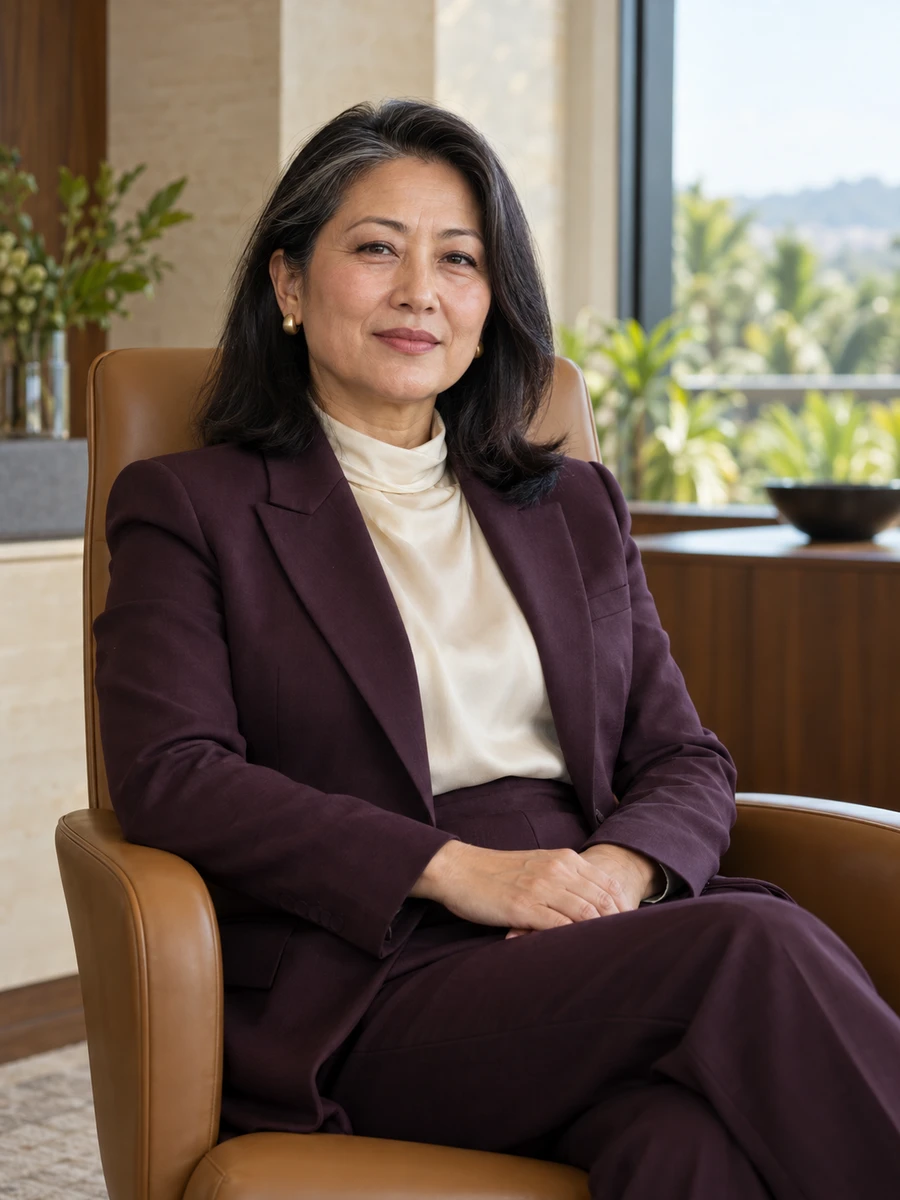
In my own words
I ask who has to find the money, absorb the delay or carry the responsibility when a people policy looks inexpensive. The answer is sometimes a candidate, a field colleague or a specialist pushed into a management job they do not want. My work is to make that transfer visible and decide whether the company should fund a different arrangement. I have also had to correct policies I approved before asking that question carefully enough.
Yeshi Qelzani
Education
Formation
- Bachelor of Arts in SociologyVezmuthi Social Studies College1996
Working languagesMonpa · English · Hindi · Kannada — working